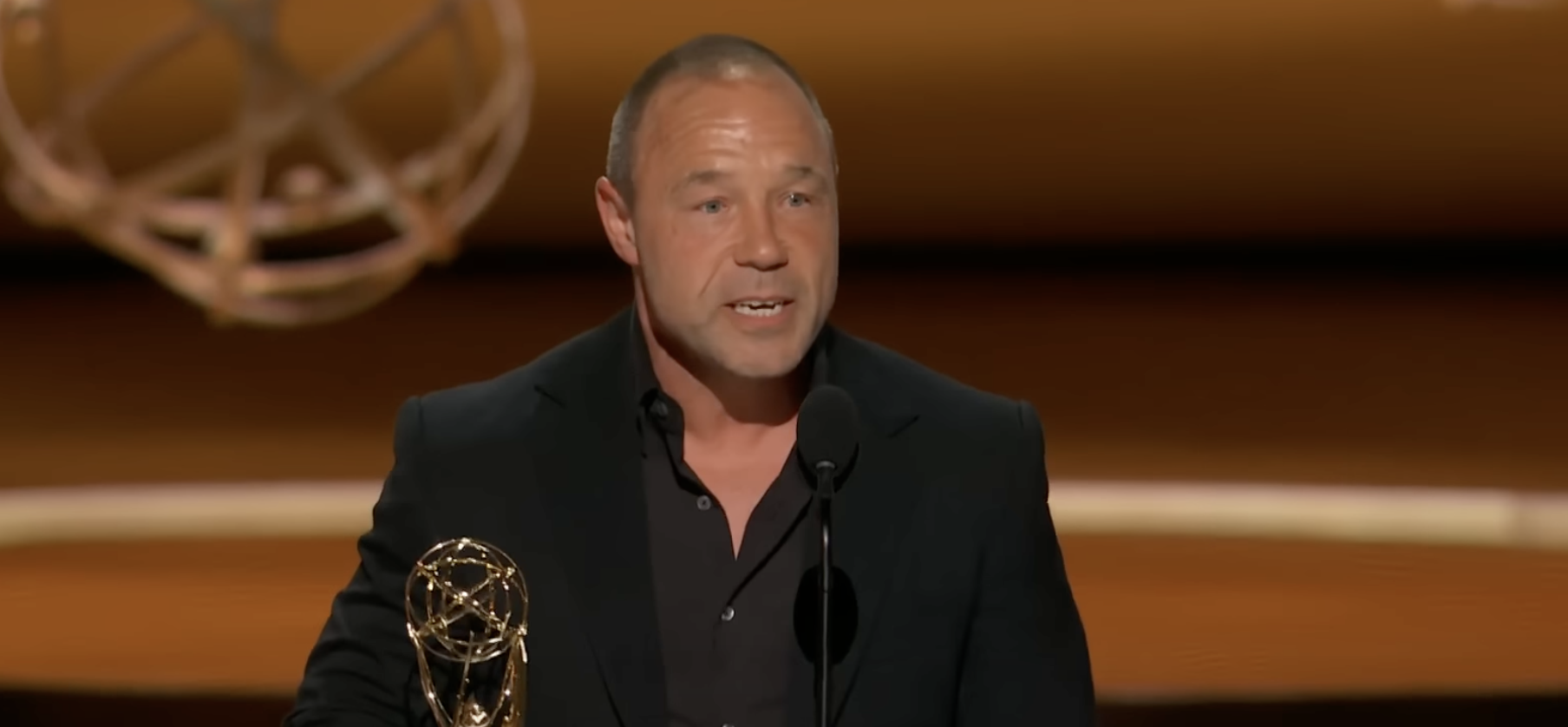
Stephen Graham’s description of himself as “just a mixed-race kid from a block of flats in a place called Kirkby” during his Emmy acceptance speech has set off a wave of surprise across social media, with many viewers admitting they had not known the British actor has Jamaican heritage through his father. The remark came as Graham, 52, accepted outstanding lead actor in a limited or anthology series or movie for the Netflix drama Adolescence at the 77th Primetime Emmy Awards in Los Angeles on 14 September. “This kind of thing doesn’t normally happen to a kid like me,” he said, before thanking his family and paying an extended tribute to his wife and producing partner, Hannah Walters.
The speech reverberated well beyond the auditorium. Within hours, posts highlighting the line circulated widely, with one user quoted by entertainment site LADbible writing: “Stephen Graham is JAMAICAN?!?! The amount of BBC dramas I have watched this guy in I would have never known until his speech.” Another reportedly said: “finding out stephen graham is Jamaican bc he called himself mixed race.” The outlet’s round-up captured dozens of similar reactions, reflecting how an actor known for playing white, working-class northern characters has, for many viewers, kept private a family history he has discussed in interviews but that has seldom been foregrounded in coverage of his work.
Graham’s wording at the Emmys was not new for him, but the global stage amplified it. A video clip shared by The Independent showed him repeating the “mixed-race kid from Kirkby” line, a formulation he has used previously when asked about growing up in the Liverpool satellite town and about how his background informs the roles he chooses. The newspaper’s write-up noted his Jamaican heritage on his father’s side and said Graham has spoken in the past about experiencing racism as a boy. In March, The Guardian profiled the actor as a “working-class, mixed-race kid” who has made a virtue of bringing Scouse voices to prestige film and television.
The Emmys marked a landmark evening for Adolescence, the six-part series Graham co-created and produced, and in which he plays a father whose 13-year-old son is arrested for murdering a schoolmate. ABC News reported that Graham delivered multiple speeches as the show collected a haul that included best limited or anthology series and writing for a limited series, with Graham sharing the writing award alongside Jack Thorne. In his remarks after the series win, he stressed the set’s egalitarian culture: “Whether you was number one on the call sheet or number 101, we were treated equally.” The series’ supporting actors also took home trophies, with 15-year-old Owen Cooper becoming the youngest male winner of supporting actor in the category.
People magazine, which quoted Graham calling Walters his “soulmate,” underlined that the lead-actor statuette was his first Emmy and followed three nominations on the night for acting, writing and producing. That tally capped an 18-month run in which the drama moved from a British commissioning and production base into a Netflix global release, adding to Graham’s reputation as an actor-producer able to seed and steer challenging material. ABC’s report added that Netflix UK had later made the series available to all secondary schools across Britain to encourage conversations among teenagers about violence, misogyny and the online influences portrayed in the show.
Online, reaction to Graham’s reference to his heritage cut in several directions. Many viewers framed their surprise as a function of his appearance and the kinds of parts for which he is best known, from the violent nationalist Combo in Shane Meadows’s This Is England through a corrupt undercover officer in Line of Duty and a tightly coiled head chef in Boiling Point. LADbible’s collation of posts included comments from users who said they first learned of his Jamaican background during his stint in Boardwalk Empire more than a decade ago, while others asked why the information had eluded them until the Emmys telecast. The social-media flashpoint echoed earlier moments this year when Graham discussed being mixed-race, saying in one interview that he had encountered racial slurs as a child.
Graham has said the circumstances of his upbringing in Kirkby, a town a few miles north-east of Liverpool, shaped both his sensibility and his career. In press interviews he has described an early introduction to acting through local theatre and mentors, later training at Rose Bruford College, and a commitment to roles that complicate stereotypes of northern, working-class life. The Guardian’s spring profile quoted him saying, “I’m proud to be this mixed-race working-class kid from a block of flats,” and noted that he often asks directors to let characters keep a Scouse accent as a small but substantive push against typecasting. Those comments preceded Adolescence, which he developed with Walters and director Philip Barantini after the pair partnered on the single-take film version of Boiling Point in 2021.
In his Emmys speech, Graham fused that personal history with a message about access and possibility. “For me to be here today, in front of my peers, and to be acknowledged by you is the utmost humbling thing I could ever imagine in my life and it shows you that any dream is possible,” he said. He thanked his father for “kick-starting” his film education with childhood trips to a local video shop and closed by addressing Walters directly: “You are my rock, you are my world, you are my soulmate and you know and I know, without you, I would be dead.” The Independent’s video shows the audience applauding through much of the speech; Variety and other entertainment outlets later reposted the clip and the “mixed-race kid” pull-quote.
While the disclosure surprised many, the actor’s heritage has long been part of his public record. Biographical summaries compiled before Adolescence often referenced Jamaican roots on his father’s side, and earlier this year the youth-focused outlet JOE recapped an interview in which he recalled being called racist names as a child. He has also spoken of dyslexia and periods of anxiety in past interviews, setting that alongside a parallel theme of pride in the community he comes from and in British working-class stories. The strand that ran through the Emmys night—equal treatment on set, gratitude to family, and a reminder of where he began—aligned with that earlier portrait.
Adolescence itself provided the backdrop for the moment. The series follows a suburban family fractured by a shocking crime, with Graham’s character, Eddie Miller, and Walters’s character, his wife, navigating the aftermath of their son’s arrest. ABC News said the show took six trophies on the night, including directing for Barantini and supporting awards for Cooper and Erin Doherty. In media interviews, Graham has said the story drew in part on real incidents in Britain and was intended to interrogate how online misogyny and extremism can seep into ordinary homes. The attention around his heritage did not overshadow those themes so much as intersect with them, as commentators contrasted public perceptions of identity with the series’ focus on unseen pressures within families and communities.
The scale of the reaction also reflected Graham’s unusual position in the British screen landscape. A veteran of 25 years in film and television, he has blended character-actor breadth—Scorsese’s Gangs of New York and The Irishman, Guy Ritchie’s Snatch—with grounded British dramas such as Meadows’s This Is England cycle and Stephen Knight’s A Thousand Blows. People magazine’s account of his win placed him in a field that included Colin Farrell, Jake Gyllenhaal and Brian Tyree Henry, reminding viewers that his rise, while steady, has not been propelled by blockbuster franchises. That context likely helped turn a line about identity into a wider talking point: it sounded confessional from a figure many assumed they already knew.
Some of the social-media commentary sampled by LADbible edged into debates over terminology and visibility, with users arguing over whether “mixed-race” is an appropriate label for someone with relatively light skin and over how family history—grandparents, parents, and the specifics of migration to Merseyside—filters into self-description. The Independent’s coverage stuck to what Graham himself said on stage and to what he has previously put on the record about Jamaican heritage. In Liverpool, where Britain’s longest-established Black community has roots stretching back generations, the idea that mixed ancestry can be complex is hardly new, but the Emmys spotlight made it newly visible to a broader audience.
The immediate professional aftermath for Graham is celebratory. ABC News said he appeared on stage three times on Emmys night—first for acting, later for the writing award shared with Thorne, and again when the series took best limited or anthology series—with photographs showing him in the press room holding multiple statuettes. People’s account noted that the lead-actor prize was his first Emmy win. In the days since, UK and US outlets have published further clips of his backstage comments, and British broadcasters replayed portions of the speech on morning programmes, focusing on his remarks about class and on the line that triggered the biggest online response.
Graham’s emphasis on origins has long been bound up with his partnership with Walters. The pair formed Matriarch Productions and have used it to develop material with what colleagues describe as an egalitarian ethos mirrored in his series-win speech. The Guardian’s earlier profile, published months before the Emmys, tied that approach to how he was raised and to the experience of working in Liverpool’s Everyman Theatre as a teenager. If the Emmys drew those themes together under glare of the American awards circuit, the reaction in Britain, as tallied across entertainment pages and social platforms, showed how biography can still surprise in an era of extensive celebrity profiles.
For audiences who had not connected the dots until the telecast, the jolt of recognition landed alongside a broader message that Graham pressed in each appearance on stage: that success need not be confined to those who fit an expected background or accent. The core of that message was biographical—“kid from a block of flats”—but it was also institutional, as he urged those watching to foster sets where, in his words, “we were all equal.” As Adolescence rides the momentum of its wins into a new phase of distribution and discussion, the exchange his speech sparked has turned a personal identifier into a window on the industry that helped make him a star.
The social-media churn will fade, but the biographical facts that startled many viewers are not in dispute. On one of the biggest nights of his career, Graham chose to centre them, placing his family and hometown at the heart of the narrative he wanted to tell in front of peers and a global audience. That choice, coupled with the success of a series he helped build from the ground up, ensured that the headlines would capture both halves of the story: the prizes and the path he took to reach them. If the internet’s surprise said anything, it was that perceptions often lag behind the record; in this case, the record now includes an Emmy stage and, by Graham’s own telling, a reminder that where he is from is inseparable from where he has arrived.