Social media posts and a cluster of online articles have resurfaced 2012 swimsuit images of Erika Kirk, the widow of conservative activist Charlie Kirk, and framed them as evidence of a prior connection with Donald Trump, who owned the Miss Universe Organization—including Miss USA—at the time she competed as Miss Arizona USA. The photos, drawn from routine pageant shoots that circulated widely in 2012, have been labeled “NSFW” by some outlets and republished alongside speculative claims about the nature of any link between Kirk and Trump. The verifiable intersection is straightforward: in 2012, Erika Lane Frantzve (now Erika Kirk) represented Arizona at Miss USA, a pageant then owned by Trump; there is no independent evidence that she worked for Trump or held any role in his businesses.
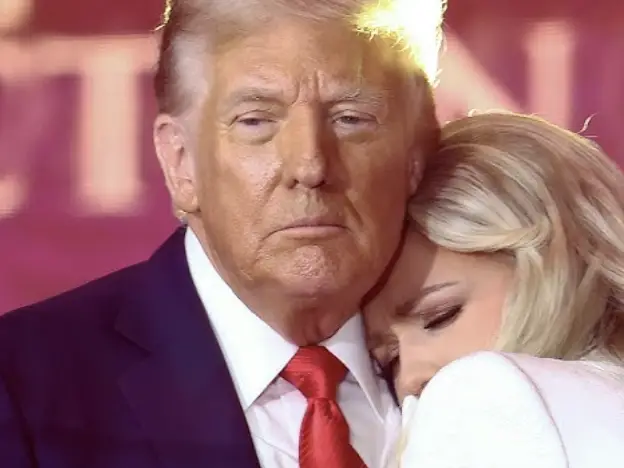
UNILAD and other viral-content publishers said users “unearthed” a “bizarre tie” between Trump and Kirk as “NSFW photos” spread across platforms, a characterization that refers to standard swimsuit images from the pageant season. Livemint, summarizing the same online chatter, noted that Kirk’s Miss USA appearance occurred during Trump’s ownership period. These accounts, which circulated after Trump publicly embraced Erika Kirk during events honoring her late husband, rely on the fact of Trump’s control of the pageant system in 2012 rather than on documentation of direct personal or professional contact between Trump and the then-23-year-old contestant.
The underlying facts are not in dispute. Kirk won the Miss Arizona USA title and appeared at Miss USA 2012 in Las Vegas, a competition that lists her among the state delegates. Trump, for his part, owned the Miss Universe Organization—which included Miss USA and Miss Teen USA—from 1996 until 2015, when he sold it to WME/IMG amid a separate broadcasting fallout. Those ownership details are recorded in contemporary trade coverage and mainstream reports on the sale.
Kirk’s pageant résumé predates her emergence as a prominent conservative influencer alongside Charlie Kirk, whom she married in 2021. Public profiles compiled after Charlie Kirk’s killing earlier this month describe Erika Kirk as a former Miss Arizona USA, an NCAA basketball player, and a ministry entrepreneur before assuming a larger role in Turning Point USA, the youth organization her husband founded. A Fox News backgrounder and a Vanity Fair feature both recount her 2012 state title and subsequent Miss USA participation as documented elements of her early public life. Neither profile reports employment by Trump or by his companies.
What elevated the old visuals this week was timing and context rather than novelty. The imagery that went back into circulation appeared alongside footage of Trump consoling Erika Kirk at large memorial events, spurring questions from online commentators about how far back their acquaintance might run. At the same time, outlets that republished the 2012 photographs acknowledged that her participation in Miss USA is the relevant connective tissue; “Erika’s journey from competing in the Trump-owned Miss USA pageant to leading Turning Point USA” was how one widely shared piece summarized the arc. The insinuations went further on social platforms, but the factual spine remains the year she wore a state sash on a stage Trump controlled.
The Miss USA pageant in which Kirk competed was a high-profile edition remembered chiefly for winner Olivia Culpo’s response to a final-round question about transgender women competing in pageants. Trump, then the pageant’s owner, told Fox News in a live interview afterward that Culpo “gave a great answer,” adding that he had vetted the questions and considered that one “a tough one.” Those comments underscored the degree of his involvement in the product during the period when Kirk was among its state delegates.
Publicly available records of Miss USA 2012 list “Erika Frantzve—Arizona—age 23” among the 51 state entries, along with basic biographical notes then typical of pageant programs. While contestants frequently appeared in promotional and editorial shoots in swimwear as part of Miss USA’s long-standing format—images that are the subject of this week’s reposts—there is no evidence in mainstream coverage from 2012 or in this month’s profiles that Kirk appeared in materials outside the pageant’s standard productions. Contemporary arts and culture coverage of the 2012 broadcast documented the structure of the event and the interview controversy but did not single out Arizona’s delegate.
Kirk’s own remarks from the period, captured in local features while she prepared for the national stage, framed the experience in terms of ambition and service. “I didn’t wear my first pair of heels until I was 14 years old, but I had a really mean lay-up,” she told Arizona Foothills Magazine, which profiled the Scottsdale native as she balanced pageant training with charity work. The profile presented her as a first-time state winner eager to translate pageantry exposure into philanthropic projects.
Online speculation has also folded in claims that Kirk’s pageant experience implies a more personal relationship with Trump than has been reported. Neither the Vanity Fair feature published last week nor Fox News’s detailed biographical piece on Sept. 13 records any employment or advisory position she held with Trump’s companies or political committees. The verified link established by multiple sources is the ownership structure of Miss USA in the year she competed. The 2015 sale of the Miss Universe Organization to WME/IMG, covered by Variety and The Hollywood Reporter, closed Trump’s formal ties to the pageant system three years after Kirk’s Miss USA appearance.
The current wave of postings has tended to describe the 2012 images as “NSFW,” a label that is subjective and often used by publishers to warn of partial nudity or swimwear. In this instance, the republished photos are drawn from public, work-for-hire shoots organized by Miss USA itself for contestant microsites and media kits. UNILAD and similar sites used the “NSFW” tag while directing readers to galleries of pageant content that were already widely distributed during the 2012 season. Livemint’s write-up was more explicit about the context, identifying Trump’s ownership of the organization as the basis for the renewed attention rather than reporting any independent relationship.
Trump’s history with the Miss Universe Organization is well documented. He acquired the pageant company in 1996, operated it through a series of broadcast partnerships, and in September 2015 announced he had bought out NBC’s stake before selling the entire business to WME/IMG the same week. Time, Variety and The Hollywood Reporter each covered the transactions at the time, establishing a clear timeline that places the 2012 Miss USA contest—Culpo’s victory and Kirk’s participation—within Trump’s ownership period.
In parallel, mainstream coverage this month has focused on Erika Kirk’s sudden elevation within Turning Point USA following her husband’s killing, emphasizing her role as a public standard-bearer for the organization’s religious and political message rather than on her pageant history. Vanity Fair’s profile traced her path from state titleholder to podcast host and ministry leader, then to CEO and chair of Turning Point USA after Charlie Kirk’s death. Fox News’s biographical piece likewise concentrated on her statements of faith and family in the wake of the shooting. Those articles serve as a counterpoint to the social-media framing of 2012 material as scandalous; they document a career that moved quickly away from the pageant world.
The 2012 broadcast itself, and Trump’s public remarks about Culpo’s interview answer, offer the clearest window into the practical intersection at issue. In his Fox News interview the morning after the pageant, Trump said he had reviewed and approved the transgender-participation question and praised Culpo’s response as “great.” That exchange, unrelated to Arizona’s delegate, shows how the then-owner engaged with content around the event and helps explain why any contestant from that cycle—including Kirk—would be swept into renewed attention when Trump returns to the center of a news story.
Kirk’s personal background—Catholic schooling, collegiate basketball, a 2012 state crown, and subsequent entrepreneurship—also sits in the public record. The Fox News profile lists her education and ministry ventures and includes images from recent memorial events; Vanity Fair documents her shift into formal leadership at Turning Point USA. That these details are readily available underscores a key point about this week’s “exposed” narrative: the “history” now being flagged as revelatory has long been a matter of public, published fact.
There is no indication in the sources reviewed that Kirk has commented on the resurfaced photographs or on the claim that they reveal a deeper tie to Trump beyond pageant ownership. Her social-media channels in recent weeks have centered on tributes to her husband and pledges to continue his work. Likewise, the accounts that amplified the images have not presented new documentary evidence of private communications or professional engagements between Trump and Kirk in 2012 or afterward. The emphasis is instead on contemporaneous visuals whose existence aligns with the standard promotional rhythms of a pageant season.
The chain of custody for the pageant archives explains their resilience online. Miss USA’s contestant galleries, media-day shoots and broadcast stills were syndicated to local and national outlets in 2012, mirrored on fan sites and scraped by aggregators; images of state titleholders in swimwear and evening gowns have been accessible for years, often divorced from their original captions. When political attention converges on a former contestant—whether because she assumes a high-profile role or appears alongside a sitting president—the rediscovery of those assets is predictable. That appears to be the dynamic at work in this case.
For Trump, the episode adds to a long history of his past pageant holdings intersecting with contemporary politics. His praise of Culpo’s answer in 2012 has been revisited in recent reporting on his statements about transgender participation in sports and public life, illustrating how comments from the pageant era can be reinterpreted through current debates. Business Insider and other outlets have pointed out the contrast between his 2012 tone and his rhetoric during recent campaigns, though those discussions are tangential to the specific question of Kirk’s appearance that year.
In sum, the material newly ricocheting across platforms documents what mainstream sources have long recorded: Erika Kirk was a participant in the 2012 Miss USA competition during Donald Trump’s ownership of the pageant, and the photographs being shared this week are part of the event’s standard promotional output. Profiles of Kirk published this month by major outlets make no claim that she worked for Trump or held any role in his businesses; coverage of Trump’s pageant tenure and the 2015 sale establishes the corporate context in which her Miss USA appearance occurred. The revival of 2012 imagery has generated a short-lived wave of speculation, but the facts trace back to public records and on-the-record reporting from the time.