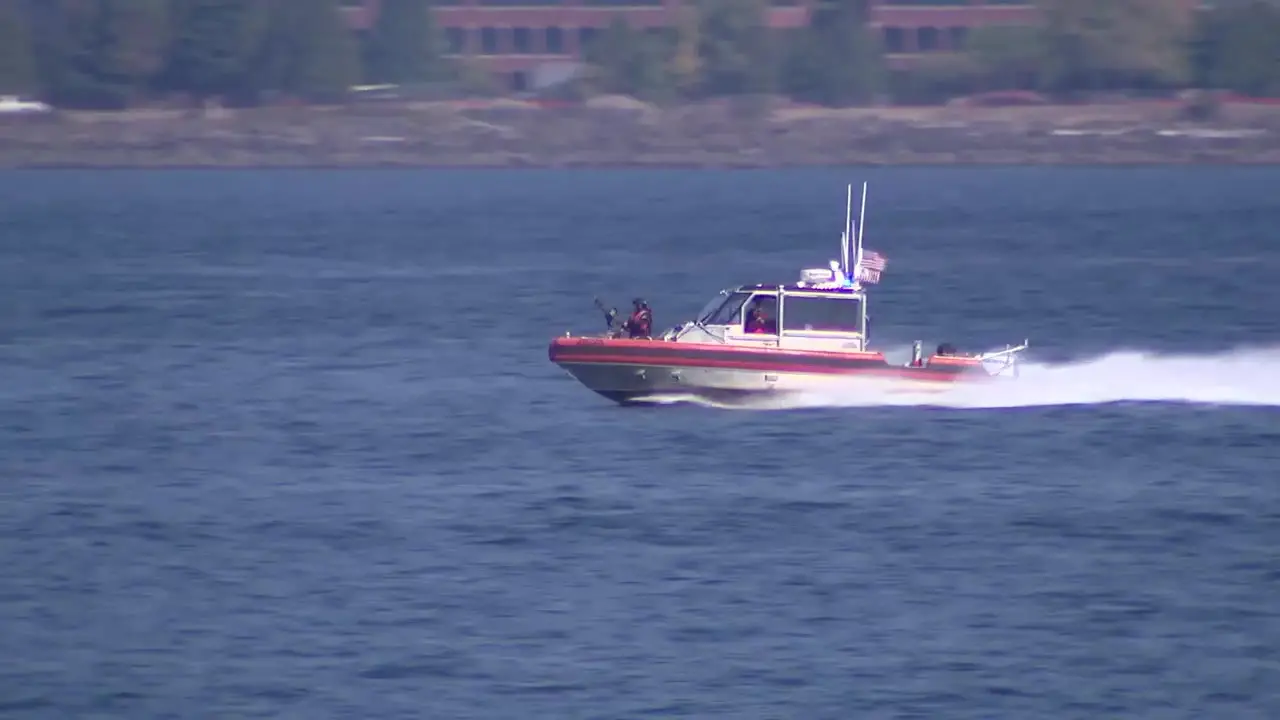
The United States Coast Guard is facing intense scrutiny and political backlash after internal policy documents showed it had reclassified swastikas, nooses and other extremist imagery as “potentially divisive symbols,” prompting widespread fears that the service was downgrading its treatment of some of the most notorious hate icons in modern history. The controversy escalated rapidly on Thursday after a report that the Coast Guard would no longer classify swastikas and nooses as hate symbols, triggering condemnation from members of Congress and Jewish advocacy organisations, before senior officials moved to insist that such symbols remain prohibited and would still be treated as serious misconduct.
At the centre of the dispute is a new Coast Guard harassment and hazing policy due to take effect on 15 December. According to excerpts from the November 2025 policy document, reviewed by multiple outlets, the guidance introduces a new category of “potentially divisive symbols and flags” and explicitly names a noose and a swastika among them. One passage states that “potentially divisive symbols and flags include, but are not limited to, the following: a noose, a swastika, and any symbols or flags co-opted or adopted by hate-based groups as representations of supremacy, racial or religious intolerance, or other bias.” Another section confirms that “the terminology ‘hate incident’ is no longer present in policy,” with conduct previously handled as a potential hate incident now to be recorded as “a report of harassment” where an aggrieved individual is identified.
Those changes mark a clear departure from a February 2023 Coast Guard policy, which had listed “a noose, a swastika, supremacist symbols, Confederate symbols or flags, and anti-Semitic symbols” as examples of imagery whose display “would constitute a potential hate incident” because such symbols had been adopted by hate-based groups as markers of supremacy and bigotry. The shift in language, from explicit “hate incident” classification to the broader and more neutral term “potentially divisive”, has fuelled concerns that the bar is being lowered for how the service recognises and records racist or antisemitic conduct within its ranks.
The Coast Guard is a military service branch that sits under the Department of Homeland Security rather than the Pentagon, but it is regarded as part of the US armed forces and has historically modelled many of its personnel policies on wider defence guidance. The new policy comes in the context of a broader effort by the Trump administration to revisit hazing, bullying and harassment rules across the military, with Defence Secretary Pete Hegseth previously ordering a review of definitions he argued were “overly broad” and damaging to combat readiness and trust. Within the Coast Guard, the new harassment framework also introduces a 45-day deadline for personnel to report incidents, a time limit that critics say could deter reporting, particularly during longer sea deployments, and in practice create impunity for some offenders.

Reaction to the reported policy shift was immediate and fierce. Senator Jacky Rosen of Nevada, a Democrat and one of the few Jewish members of the Senate, said the updated policy “rolls back important protections against bigotry and could allow for horrifically hateful symbols like swastikas and nooses to be inexplicably permitted to be displayed.” She warned that, at a time of rising antisemitism in the United States and globally, relaxing measures intended to counter hate crimes “not only sends the wrong message to the men and women of our Coast Guard, but it puts their safety at risk.”
Representative Rick Larsen of Washington state, the senior Democrat on the House Transportation and Infrastructure Committee, which oversees the Coast Guard, said in response to the report that “lynching is a federal hate crime” and that the debate over such imagery “is over”. “They symbolize hate,” he said, urging the service to reverse course and telling the Coast Guard to “be better.”
Other lawmakers with direct ties to the service voiced similar concerns. Representative Joe Courtney of Connecticut, whose district includes the US Coast Guard Academy in New London and who serves on its Board of Visitors, called the changes “deeply troubling” and said it was “appalling that the Coast Guard is taking this gigantic step backwards and reclassifying nooses and swastikas as ‘potentially divisive,’ as opposed to what they are: hate symbols.” He recalled a 2007 incident in which two hangman’s nooses were found at the academy, noting that the then commandant had flown to the campus to tell cadets that such behaviour had no place in the service.
Jewish advocacy groups also condemned the reported downgrading of the symbols, arguing that the swastika, in particular, is inseparable from its association with the Holocaust, Nazism and white supremacy. The backlash comes at a moment when Jewish organisations have been warning about a surge in antisemitic incidents in the United States, including harassment, vandalism and violent attacks. Against that backdrop, any sign that a federal uniformed service might soften its internal language around explicitly racist iconography has been taken as a worrying signal about institutional tolerance of extremism.
As criticism mounted, officials at both the Coast Guard and the Department of Homeland Security moved to push back against the characterisation that the service was legitimising swastikas or nooses. Tricia McLaughlin, a spokesperson for DHS, accused one major newspaper of publishing “fake crap” in its reporting on the policy.
Admiral Kevin Lunday, the Coast Guard’s acting commandant, issued a statement insisting that “the claims that the U.S. Coast Guard will no longer classify swastikas, nooses or other extremist imagery as prohibited symbols are categorically false.” He said that “these symbols have been and remain prohibited in the Coast Guard per policy” and pledged that “any display, use or promotion of such symbols, as always, will be thoroughly investigated and severely punished.” Lunday added that the service “remains unwavering in its commitment to fostering a safe, respectful and professional workplace” and that symbols such as swastikas, nooses and other racist imagery “violate our core values and are treated with the seriousness they warrant under current policy.”
A Coast Guard spokesperson also said the service disagreed with the characterisation of the new policy but would nonetheless review its language. According to one account of that follow-up, the spokesperson said, “We will be reviewing the language,” after being asked why the new policy no longer explicitly described swastikas and nooses as hate symbols.
Despite those assurances, the underlying text of the November policy has continued to fuel concern among critics because it clearly removes the “hate incident” terminology that had been used to frame such images. One section states: “Conduct previously handled as a potential hate incident, including those involving symbols widely identified with oppression or hatred, is processed as a report of harassment,” reiterating that “the terminology ‘hate incident’ is no longer present in policy.”
Supporters of tougher rules argue that this shift is more than semantic. Classifying a swastika or a noose as central evidence in a “hate incident” makes clear that such symbols are intrinsically tied to racist or antisemitic intimidation. Relegating them to the broader category of “potentially divisive” imagery, they say, risks implying that they are simply one of many sources of disagreement or offence, rather than icons of organised hatred. Critics warn that this could make it harder for affected personnel to come forward, or for commanders to treat such acts with the gravity they deserve, especially given the new time limits on reporting.
Within the ranks, some serving personnel have expressed unease about the message the policy sends. An official who had seen the new wording told one newspaper that the changes were “chilling” and questioned how the service could “deserve the trust of the nation if we’re unclear about the divisiveness of swastikas.”
The dispute has also triggered a wider discussion about the role of extremist symbols in military and paramilitary environments. The swastika, appropriated by Adolf Hitler’s regime in Germany, is widely recognised in the West as the emblem of Nazism and the genocide of six million Jews during the Second World War. The noose, in the US context, is strongly associated with the history of lynching and terror against Black Americans, and Congress only recently codified lynching as a federal hate crime, after decades of failed attempts to pass such legislation.
US armed forces have grappled for years with episodes involving racist imagery, including displays of Confederate flags in barracks, graffiti of swastikas in shared spaces and nooses left as threats against minority service members. Those incidents have prompted successive policy reviews across different branches, as leaders attempted to balance free expression concerns with the need to maintain good order, discipline and equal opportunity in the ranks. The Coast Guard itself has a documented history of dealing with such behaviour, including the 2007 noose incident at its academy cited by Representative Courtney, which led to a high-level intervention from the then commandant.
The latest controversy comes amid wider turbulence at the top of the service. President Donald Trump removed Admiral Linda Fagan, the first woman to lead a US military branch, on his first day in office, criticising what allies described as a focus on diversity initiatives. Her departure was followed by moves to suspend or soften some existing anti-hazing and anti-harassment policies, as the administration sought to reshape the culture of the armed forces under the banner of combating “woke” programmes. Admiral Lunday was nominated to succeed her as commandant and has been overseeing the implementation of the new harassment guidance.
As public criticism intensified on Thursday, the Coast Guard signalled it would issue updated guidance clarifying the treatment of hate symbols. A later statement described as a “new, firmer policy” again stressed that swastikas and nooses are regarded as prohibited hate imagery and that there was no intention to authorise their display. However, questions persist over why the November policy introduced the “potentially divisive” category and removed explicit references to “hate incidents,” and whether those choices will have practical consequences for how cases are recorded and addressed in future.
For now, the episode has placed the Coast Guard in the middle of a broader national argument about how institutions respond to rising extremism and antisemitism, and whether changes in official language signal a deeper shift in priorities. Lawmakers and advocacy groups are pressing for the service to restore unequivocal wording that identifies swastikas, nooses and related symbols as hate imagery, while senior leaders insist their core prohibitions have not changed. How the policy is revised, and how it is applied in practice after it comes into force next month, is likely to be closely watched by serving personnel, civil rights organisations and political leaders alike.