Federal investigators have formally closed their probe into the attempted assassination of Donald Trump at a Pennsylvania campaign rally, concluding that gunman Thomas Matthew Crooks acted entirely alone and leaving the attack without a clear motive more than a year after shots rang out over the crowd. The FBI’s finding, delivered in recent days to Trump and key officials, caps what authorities describe as one of the most extensive inquiries in the bureau’s modern history, but it does little to dispel lingering questions about how and why a 20-year-old from suburban Pittsburgh came to target a former president in front of live television cameras.
The shooting took place on 13 July 2024 at the Butler Farm Show grounds near Butler, Pennsylvania, where Trump, then the Republican Party’s presumptive presidential nominee, was addressing thousands of supporters at an open-air rally. As he spoke from the stage in early evening light, Crooks climbed onto the roof of a nearby building overlooking the venue and opened fire with an AR-15-style rifle. One bullet grazed Trump’s right ear, leaving his face bloodied as Secret Service agents rushed to shield him and pull him from the stage. Other rounds tore into the crowd, killing 50-year-old firefighter Corey Comperatore and critically injuring at least two other attendees.
Within seconds, local tactical officers and a Secret Service counter-sniper team returned fire. A local officer’s shot struck Crooks’s rifle, briefly interrupting the barrage, and a Secret Service sniper fatally shot the gunman seconds later. Emergency vehicles converged on the fairground as Trump was evacuated to safety and shocked spectators were shepherded away from the stands. Authorities quickly labelled the incident an attempted assassination and opened a federal investigation into what they also treated as a potential act of domestic terrorism.
Crooks was identified within hours as a 20-year-old resident of Bethel Park, a community south of Pittsburgh, with no criminal record and what neighbours later described as an unremarkable personal life. He had recently completed a community college course and worked as a dietary aide at a nursing home. Investigators said the rifle used in the attack had originally been purchased legally by his father and later transferred to him. A search of his vehicle and belongings uncovered unused ammunition, additional magazines and an improvised explosive device, adding to fears that the attack could have been even more lethal had he not been stopped when he was.
From the outset, the FBI deployed large numbers of agents, analysts and technical specialists to trace Crooks’s movements, communications and potential accomplices. Investigators seized multiple electronic devices, including phones and computers, and moved to secure his online accounts, ranging from email services hosted abroad to social media and gaming platforms. According to officials briefed on the inquiry, the bureau ultimately reviewed dozens of accounts and hundreds of thousands of digital files. Agents conducted more than a thousand interviews, from family members and classmates to co-workers, neighbours and rally attendees, and followed tips from across the United States and overseas.
Despite the scale of that effort, the bureau has now concluded that Crooks acted on his own and did not coordinate with any foreign government, extremist group or domestic network. Officials say they found no evidence of payments, communication with outside handlers or logistical support that would point to a wider conspiracy. The attack, they say, was planned and executed by a single individual using weapons and equipment he obtained himself. Law enforcement sources have also stressed that Crooks was not on any federal watchlist before the shooting and was not previously known to counter-terrorism investigators.
What remains most troubling to many observers, including some within law enforcement, is that the investigation has not yielded a clear motive. Unlike past high-profile attackers, Crooks left behind no manifesto, no video confession and no definitive statement of intent. Investigators did identify politically tinged and at times anti-government material among his older online activity, including posts indicating disillusionment and anger, but officials say these did not amount to a coherent ideology or a direct explanation for the decision to target Trump at that rally. They have described his writings and searches as fragments that, taken together, still stop short of revealing why he chose that moment and that method.
The absence of a motive has fuelled speculation and suspicion since the first hours after the shooting, particularly in a polarised political climate where major acts of violence are quickly folded into wider narratives of grievance and distrust. The FBI has attempted to address some of those concerns by publicly stating that it accounted for all spent rounds at the scene, that no additional shooters were involved and that technical teams were able to gain access to all significant digital material linked to the gunman, including accounts hosted overseas. Officials have rejected claims that encryption or foreign jurisdictions prevented them from seeing crucial communications.
Even so, the investigation itself has come under scrutiny from some members of Congress involved in parallel oversight efforts. Lawmakers who participated in a House inquiry into the attack have accused the bureau of withholding certain online posts and search histories that they say shed additional light on Crooks’s trajectory in the months and years before the shooting. Some of those posts, according to people familiar with the congressional review, suggested a progression from earlier support for Trump to increasingly hostile rhetoric, including violent fantasies and extremist content. Legislators have complained that these materials were not initially shared with their staff and have accused the bureau of “stonewalling” aspects of their work.
The FBI has pushed back on those accusations, arguing that it provided appropriate briefings while protecting sensitive investigative techniques and the privacy of individuals not accused of a crime. Officials insist that none of the additional digital material uncovered by outside investigators changes their core conclusion: that Crooks acted without co-conspirators and that, while disturbing, his online posts do not establish a clear operational link to any organised group or foreign actor. They acknowledge, however, that the nature and volume of digital footprints in modern cases make questions of what to share, and when, more contentious than in past eras.
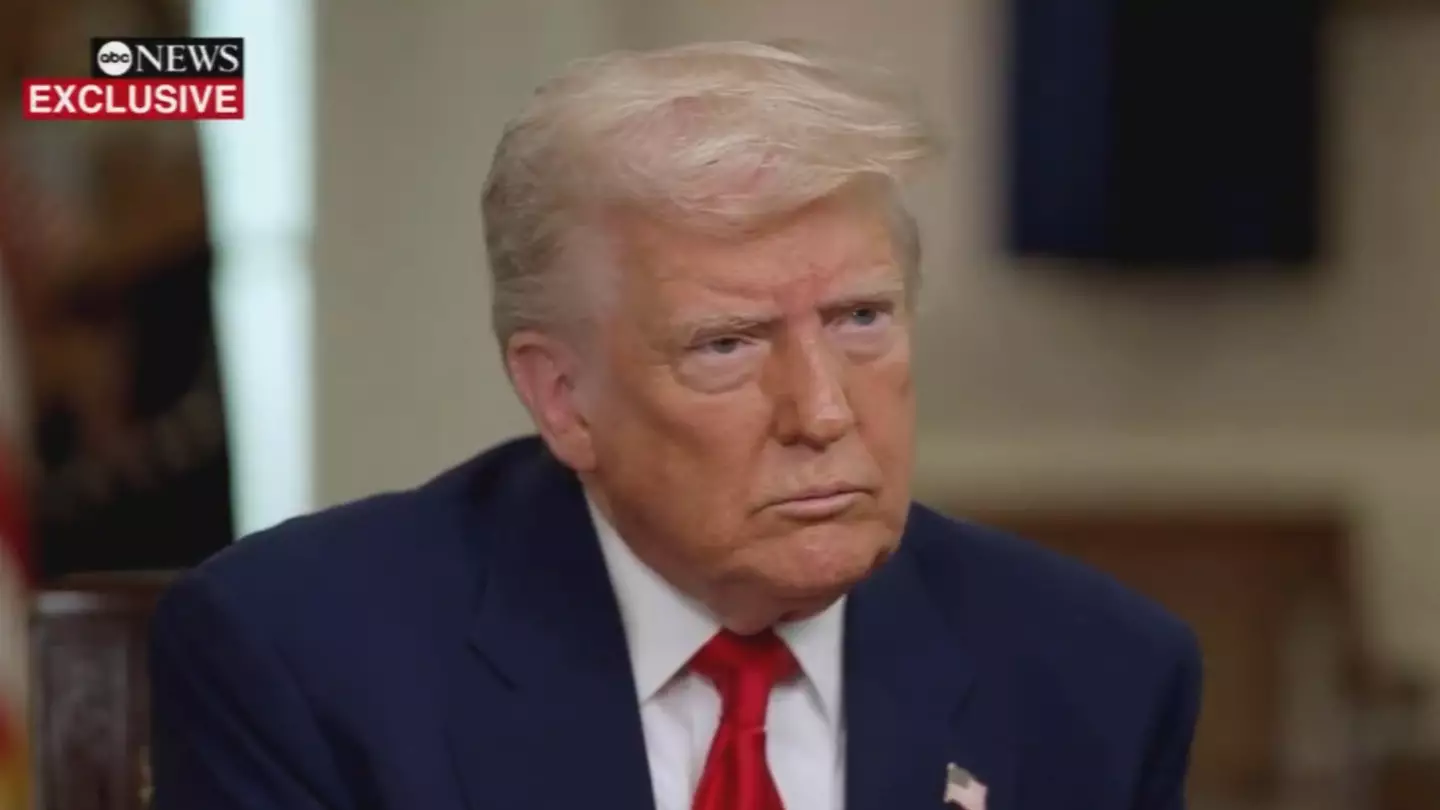
Trump, who returned to the campaign trail within days of the shooting and went on to recapture the White House, has been kept informed of the investigation’s progress as what authorities describe as a victim in the case. People briefed on the latest update say he was told of the lone-gunman conclusion and the lack of evidence for a broader plot. They say he expressed satisfaction that the bureau had ruled out more elaborate theories that had circulated online, even as he and his allies continue to criticise broader aspects of federal law enforcement and security planning around the rally.
For the Secret Service and other protective agencies, the Butler attack has already become a case study in the challenges of securing open-air political events against long-range threats. In the months following the shooting, internal reviews focused on how Crooks was able to climb onto a vantage point overlooking the rally site with a rifle and explosive materials, and whether local and federal teams had adequately monitored nearby structures and potential sightlines. Officials have acknowledged that the gunman was spotted by some members of the crowd before he fired and that calls of concern did not translate into swift enough action to prevent the first shots.
Families of the victims and survivors have also been following the investigation’s outcome closely. Relatives of Comperatore, the volunteer firefighter who died shielding loved ones from the gunfire, have spoken publicly about their grief and their desire for a full accounting not just of Crooks’s actions but of the security decisions that allowed him to get into position. For them, the conclusion that the attacker acted alone may provide some answers, but it does not resolve the question of whether the tragedy could have been prevented.
Experts on domestic extremism say the case illustrates a phenomenon that has become increasingly common in recent years: individuals who may consume a mix of political, conspiratorial or violent content without clearly affiliating with a single group or ideology, and who may give few outward signs of radicalisation before acting. Without a manifesto or explicit claim of responsibility, investigators are left to piece together intent from scattered traces that can be interpreted in multiple ways. That ambiguity makes it harder not only to assign motive after the fact but also to identify and intervene before violence occurs.
With the investigation now declared complete, the FBI has indicated it will not conduct further active inquiries unless new, credible evidence emerges. The agency has characterised the case as a stark reminder of the persistent threat posed by individuals willing to take up arms in highly charged political environments, even in the absence of an organised cell or clear ideological label. Officials say that while they have answered the question of whether Crooks had help, the deeper question of why he fired on a presidential candidate and a crowd of supporters may never be fully resolved.
For now, the official record will show that on a July evening in Pennsylvania a young man climbed onto a rooftop and opened fire, killing one person, wounding several others and narrowly missing his apparent target, before being shot dead himself. After sixteen months of forensic work, digital analysis and witness interviews across multiple countries, investigators say they have found no hidden network or secret sponsor behind him. The attempted assassination of a former president, one of the most intensely examined crimes in recent American history, ends not with the unmasking of a conspiracy but with a portrait of a lone gunman whose ultimate motives remain unknown.