US efforts to advance a negotiated settlement to end Russia’s invasion of Ukraine have stalled after a new round of talks in Moscow concluded without progress, despite hours of closed-door discussions between senior American and Russian officials on 2 December. The meeting, intended to test whether a revised proposal from Washington might create the basis for future negotiations, ended with both sides acknowledging that significant gaps remain.
Yuri Ushakov, President Vladimir Putin’s foreign policy adviser, said the discussions left the two countries “neither further nor closer” to an agreement. He noted that certain elements presented by the US delegation were “more or less acceptable” in Moscow’s view, but said other parts of the language “don’t suit us” and would require additional work. Russian officials described the meeting as constructive and useful, signalling that talks may continue but offering no indication that a breakthrough is imminent.
The attempted diplomatic push comes as the conflict approaches its fourth year. Putin launched what he called a “special military operation” in February 2022, expecting Ukrainian resistance to collapse within days. Instead, it evolved into the largest conflict in Europe since the Second World War, displacing millions of civilians and causing widespread destruction across Ukrainian cities and infrastructure.
The United States has been attempting to broker a peace plan that both Ukraine and Russia could accept, but early drafts circulating in recent weeks faced criticism. A version attributed to advisers close to President Donald Trump included proposed territorial concessions to Moscow — terms that Ukrainian officials have repeatedly ruled out as incompatible with their country’s sovereignty and international law. Trump has since said the leaked outline was not his final proposal.
The core obstacle remains unchanged: Russia seeks to maintain control over occupied Ukrainian territory, while Ukraine rejects any settlement that cedes land or allows Moscow to consolidate gains taken by force. Kyiv has also insisted on credible security guarantees to prevent Russia from using a ceasefire to regroup and launch another offensive.
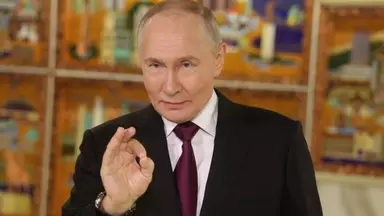
During remarks on the same day as the talks, Putin accused European governments of siding with “war” and obstructing a negotiated settlement. He claimed Europe was preventing the US administration from reaching an agreement over Ukraine, though he did not specify which aspects of Washington’s proposal he believed had been blocked by European partners. His comments were widely interpreted as an attempt to shift blame amid Russia’s continued refusal to retreat from Ukrainian territory.
Putin also insisted that Russia did not intend to go to war with Europe, but added that his country was “ready right now” if European states “suddenly” chose to confront Russia militarily. He said that in such a situation, negotiations could quickly become impossible, presenting Russia’s posture as defensive despite its role as the initiator of the conflict.
In Kyiv, President Volodymyr Zelenskyy said he was awaiting updates from the US delegation following their return from Moscow. He noted that the revised American proposal “looks better,” but emphasised that “work is not over yet.” Zelenskyy restated that any acceptable agreement must prevent Russia from using a peace deal as an opportunity to rebuild military capacity for future attacks.
With both sides publicly entrenching their positions, prospects for a near-term diplomatic breakthrough remain remote. The Moscow talks demonstrated that neither Washington nor Moscow is prepared to abandon negotiations altogether, but the fundamental political and territorial disputes at the heart of the war continue to block the path to peace.