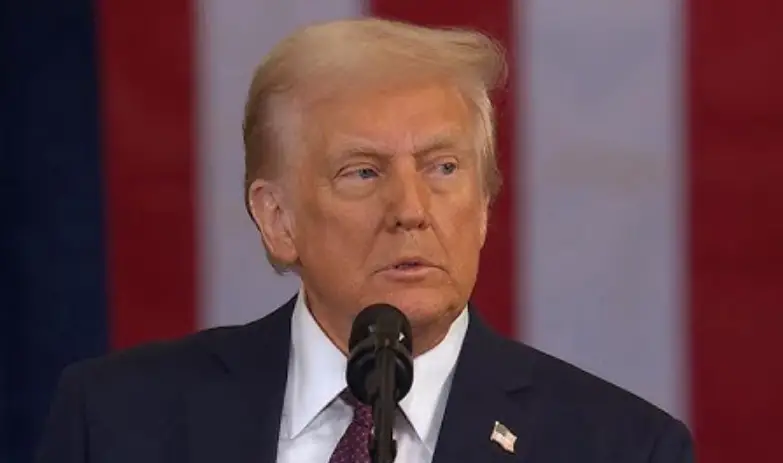
Former President Donald Trump has repeated his pledge to deliver a direct payment of two thousand dollars to millions of Americans, telling supporters that the first wave of payments would be issued in what he described as “mid to late 2026.” The promise, which has circulated widely online and fuelled speculation about immediate financial relief, remains a proposal rather than an authorised government programme. No formal mechanism for distributing the money currently exists, and no federal agency has confirmed a timeline.
The proposed payment is part of what Trump calls a “tariff dividend,” a policy framework that would use revenue from increased tariffs on foreign goods to fund annual cash payments to households. In recent appearances, Trump has argued that raising tariffs on imported items would generate enough additional revenue to finance two-thousand-dollar cheques for what he identifies as “middle-income or moderate-income” Americans. High-income earners would be excluded, although no specific income thresholds or eligibility rules have been formally drafted.
The former president has framed the payment as a way to return money “directly to the American people,” casting it as compensation for the economic effects of global trade practices. Trump has argued that foreign manufacturers benefit disproportionately from access to American consumers and that a nationwide tariff programme could restore what he considers lost economic leverage. He has also portrayed the plan as a counterweight to inflation, asserting that families need immediate financial help after years of rising prices.
Despite the confident tone of Trump’s remarks, the proposal faces significant structural and financial hurdles. While increased tariffs do raise federal revenue, economists and budget analysts note that the amounts collected would be highly unlikely to cover a nationwide programme of two-thousand-dollar cheques each year. For perspective, a single annual payment at that level to most American adults would require hundreds of billions of dollars in funding. Tariff revenue fluctuates widely and depends heavily on economic conditions, import levels and the global trading environment. Analysts estimate that even steep tariff increases would fall short of raising the necessary amount without causing major disruptions to consumer prices.
In addition to revenue gaps, there is no legal framework currently in place to issue the payments. Congress would need to pass authorising legislation setting eligibility rules, appropriations and administrative procedures. Without such a measure, neither the Treasury Department nor the Internal Revenue Service has the authority to process or distribute payments. No draft legislation has been introduced, no committees have scheduled hearings and no budget office analysis has been conducted. As a result, the timeline Trump cited appears aspirational and dependent on future political developments.
While Trump’s remarks have ignited intense public interest, including widespread social-media discussion and speculation that checks were imminent, officials familiar with federal budgeting processes have cautioned that no payments are scheduled. Government agencies do not begin preparation for mass disbursements until Congress has enacted a legally binding framework. In recent history, similar direct-payment programmes — such as emergency relief checks during the pandemic — required large bipartisan bills, extensive administrative planning and weeks of logistical preparation before reaching households.
Trump has continued to promote the idea as a core part of his economic agenda, arguing that the payments would ease financial pressure on families, stimulate consumer spending and “reward people who work and contribute.” Supporters contend that returning tariff revenue directly to households is more visible and politically popular than using it for general government spending. Critics counter that tariffs often translate into higher prices on essential goods, and that consumers could end up paying more through increased costs than they would receive through a one-time or annual payment.
Policy experts also note that the structure of the plan remains ambiguous. It is not clear whether every eligible adult would receive the same amount, whether the payment would recur annually, or whether it would adjust based on income. Trump has said the amount would be “at least” two thousand dollars, suggesting that the payment could increase in future years if tariff revenues expand. Without formal budget projections, however, there is no clear indication of long-term sustainability.
Despite these uncertainties, Trump’s remarks have resonated with many Americans facing persistent financial strain. Rising housing costs, groceries, energy bills and borrowing expenses have heightened interest in any form of direct economic relief. The large-scale engagement on social platforms following Trump’s statements reflects a high level of public demand for clear information about potential payments. Much of the online discussion has revolved around the mistaken belief that checks are scheduled to arrive soon, prompting financial advisers and public-policy analysts to clarify that no such disbursement is imminent.
For now, the two-thousand-dollar payment remains a political promise tied to a proposed tariff overhaul rather than a confirmed government benefit. To become reality, it would require an extensive legislative process, detailed budget work, interagency coordination and months of implementation planning. Until those steps occur, federal agencies cannot issue or schedule any payments.
In the absence of a formalised framework, Americans should treat Trump’s timeline as a projection rather than a guarantee. Whether the proposal advances will depend on political negotiations, legislative priorities and economic conditions over the next year. As it stands, there is no official payment date, no approved distribution plan and no administrative preparations underway. Trump’s announcement has set expectations, but the path to delivering on the promise remains complex, uncertain and subject to significant policy debate.