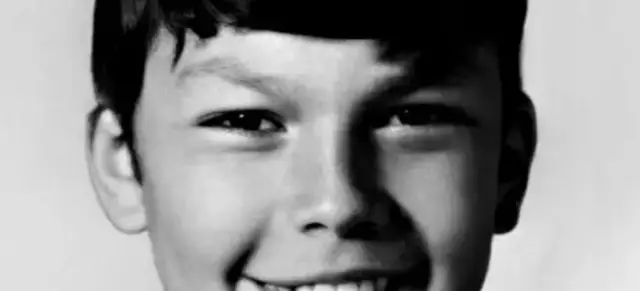
A photograph circulating widely on social media has sparked confusion and alarm after being presented as an image of serial killer Richard Ramirez as a young child. The photo, which shows a smiling boy in a formal portrait, has been shared under headlines claiming he later became the man known as the “Night Stalker.”
The image first resurfaced on a viral entertainment site that specialises in before-and-after comparisons of celebrities and criminals. The accompanying text describes the boy as having endured a traumatic and violent upbringing, suggesting that the circumstances of his childhood shaped him into one of America’s most notorious killers. While some elements of that narrative reflect documented aspects of Ramirez’s early life.
Ramirez’s childhood is broadly understood through court records, interviews, and biographical accounts. Born in 1960 in El Paso, Texas, he grew up in a household marked by physical violence, instability and early exposure to inappropriate and traumatic material. He spent significant time with an older cousin, a former soldier who reportedly recounted graphic stories of violence witnessed during military service. Ramirez also suffered from head injuries and developed behavioural issues that escalated throughout his adolescence. These details are widely accepted by criminologists and appear consistently across reputable sources.
What is not supported is the authenticity of the widely shared childhood image. The photo does not appear in any documentary profiles, investigative archives or reliable biographical material on Ramirez. It has never been confirmed by surviving family members, journalists who covered his trial, or law-enforcement officials who released other images of him as an adult. No chain of verification has been provided by the site that originally published the photo, and it appears to have been circulating online for years without attribution.
Despite the lack of evidence, the image has triggered extensive discussion among social-media users, many of whom have speculated about the transformation from an innocent-looking child to a convicted serial killer. Some commenters have interpreted the photo through the lens of Ramirez’s troubled background, while others have warned against assuming that a single photograph can meaningfully explain or predict future criminal behaviour. Mental-health professionals consistently caution that trauma may increase risk but is not deterministic, and that the vast majority of individuals who experience childhood abuse do not go on to commit violent crimes.
The renewed interest in Ramirez’s early years comes as true-crime content continues to dominate online platforms, often blending verified information with unconfirmed or sensationalised material. Experts warn that the spread of unverified images can distort public understanding of criminal cases and risk misidentifying individuals who have no connection to the crimes being discussed.
At present, there is no conclusive evidence linking the childhood photograph to Richard Ramirez. While his difficult upbringing is well documented, the viral image remains unconfirmed and should be regarded as unverified. If authenticated childhood photos of Ramirez do exist, they have not been made public through recognised journalistic or official channels, and the image now circulating online does not match any confirmed archival material.