The latest confrontation between President Donald Trump and a member of the White House press corps unfolded during what was meant to be a routine roundtable on agriculture and national security, and quickly became a flashpoint in the growing controversy over a US drone strike that critics say may have violated the laws of war. As ABC News senior congressional correspondent Rachel Scott pressed Trump over his role in promoting disputed footage of a deadly strike on a Venezuelan boat, the president cut her off and branded her, in front of cameras and colleagues, “the most obnoxious reporter in the whole place,” according to video of the exchange and subsequent reports.
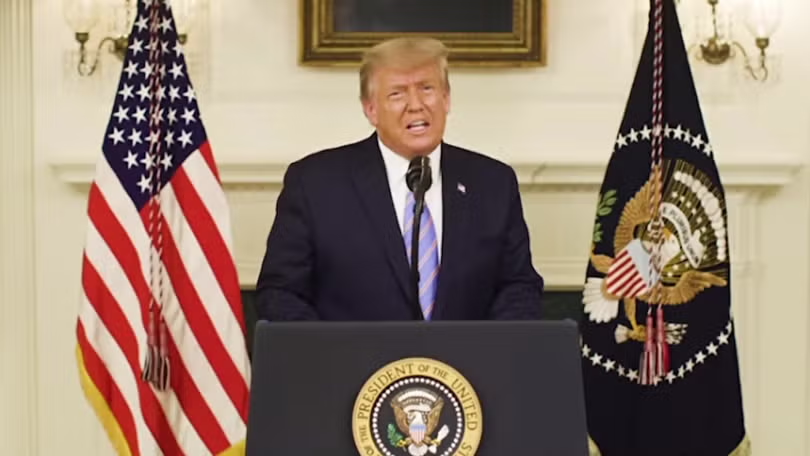
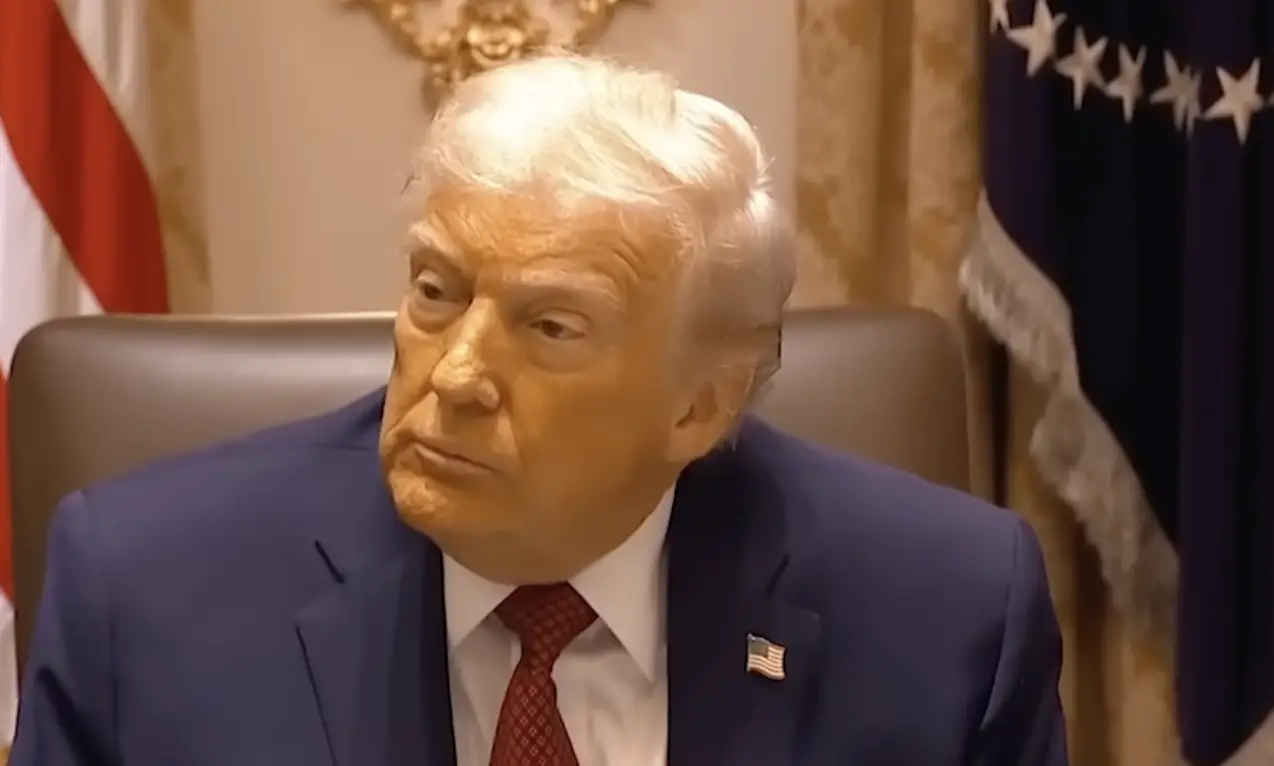
The exchange took place on Monday 8 December in the Roosevelt Room of the White House, where Trump was seated at a long table flanked by administration officials and invited guests. At the top of the meeting, he delivered prepared remarks on farm policy and border security. When reporters were allowed to ask questions, Scott focused on a subject that has placed the administration and the Pentagon under intense scrutiny: a February US drone operation against a small vessel in the Caribbean that American officials initially described as a strike on a suspected drug smuggling boat crewed by Venezuelan nationals.
Earlier this month, Trump had posted on social media a declassified video clip from that operation and presented it as proof that the mission was “perfect” and justified. The footage, which showed an initial strike on the vessel, was quickly challenged by legal experts and human rights advocates who pointed out that it appeared to omit a second strike that reportedly hit survivors who had jumped or fallen into the water. US defence officials have since acknowledged that there was a follow up strike after personnel were seen in the sea, and have opened an internal investigation into whether the engagement complied with the rules of engagement and international humanitarian law.
Scott’s questions on Monday centred on that missing second strike and on Trump’s own decision to amplify the edited video. According to footage of the encounter, she began by asking whether the president would apologise for sharing material that did not show the full sequence of events and whether he would support the release of the complete video, including the second strike, so that the public could judge for itself. Trump responded by insisting that the clip he had posted was “declassified” and accusing Scott of ignoring that point. When she tried to restate her question, he leaned forward and told her that she was “the most obnoxious reporter in the whole place,” before moving on to another journalist.
Scott continued to try to press the issue, asking again whether he would commit to releasing the full video and whether he accepted any responsibility if the second strike was ultimately found to be unlawful. Trump did not directly answer those questions. Instead, he repeated that the video had been declassified and suggested that any further release was up to the Pentagon. He then signalled for another question, effectively shutting down the line of inquiry.
The clash captures the intersection of two running themes of Trump’s presidency and post presidency: his combative relationship with the press, particularly female journalists of colour, and the growing fallout from the boat strike, which some legal scholars and advocacy groups have already described as a possible war crime. Under international law, attacking shipwrecked survivors is generally prohibited, and critics argue that the reported second strike against people in the water would be difficult to reconcile with those rules. US officials have said the incident is under active review and have not publicly detailed their legal assessment.
Scott is one of ABC News’ most prominent political reporters and has become a familiar figure in the Capitol and at the White House. A graduate of Howard University, she joined the network in 2016 and has covered the Trump and Biden administrations, the 2020 and 2024 presidential campaigns, and major policy debates on Capitol Hill. She has also interviewed Trump before. At a National Association of Black Journalists event in Chicago in 2024, she questioned him about his record on race and his past comments about Black communities, prompting him to describe her tone as “nasty,” according to accounts of that panel.
The president’s latest remarks therefore land against a backdrop of repeated run ins with female reporters. In recent weeks he has come under criticism for calling a Bloomberg journalist “quiet, piggy” when she attempted to ask about the release of files related to the Jeffrey Epstein case, and for attacking CNN’s chief White House correspondent Kaitlan Collins as “stupid and nasty” in a social media post after she questioned him about the cost of a planned White House ballroom renovation and his posture toward Venezuela.
Those incidents were themselves part of a longer pattern stretching back to his first term, when he repeatedly derided female journalists as “nasty,” “stupid” or “losers.” Press freedom groups and journalism organisations have accused him of singling out women, and particularly Black women, in ways that go beyond his already adversarial stance toward the media. In 2018, for example, he told CNN’s Abby Phillip that she asked “a lot of stupid questions” and clashed with Yamiche Alcindor and April Ryan, prompting public statements of concern from groups representing Black journalists.
The confrontation with Scott on Monday has drawn renewed attention because of the stakes attached to the underlying policy issue. The February strike on the Venezuelan boat took place in an area of the Caribbean that US officials say has become a corridor for drug trafficking. According to military briefings cited in earlier reporting, an American drone tracked the small vessel before launching a precision guided weapon that destroyed it. When several figures were later seen in the water, a second strike was ordered. At least a dozen people were killed in total, and Venezuelan officials have demanded a full accounting from Washington.
Initially, US officials framed the operation as a decisive blow against suspected traffickers. That narrative began to unravel as survivors’ relatives and independent analysts questioned whether everyone on board was in fact involved in smuggling, and whether the second strike could be justified as a legitimate act of self defence rather than an unlawful attack on shipwrecked individuals. The partial video Trump shared was meant to bolster the administration’s case, yet critics argue that by omitting the second strike it instead underscored the lack of transparency around the decision making that night.

In that context, Scott’s question cut to the heart of the controversy: whether the commander in chief, who had chosen to publicly champion the edited footage, would acknowledge that the public deserved to see the full record and that any mistakes should be confronted openly. Her choice to raise the matter in a setting devoted to domestic policy highlighted how the scandal has bled into nearly every aspect of the administration’s agenda. For journalists who cover the presidency, it also raised familiar concerns about whether aggressive questioning, particularly by women and journalists of colour, risks being met with personal insult rather than substantive answers.
Trump’s allies have often defended his confrontational style as a response to what they describe as unfair or hostile coverage. In the aftermath of the latest episode, some supporters claimed on social media that Scott had been disrespectful in her tone and that the president was justified in pushing back. One pro Trump Facebook page accused her of having “verbally lunged” at the president without even greeting him, language that mirrors earlier defences of his behaviour toward the press.
Press advocates and many of Scott’s colleagues see it differently. They argue that the role of a reporter in such settings is precisely to pose uncomfortable questions, especially on matters that involve potential violations of international law. They note that Scott’s inquiries were directly tied to Trump’s own public statements about the strike and that she repeatedly tried to focus him on whether he accepted responsibility for sharing incomplete information. For them, the president’s decision to resort to a personal insult rather than engage on the substance illustrates a broader effort to intimidate journalists and discourage probing scrutiny.
The Pentagon investigation into the boat strike is continuing. Officials have not indicated when it will conclude or whether the findings will be made public in full. Lawmakers from both parties have requested briefings, and some have signalled that they may push for an independent inquiry if they are not satisfied with the Defence Department’s internal review. Human rights organisations are monitoring the process closely, arguing that the outcome will be an important test of Washington’s stated commitment to the laws of armed conflict.
In the meantime, Trump has shown little sign of moderating his language. His social media feeds in recent weeks have included fresh attacks on news organisations and specific reporters, often singling out women by name. On one day in November, he used terms like “ugly,” “stupid” and “piggy” to describe female journalists who had questioned him on topics ranging from foreign policy to domestic spending, according to a summary of his comments.
For Rachel Scott, the latest encounter appears unlikely to change her approach. She returned to Capitol Hill the next day to continue covering the unfolding debate over the drone strike, interviewing members of Congress who are demanding more information about the rules that governed the operation and the chain of command that led to the second strike. Colleagues at ABC and across the press corps have privately praised her persistence, and viewers on social media have shared clips of the exchange as an example, in their view, of a journalist refusing to back down.
The longer term implications of the clash may depend on how both the investigation and the political debate develop. If the Pentagon were to determine that the second strike violated the laws of war, questions about who authorised it and who promoted selective footage are likely to intensify. Trump’s decision to attack a reporter for asking about those issues could then be seen as an early attempt to shift attention away from his own role in shaping the public narrative. If, on the other hand, officials conclude that the operation complied with the law, his supporters are likely to argue that the criticism was overblown and that the president was justified in expressing frustration with what he sees as hostile questioning.
What is already clear is that the relationship between Trump and the journalists who cover him remains deeply fraught. Episodes like the one involving Rachel Scott reinforce anxieties within the press corps about safety, access and the willingness of those in power to respect the basic norms of democratic accountability. For many observers, the scene in the Roosevelt Room, with a president brushing aside questions about a deadly military operation and disparaging the journalist who posed them, encapsulated those tensions in stark form. Whether it proves to be a turning point in the public reckoning over the boat strike, or simply another entry in a long list of presidential attacks on the media, it has already added a new chapter to the uneasy history between Donald Trump and the women who insist on asking him difficult questions.