Elon Musk has sketched out how he believes he would rebuild his fortune if he somehow found himself with just 1,000 dollars to his name, telling a recent podcast that the scenario would only be possible either in the wake of civilisational collapse or in a world where his existing reputation meant he could quickly attract investors. His remarks, made during an appearance on The Katie Miller Podcast and amplified in clips shared across social media, have prompted another round of debate about how far the billionaire entrepreneur sees his own success as the product of individual effort rather than circumstance.
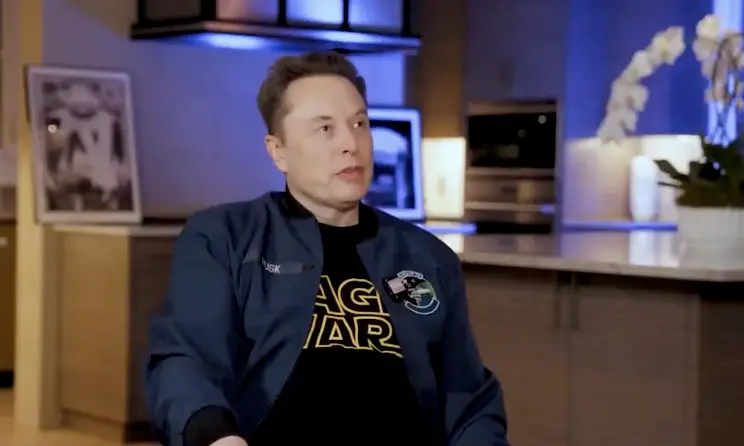
In the interview, recorded in late 2025, host Katie Miller asked the Tesla and SpaceX chief what he would do if he were forced to start again in business with only 1,000 dollars. The question is a staple of motivational interviews, usually inviting guests to outline a step by step path that ordinary listeners might follow. Musk responded by challenging the premise, arguing that in his case the hypothetical depends on how such a reversal had happened.
He prefaced his answer by calling the situation “somewhat of an impossible dichotomy”, a phrase that set the tone for what followed. Musk said that for him personally to be reduced to such limited means, something far larger than a run of bad luck would almost certainly have occurred. In one scenario, as he described it, the wider world would still be functioning normally but all of his companies and assets would somehow be taken away. In the other, society itself would have been devastated to the point where existing wealth no longer held the same meaning.
Musk told Miller that if civilisation had been shattered to that degree, the idea that 1,000 dollars could provide a way back was unrealistic. In a passage that quickly circulated in clips on X and Facebook, he suggested that the level of disaster needed to wipe out his businesses would have to be “Armageddon” or “Ragnarok next level”. In those conditions, he said, “1,000 dollars is not going to solve your problems”.
He then turned to the alternative: a world in which his track record and knowledge remained, but his current holdings did not. In that case, he argued, the key asset would not be the 1,000 dollars but his ability to persuade investors to back a new venture. Musk said that if he still possessed his present level of experience and credibility, he believed it would be straightforward to convince people with capital to fund him in exchange for a share of future returns. Rather than painstakingly growing a business from a tiny initial stake, he pictured raising significantly more money almost immediately.
He expanded on that idea by stressing that he would frame the pitch in a way that minimised risk for backers. According to the transcript of the conversation, Musk said he would promise investors a high probability “multiple on capital” within a fixed period, effectively turning his own labour and expertise into the collateral for the deal. The 1,000 dollars in the thought experiment, he suggested, would be almost incidental compared with the value of the reputation he has built while running several global companies.
The podcast segment sat alongside a broader discussion of social media, business and human behaviour. At another point in the conversation, Musk was asked about the explosion of short form video platforms. He replied that he regarded much of that content as psychologically unhealthy, warning that it was “rotting people’s brains” and comparing it to junk food that should be consumed sparingly, if at all.
Musk also talked about what motivates him personally. Asked to name a song that helps him push through difficult moments, he picked “The Final Countdown” by the Swedish band Europe, a choice he said had been with him since his youth. The comments were delivered in the casual style typical of podcast appearances, but the section about starting over with 1,000 dollars was quickly clipped and shared by accounts that routinely highlight his most headline friendly remarks.
On X, video snippets of Musk describing the hypothetical were posted with captions portraying his answer as quintessentially in keeping with his public persona. Some users praised what they saw as a realistic response, arguing that the success of a figure in his position is now bound up with networks of capital, manufacturing and talent that cannot easily be recreated from scratch. Others criticised the answer as evasive, suggesting that many people who look to wealthy business leaders for guidance would have preferred concrete advice about small scale entrepreneurship rather than a theoretical discussion of civilisation level risk.
Underneath a Facebook post from technology outlet UNILAD Tech that promoted the story with a photograph of Musk superimposed with the question, commenters voiced similar divisions. Some respondents joked about the idea that he had ever faced hardship, while others referenced long running online claims that his family once held a stake in an emerald mine in southern Africa. Those commenters argued that the scenario of starting with 1,000 dollars did not square with what they saw as an already privileged background.
The emerald mine narrative has circulated online for several years, drawing on accounts given by Musk’s father, Errol, who has said he part owned a Zambian emerald operation during the 1980s. Musk has repeatedly rejected the idea that this translated into a straightforwardly wealthy upbringing or that family money underwrote his later ventures, writing on X in 2019 that he “worked [his] way through college” and ended up in significant student debt. The podcast exchange did not revisit those disputes directly, but the reactions to the clip showed that questions about his starting point still shape how many people interpret his views on wealth and opportunity.
Musk’s own account of his rise, as described in previous interviews and biographies, emphasises a sequence of high risk moves through the technology sector. After leaving South Africa and studying in Canada and the United States, he co founded the online city guide Zip2 in the mid 1990s, then helped launch the online payments company X.com, which later evolved into PayPal. He ploughed much of the proceeds from the sale of those companies into two new ventures in the early 2000s, founding the rocket company SpaceX and investing heavily in the electric car maker that became Tesla. Both firms survived periods of acute financial strain, with Musk saying in earlier interviews that he came close to losing everything during the 2008 financial crisis.
In the years since, he has become one of the richest individuals in the world, presiding over a portfolio that ranges from SpaceX and Tesla to brain interface company Neuralink and tunnel construction outfit The Boring Company. In 2022 he acquired the social media platform then known as Twitter, rebranding it as X and installing himself as its owner and leading public figure. Supporters often point to that trajectory as evidence of exceptional entrepreneurial talent, while critics argue that his success reflects the concentration of capital and attention in the modern technology economy.
The Katie Miller Podcast appearance tapped directly into that wider argument. By characterising the 1,000 dollar scenario as either apocalyptic or irrelevant to someone with his present standing, Musk effectively suggested that there is no simple formula by which his path can be retraced from a modest starting point. In his telling, the skills and reputation that now define him are inseparable from the decades of work that have already happened, and the web of relationships with investors and institutions that grew around his companies.
For those listening in search of practical guidance, the message was that the world is divided between ordinary people trying to build small businesses and a tiny number of figures whose names alone can move markets. Musk did not set out step by step instructions for what a struggling entrepreneur should do with 1,000 dollars of savings. Instead, he offered an analysis of why someone in his position would never realistically find themselves weighing up whether to buy tools, rent an office or start trading from a spare room.
That distinction has fed into the ongoing conversation about how advice from the world’s wealthiest should be interpreted. Motivational rhetoric often frames success as a matter of mindset and hustle that can be reproduced by anyone who follows the right steps. Musk’s comments, though delivered with his characteristic flourish and references to mythic catastrophe, implied that context and timing are at least as important as individual effort. The very fact that he could see himself raising millions on the basis of a track record built under specific historical conditions illustrates how far removed his options are from those available to most people.
Yet the enduring fascination with his views shows little sign of fading. Each new interview or podcast appearance that touches on money, risk or the future is sliced into shareable clips, captioned and debated across platforms where his supporters and detractors rarely persuade one another. In this case, a single question about what he would do with 1,000 dollars has opened another window onto the way Musk sees the world: either on the brink of collapse, in which old rules no longer apply, or functioning well enough that his access to capital would again be assured.
For now, the thought experiment remains just that. Musk continues to occupy a position at the very top of the global technology industry, with valuations for his companies and his own net worth fluctuating with markets but still dwarfing the hypothetical 1,000 dollars at the heart of the question. What his latest comments underline is that when he imagines starting over, he does not picture himself selling goods at a local market stall or quietly building a small online shop. Instead, he imagines a world in which his name, experience and connections remain his most valuable assets, and in which the route back to influence runs through the same high stakes networks of investment and innovation that put him in the spotlight in the first place.