Sharon Osbourne has described in harrowing detail the final hours of her husband Ozzy Osbourne’s life, revealing the rocker’s last words to her and the regrets that have weighed on her since his sudden death in July. Speaking in her first broadcast interview since the Black Sabbath frontman died aged 76, she set out a precise timeline of his final night at home, the moment she realised he had gone and the powerful sense that he had been preparing for death in the weeks beforehand.
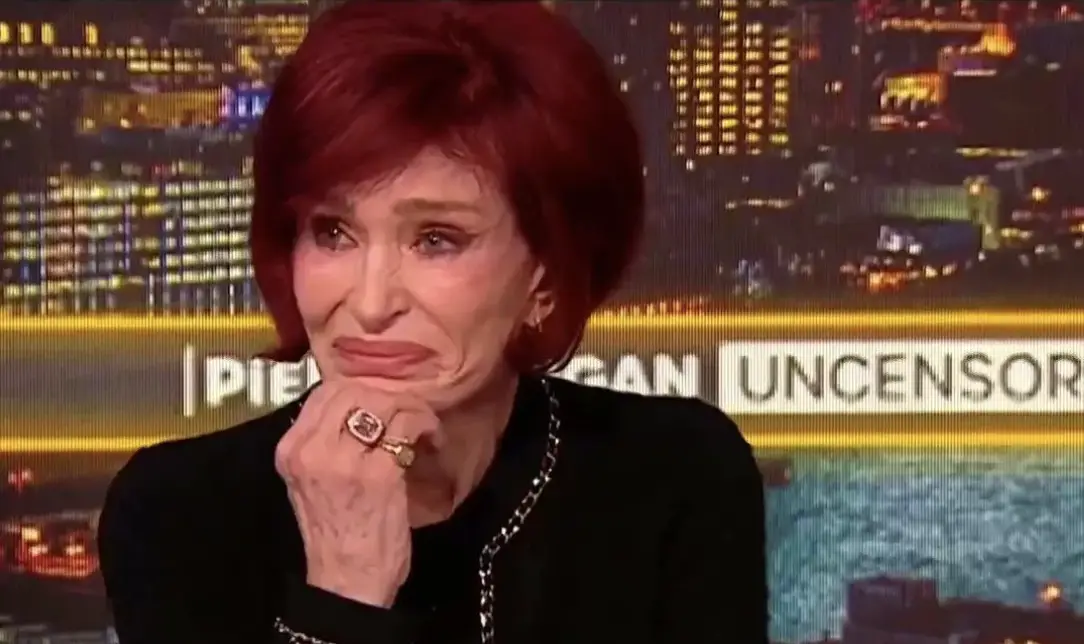
In the interview, recorded for Piers Morgan Uncensored, Sharon said Ozzy had been restless throughout the night of 21 to 22 July, repeatedly getting out of bed to go to the bathroom. At around 4.30 in the morning he woke her fully, telling her, “Wake up.” She replied that she was already awake, and then, she recalled, he asked her for a kiss before telling her, “Hug me tight.” Those brief lines, which she has now publicly repeated, were the last words he spoke to her directly.
A few hours later the household fell into chaos. Ozzy went downstairs to undertake the light daily workout that had become part of his routine even as his health deteriorated. Around 20 minutes after he left their bedroom Sharon heard shouting from elsewhere in the house. She said she ran downstairs and found attempts already under way to resuscitate her husband, who had gone into cardiac arrest. Medics tried to revive him at home and then in hospital after he was airlifted by helicopter, but Sharon said she “knew instantly” that he was gone and pleaded for attempts to be stopped.
The official cause of death later confirmed the severity of what had happened. According to his death certificate, Ozzy Osbourne died of out of hospital cardiac arrest and acute myocardial infarction, with coronary artery disease and Parkinson’s disease with autonomic dysfunction listed as joint causes. He died on 22 July at the age of 76 after paramedics were called to the family’s home in Buckinghamshire and he was flown to hospital.
Sharon told the programme that although the heart attack was sudden, her husband had been seriously ill throughout the year and was aware that his health problems were reaching a critical stage. She said he had told her he was “ready” for death and had been unsettled by a series of recurring dreams. In these dreams, which she recounted in detail, Ozzy saw “all different people” he did not recognise, standing silently and looking at him as he walked among them. Sharon interpreted the recurring visions as evidence that he sensed his life was nearing its end and said simply, “He knew. He was ready.”
Those comments come after a long and public struggle with illness. Ozzy revealed in 2020 that he had been diagnosed with a form of Parkinson’s disease, explaining in a US television interview that the condition had been discovered after he suffered a fall and underwent neck surgery that “screwed all my nerves.” Sharon, appearing alongside him at the time, described it as “PRKN 2” and stressed that while it was not a death sentence, it left him with unpredictable good and bad days.
In the years that followed he endured repeated health setbacks. The singer faced spinal surgery, infections and mobility issues that often left him unable to walk unaided. Despite this he continued to talk about returning to the stage and eventually agreed to a large-scale farewell event that would become both a benefit concert and his final live performance. The show, titled Back to the Beginning, took place at Villa Park in Birmingham on 5 July and reunited the original Black Sabbath line up for the first time in two decades, drawing a crowd of around 45,000 and raising millions of pounds for children’s and Parkinson’s charities.

Sharon told Piers Morgan that Ozzy’s medical team in Britain had warned strongly against the performance. She recalled one senior doctor telling him, “If you do this show, that’s it. You’re not going to get through it.” She said her husband understood the risk yet insisted on going ahead, determined to deliver a final thank you to fans who had supported him for more than half a century.
According to Sharon, the concert left an extraordinary impact on his mood. She said that in the days after the Villa Park show Ozzy was transformed, describing each day as like “sunshine” and repeatedly expressing amazement at the affection shown to him. She recalled him poring over press coverage and telling her, “I never knew so many people liked me,” adding that he was “so happy, so, so happy” and “happier than we’d seen him in seven years.”
The interview also laid bare the depth of Sharon’s own grief and remorse. Married to Ozzy for more than four decades and long serving as his manager, she said that after his death she was overwhelmed by “fear and regret” and found herself unable to function. She spoke of replaying his final hours in her mind and wondering whether she could have altered the outcome if she had acted differently when he woke her before dawn. “If only I’d have told him I loved him more,” she said. “If only I’d have held him tighter.”
Sharon’s account also confirms that Ozzy spent his last morning following a routine that, on the surface, looked ordinary. The image of the veteran musician heading downstairs to exercise, even after a night of disturbed sleep, underlines how determined he remained to maintain aspects of daily life despite mounting illness. Within minutes the situation had changed irreversibly. Sharon said she heard screams and found efforts already under way to revive him, an experience that has left her with lasting trauma as well as sorrow.
In the months since his death the family have taken part in public tributes that underline Ozzy’s status as one of Britain’s most influential rock figures. A major memorial service was held in Birmingham, the city where Black Sabbath formed in 1968, and fans lined the streets as his coffin was carried through. Local leaders have recognised his cultural contribution with civic honours, including the Lord Mayor’s Award in Birmingham which was presented posthumously, and the earlier decision to grant Black Sabbath the freedom of the city.
Sharon used the interview to place those tributes in the context of her husband’s complicated sense of self. She said he knew he was famous yet seemed surprised by the depth of warmth shown to him following the Villa Park show and, later, after his death. According to her, he marvelled at the scale of the reaction and the affection expressed by fans who had followed him from his early days in Black Sabbath through a solo career, reality television fame and, eventually, a long public battle with illness.
The couple’s children have also spoken publicly about the shock of losing him so soon after what appeared to be a triumphant final performance. In a separate television appearance, their son Jack described his father’s decision to headline the Back to the Beginning concert as “the ultimate mic drop,” saying he had done “a massive, big gig” then “was like, ‘Alright, I’m done.’” Jack said the family had known Ozzy was sick for some time but had not expected his death to come so quickly.
Ozzy’s death certificate and Sharon’s description of his final months together provide a stark picture of the pressures he faced. Parkinson’s disease with autonomic dysfunction can affect blood pressure, heart rate and other automatic functions of the body, compounding the danger posed by coronary artery disease. The out of hospital cardiac arrest that killed him occurred less than three weeks after he spent hours performing at a stadium benefit, seated on a throne because he could no longer stand unaided but still determined to sing.
Sharon’s decision to recount his last words and the details of that final night brings rare insight into how the couple navigated those pressures behind closed doors. Her description of a man who was physically frail yet emotionally resolute, experiencing strange dreams and telling his wife he was ready, sits alongside her memories of a husband who was thrilled to discover the scale of public affection and who took satisfaction from leaving the stage on his own terms.
For fans, the new interview adds another layer to the story of Ozzy Osbourne’s final year. It links the public scenes at Villa Park, where fireworks lit up the sky as he closed the chapter on a five decade career, with the private moments in his bedroom hours before his death. It shows a family trying to reconcile medical warnings and deteriorating health with a musician’s determination to perform, and a wife grappling with the question of whether anything she might have done differently would have changed the outcome.
Sharon concluded that despite her regrets she believes her husband died in a way that, for him, made sense. He had delivered a final performance in his home city, raised money for causes linked to children and Parkinson’s research and lived long enough to see the global response to that farewell. In her telling, his final request in the early hours of the morning he died was simple affection, a kiss and a tight embrace, followed by a last walk downstairs to start an ordinary day that would end his extraordinary life.