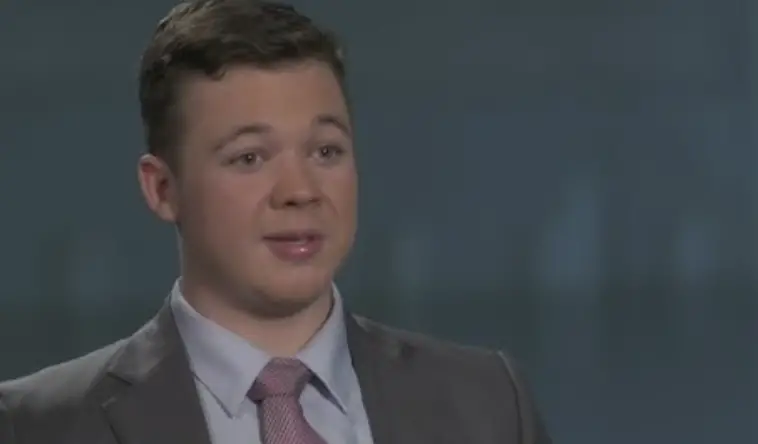
Kyle Rittenhouse has returned to social media years after the fatal shootings in Kenosha, Wisconsin that made him a lightning-rod figure in the United States’ culture wars, prompting fresh debate online over how he portrays himself after being acquitted at trial.
A post shared by LADbible said Rittenhouse, who was 17 at the time of the shootings during protests in August 2020, had resumed posting publicly and was doing so alongside an image described in the outlet’s headline as “shock” material. The post referenced the deaths of two people at the protest and framed the return as occurring four years after his controversial trial.
The reappearance has drawn renewed attention to an episode that has never fully left the American political bloodstream, in part because the shootings were filmed from multiple angles and spread rapidly online, and in part because Rittenhouse’s case became shorthand for wider arguments about firearms, vigilantism, public protest and the boundaries of self-defence in US law.
Rittenhouse was acquitted of all criminal charges in November 2021 after a jury accepted his claim that he acted in self-defence when he shot three men during unrest in Kenosha, killing two and wounding a third.
The shootings took place amid demonstrations and disorder that followed the police shooting of Jacob Blake, a Black man who was shot and paralysed by a white officer in Kenosha. In the nights that followed, parts of the city saw clashes, arson and property damage, and armed civilians, including Rittenhouse, were present on the streets.
At trial, prosecutors argued that Rittenhouse created danger by bringing a rifle into a volatile environment and that his actions were not justified. The defence said he was chased, threatened and assaulted and fired only when he believed he faced imminent death or serious injury. Jurors ultimately cleared him on the most serious counts, including intentional homicide.
The names of the men shot during the incidents are widely recorded in contemporaneous reporting: Joseph Rosenbaum and Anthony Huber were killed, and Gaige Grosskreutz was wounded.
The verdict sparked sharply divided reactions. Supporters hailed the outcome as a clear example of self-defence under American law, while critics argued the case illustrated an unequal system and warned that it could embolden armed civilians to insert themselves into protest situations.
The legal story did not end with the criminal trial. Civil litigation has continued around the events, including wrongful-death and injury claims. In 2023, the Associated Press reported that a federal judge in Wisconsin allowed a wrongful-death lawsuit connected to Huber’s death to proceed, with arguments in the case reaching beyond Rittenhouse personally and into allegations about how law enforcement handled the unrest.
In that reporting, Rittenhouse’s lawyers maintained that a jury had already found his actions to be self-defence, while plaintiffs alleged that officials and others created conditions that made the violence more likely. The judge’s decision dealt with whether claims could continue, not a final ruling on the merits.

Rittenhouse has remained a public figure since his acquittal, particularly among conservative activists and gun-rights supporters, and has used social media as a platform as debates have swirled around his actions and his subsequent fundraising and media appearances. The Associated Press has previously described him as maintaining a high profile, including through outspoken positions on guns.
The LADbible post about his latest return appears to tap into that long-running public fascination, presenting his renewed online presence as a significant moment in a saga that continues to provoke strong reactions. By emphasising both the passage of time since the trial and the nature of the imagery associated with the comeback, the framing reflects a recurring pattern in which Rittenhouse’s public moves are treated not merely as personal updates but as fresh fuel for national argument.
Even before his re-emergence, misinformation around Rittenhouse regularly circulated online, including fabricated screenshots and false claims that have required debunking. Reuters, for example, has previously fact-checked a fabricated screenshot purporting to show a post by Donald Trump about Rittenhouse, highlighting how easily the case can be pulled into wider political narratives through doctored or satirical material.
That backdrop matters because social media, where the latest attention is now focused, has repeatedly been a central battleground for competing interpretations of what happened in Kenosha. Supporters and critics alike have used clips, still images and commentary to argue over split-second decisions, the legality of Rittenhouse’s conduct and the morality of his decision to be present at all.
Public records and major news accounts of the case underline that the legal outcome turned on self-defence standards and jurors’ assessment of the immediacy of the threats he faced in the moments he fired. But the broader social and political impact has hinged on something different: the sense, among many Americans, that the verdict signalled a wider acceptance or rejection of armed “protectors” appearing at protests, and the fear that such confrontations can escalate rapidly.
For Kenosha itself, the events remain a defining chapter. The unrest after Blake’s shooting drew national attention, and the subsequent killings amplified tensions over policing and protest. The trial, held in the city, attracted crowds and intense scrutiny, with officials preparing for possible unrest around the verdict.
Rittenhouse’s return to social media, then, is not simply a story about a personal account reactivating. It is, for many people, a reminder of unresolved divisions, and an example of how high-profile defendants can continue to shape public narratives long after court proceedings end. His public presence has also played into partisan identity, with some seeing him as a symbol of resistance to progressive activism and others viewing him as emblematic of a dangerous convergence of guns and street politics.
What remains clear is that the core facts that drove the case have not changed: two men died and another was injured during chaotic nights of protest, and a jury later cleared Rittenhouse after he testified that he believed he was defending himself.
The latest burst of attention suggests the controversy continues to follow him, and that any move he makes online is likely to be read by millions not only as self-expression but as a statement in an ongoing national argument about violence, law and legitimacy in the public square.