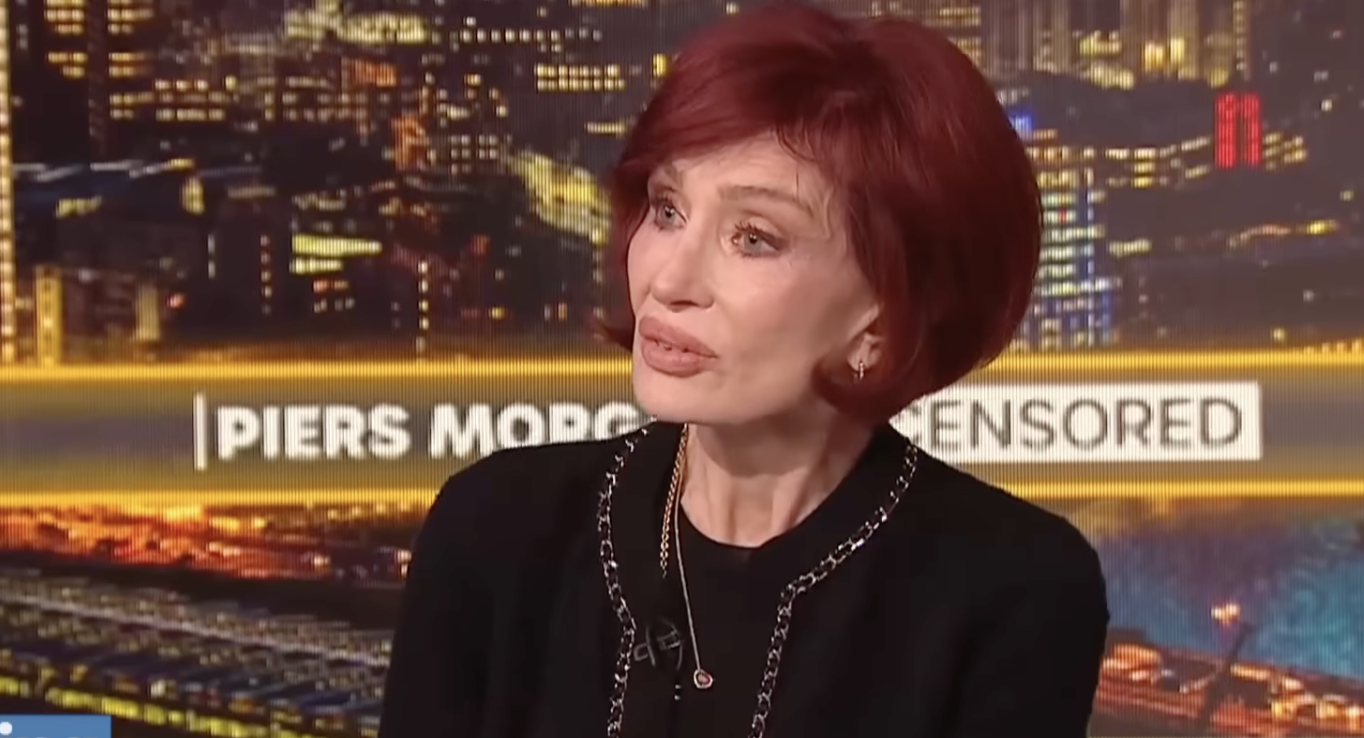
Sharon Osbourne has said she decided not to follow through on a longstanding assisted-suicide pact with her husband Ozzy Osbourne after his death, telling broadcaster Piers Morgan that her three children were the deciding factor.
Speaking on Piers Morgan Uncensored in what was described as her first major interview since Ozzy’s death, Sharon Osbourne said she “would have just gone with Ozzy” but could not do that to Aimee, Kelly and Jack after witnessing how suicide can devastate families.
Ozzy Osbourne, the Black Sabbath frontman and solo artist whose career spanned more than five decades, died in July aged 76. Several reports said he suffered a heart attack and had lived for years with significant health problems, including Parkinson’s disease, which he publicly disclosed in 2020, and complications from prior injuries and surgeries.
Sharon Osbourne told Morgan that she ran downstairs as medics attempted to resuscitate her husband and pleaded for them to stop, saying he was gone. In the same interview, she said his last words to her were: “Kiss me. Hug me tight.”
Her appearance renewed attention on comments the couple had made for years about an assisted-dying plan, initially framed around the prospect of dementia. Sharon Osbourne first discussed the arrangement publicly in interviews and in a memoir in the 2000s, saying they supported euthanasia and would travel to Switzerland if either developed an illness that severely affected the brain. In one widely repeated account from that period, she said they had spoken to their children about their wishes and believed the family understood the plan.
Ozzy Osbourne later echoed that position, saying he would not want to live with severe physical decline and that assisted dying was something he and Sharon had discussed as a practical decision rather than a dramatic gesture.
In more recent years, the subject resurfaced through the family’s podcast. In an October 2023 episode of The Osbournes Podcast, Sharon Osbourne said the pact remained in place and used a blunt sign-off while discussing the idea of combining mental and physical suffering.
That background, combined with the intensity of Sharon Osbourne’s grief in the weeks after her husband’s death, helped frame the conversation on Morgan’s programme as one about bereavement, mental health and responsibility to family.
On the show, Sharon Osbourne described an experience from years earlier that she said changed how she thought about dying by choice. She said that during a period when she had sought help in a facility following what she called a mental breakdown, she met two young women whose mothers had taken their own lives. Sharon Osbourne told Morgan that seeing their condition and the damage it had caused convinced her she could not inflict that kind of pain on her children, regardless of how overwhelming her grief might be.
Her account drew a line between the couple’s previously stated plan, which had focused on degenerative illness and loss of autonomy, and the reality of making decisions immediately after a sudden death. In the interview, she said the shock of Ozzy Osbourne’s death and the immediate aftermath did not lessen her belief that the children mattered most, describing them as “unbelievable” and “magnificent” in the period since.
Public discussion of assisted dying in Switzerland often centres on organisations that can support foreign nationals under specific conditions, though the legal frameworks and medical requirements differ by canton and provider. Over the years, Swiss assisted-dying clinics have been cited by high-profile figures as an option if terminal or degenerative illness removes independence, while critics argue it risks normalising suicide or creating pressure on the vulnerable. Sharon and Ozzy Osbourne’s comments have repeatedly been used as a celebrity reference point in that debate, particularly because they framed it as a shared plan made in advance to avoid dementia-related decline.
Ozzy Osbourne’s final months, as described in reporting around Sharon Osbourne’s interview, involved significant health challenges alongside what was presented as an effort to maintain contact with fans and music. Entertainment Weekly reported that Sharon Osbourne told Morgan her husband had seemed “ready” to die in the weeks before his death, and that he had been experiencing vivid dreams and a sense that the end was approaching.
The interview also revisited the couple’s long partnership, both personal and professional. Sharon Osbourne managed Ozzy Osbourne’s career for decades and was credited with helping steer his post-Black Sabbath success, including the commercial peak of his solo years and the reinvention of the family as reality-TV stars through The Osbournes in the early 2000s.
In the days since the programme aired, the comments have been amplified widely online, with clips and excerpts shared across social platforms and entertainment outlets. Coverage has focused on Sharon Osbourne’s description of Ozzy Osbourne’s final moments and her explanation for rejecting the idea of dying alongside him, in contrast with previous public statements that suggested she could not imagine life without him.
While much of the public attention has centred on the phrase “death pact,” Sharon Osbourne’s account on Morgan’s show framed her choice less as a reversal of beliefs about assisted dying and more as a boundary drawn by motherhood and the memory of what she said she had witnessed first-hand. In that telling, the couple’s earlier plan remained connected to illness and loss of capacity, but her response to bereavement was governed by the consequences she feared for her children.
Ozzy Osbourne’s death prompted tributes from across the music industry, reflecting his status as a foundational figure in heavy metal and a celebrity whose persona reached well beyond rock audiences. Sharon Osbourne, in the interview, described living with grief as an ongoing process rather than something resolved by any single decision, saying she was learning to carry it while remaining present for her family.