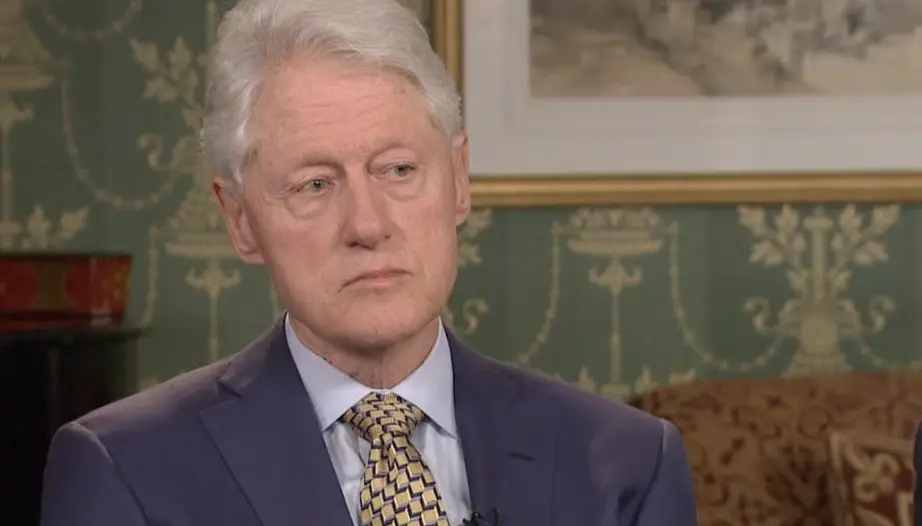
Former US President Bill Clinton has accused the Trump administration’s Justice Department of withholding material in its initial release of documents related to the late financier Jeffrey Epstein, amid political backlash over heavy redactions and complaints from lawmakers that the disclosure fell short of what Congress mandated.
In a statement issued through a spokesperson after the first tranche of files was published online, Clinton said the Justice Department appeared to be “covering up” information and suggested “someone or something is being protected.” The spokesperson, Angel Ureña, said the former president “needs no such protection” and called for the remaining material to be released in line with the law.
The Justice Department’s publication was the first public release under the Epstein Files Transparency Act, a law signed in November that requires the Attorney General to release documents and records in the department’s possession relating to Epstein, subject to restrictions intended to protect victims’ identities and prevent the disclosure of illegal imagery. The act’s text bars the release of material depicting the sexual abuse of children and provides for redactions where disclosure would be an unwarranted invasion of personal privacy.
The release, which included photos and images of boxes and folders from investigative files, prompted a wave of criticism from both parties and from transparency advocates, many of whom said the documents were heavily censored and did not satisfy the spirit of the new legislation. News organisations reviewing the postings reported that much of the material appeared to be redacted and that some pages were withheld altogether, with notations indicating restrictions tied to victim information or prohibited content.

Deputy Attorney General Todd Blanche defended the department’s approach, saying the government had to redact information that could identify victims or minors, and describing the effort as “historic” in correspondence with Congress. Blanche also said the department was continuing to review additional documents beyond the initial publication, indicating that more disclosures could follow after further vetting.
Clinton’s statement sharpened the political focus on the release by placing a former president squarely into a debate that has become entwined with partisan conflict and online speculation. Clinton has long faced scrutiny over his past associations with Epstein, including travel on Epstein’s private plane, and he has previously said through representatives that he severed contact with Epstein years before Epstein’s first criminal conviction. Ureña said Clinton cut ties with Epstein in 2005.
The Justice Department’s documents included photographs in which Clinton appears alongside Epstein, according to multiple reports reviewing the posted files. The posting of images and references to prominent figures has fuelled renewed interest on social media, where users have argued over whether the material represents a meaningful disclosure or a partial release that still protects powerful people.
Ureña’s statement framed Clinton as a target in a broader political strategy, arguing that the White House was using Clinton as a “scapegoat” to deflect from criticism of the administration’s handling of the disclosure. The spokesperson’s remarks came as members of Congress and public commentators questioned why large sections of the files were blacked out and why the department appeared to miss a deadline set out in the statute for releasing the bulk of the material.
The debate has unfolded against the backdrop of Epstein’s high-profile criminal history and death. Epstein, who cultivated relationships with wealthy and influential figures, was charged in 2019 with sex trafficking and died later that year in federal custody. The circumstances of his death and the breadth of his social network have long fuelled conspiracy theories, though official findings concluded he died by suicide. The enduring public fascination with his case has been driven in part by the scale of allegations made by victims, the leniency of a 2008 plea deal in Florida, and the repeated emergence of names of well-known individuals connected to him socially or professionally.
The Trump administration has faced pressure from different directions over how to handle the files. Some lawmakers and activists have demanded sweeping transparency, while victims’ advocates and legal experts have warned that indiscriminate disclosure could expose survivors to renewed trauma or harassment. The Epstein Files Transparency Act attempts to navigate those competing pressures by ordering broad release while explicitly excluding child sexual abuse material and requiring the protection of victim identities and other sensitive personal information.
Critics of the Justice Department’s rollout have argued that the redactions were so extensive as to make the release difficult to interpret, and that the government should provide clearer explanations of what is being withheld and why. In coverage of the controversy, US media reported that some of the most common complaints focused on what critics described as an incomplete release and the apparent absence of certain categories of documents that the public expected to see.
The department has cited legal and practical constraints, including the need to review sensitive material and to remove identifying information. Blanche’s communications to Congress said the department was continuing to process additional records, implying the initial publication was not the final release.
Clinton’s involvement in the public argument has added another layer of tension. While his spokesperson demanded full compliance with the law, the former president is among the best-known public figures whose past association with Epstein has been repeatedly discussed in political and media circles. That association has previously been used by opponents to suggest impropriety, even as Clinton has denied wrongdoing and as no criminal charges have been brought against him related to Epstein’s crimes.
In his statement, Clinton did not address specific redactions or identify particular individuals he believed were being shielded, but he urged the Justice Department to release the material required under the legislation. Ureña’s comments portrayed the release as politically manipulated and argued that Clinton, rather than being protected by redactions, was being singled out in public debate despite having no need for concealment.
The White House has also weighed in. In separate remarks reported by news outlets, President Donald Trump said he liked Clinton and described him as “a nice guy,” comments that circulated as the former president’s spokesperson accused the administration of exploiting him in the fallout from the disclosures.
For now, the dispute over the Epstein files is likely to continue as the Justice Department reviews additional material and as lawmakers press for fuller compliance with the statute’s deadlines and intent. The controversy has underscored the difficulty of meeting demands for transparency in a case involving extensive evidence, numerous potential witnesses and victims, and information that, if mishandled, could violate privacy laws or expose illegal content.
The next phase will hinge on whether the department releases further documents with fewer redactions, whether Congress seeks enforcement action or additional oversight, and whether the disclosures meaningfully advance public understanding of Epstein’s activities and the government’s handling of his case, without exposing victims to harm.