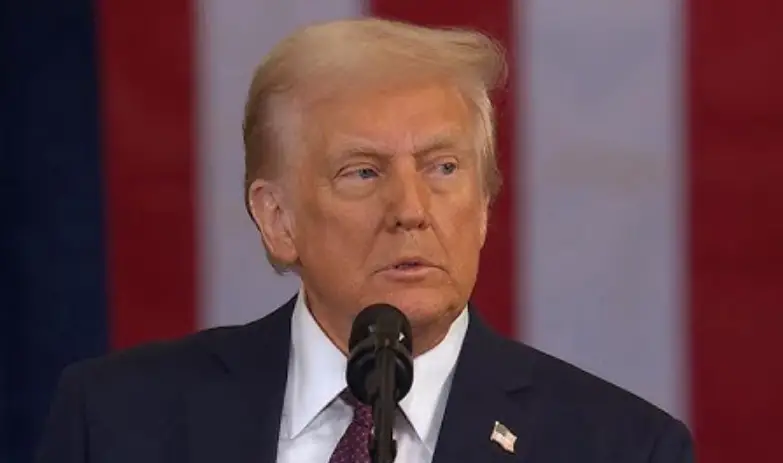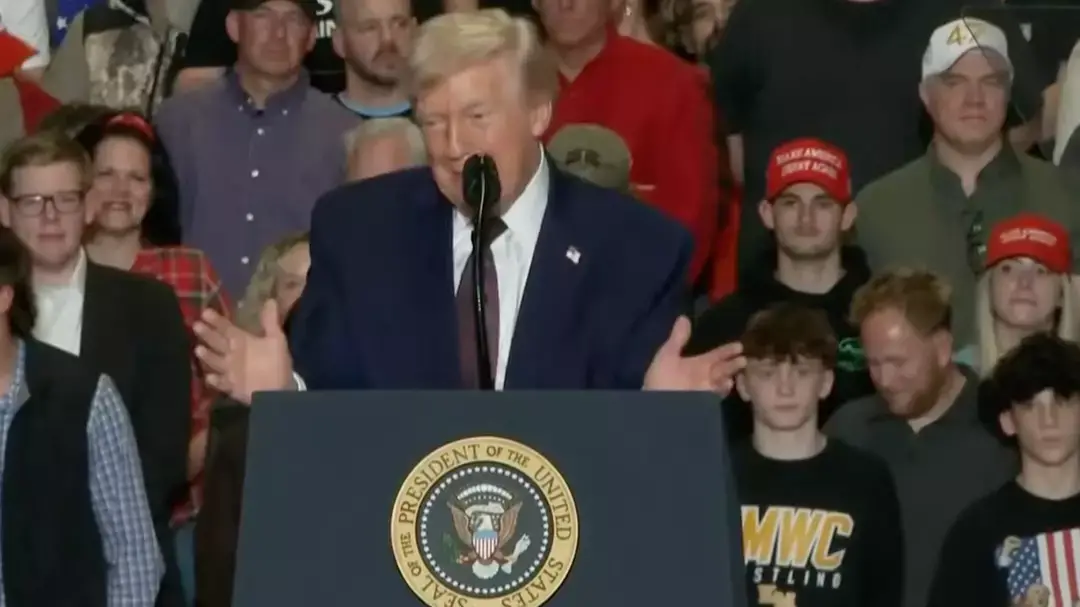
President Donald Trump has offered his most detailed public explanation yet for the bruising that has repeatedly appeared on his hands in recent months, telling an interviewer he has been taking a higher daily dose of aspirin than his doctors recommend and arguing that the medication, combined with constant handshaking, has left him prone to visible marks.
In an interview with The Wall Street Journal reported by multiple outlets, Trump, 79, said he had been taking a full-strength 325 milligram aspirin rather than the low-dose 81 milligram tablet commonly used for cardiac prevention. He said he had kept to the larger dose for years because he wanted what he described as “nice, thin blood” and believed aspirin helped reduce the risk of blood clots, even as he acknowledged the decision could lead to bruising.
The remarks came amid renewed scrutiny of Trump’s health and stamina in his second term, driven by images showing dark patches on the backs of his hands, moments in which he appeared to close his eyes for extended periods during public events, and questions about medical testing conducted in the autumn. The White House has said the bruising is benign and consistent with a daily aspirin regimen and frequent handshaking, rejecting online speculation that the marks were evidence of intravenous treatment or a more serious condition.
People magazine, which linked its report to the Journal interview, said Trump attributed the bruises partly to exceeding doctors’ advice on aspirin and partly to the demands of public life, including vigorous handshakes. The magazine reported that Trump has sometimes used makeup to cover injuries on his hands and that he dismissed the suggestion that he has been receiving intravenous therapy.
Reuters reported that the White House physician, Dr Sean Barbabella, told the Journal the president takes 325 milligrams of aspirin daily and that the bruises were consistent with that use. Reuters also said the White House has described the markings as “minor soft tissue irritation” linked to frequent handshaking and aspirin, and has sought to correct claims about imaging Trump underwent in October, saying it was a preventive CT scan rather than an MRI.
The Guardian, also citing the Journal interview, reported that Trump described his health as “perfect” despite acknowledging he takes more aspirin than his doctors want him to. The newspaper said Trump credited his wellbeing to genetics and portrayed himself as resistant to certain preventive care measures, while also addressing reports that he has looked tired in meetings.
The interview has drawn attention not just for Trump’s comments on bruising but for the broader set of health-related claims he made while batting away questions about ageing. According to Reuters, Trump’s age makes him one of the oldest people to serve as U.S. president, a reality that has sharpened interest in his medical transparency and the extent of any accommodations made to his daily schedule.
Trump has long presented himself as unusually energetic and has routinely framed health questions as politically motivated attacks. In this latest round, he sought to rebut a range of rumours that have circulated online, including suggestions that he has been treated with intravenous infusions and that he has struggled with alertness in meetings. Outlets summarising the Journal interview said Trump argued that images interpreted as him dozing were often moments when he was blinking or briefly closing his eyes to rest.
The bruising has become a recurring focus partly because it has been visible at high-profile moments, including public appearances and meetings with visiting leaders, prompting close attention to photographs and video. The White House has repeatedly pushed back on more dramatic interpretations, emphasising that aspirin can increase bleeding and bruising, particularly in older people, and that the president’s schedule involves extensive public greeting and handshaking.
Aspirin is widely used for certain cardiovascular conditions and, in some patients, for prevention, although medical guidance can vary depending on age, bleeding risk and individual health history. Trump’s comments, as reported, indicated he has chosen to take a larger dose over a sustained period. The White House has not publicly released a full contemporaneous medication list beyond general statements about routine care and periodic check-ups.
The renewed focus on medical testing stems in part from an imaging procedure Trump underwent in October that attracted attention online. Reuters reported that the White House described the scan as preventive and said it showed no cardiovascular abnormalities, and that it sought to correct misinformation about the type of scan after initial reports sparked speculation.
The Journal interview also revisited discussion of Trump’s lifestyle and exercise habits. The Guardian reported that Trump said he does not engage in regular exercise beyond playing golf, and that he has expressed scepticism toward workouts such as treadmill running. The White House has frequently highlighted golf as part of Trump’s routine and has portrayed his public schedule as evidence of stamina, while critics argue that the visible bruising and occasional signs of fatigue warrant fuller disclosure.
Alongside the bruising, Trump has faced questions about other health issues that have surfaced in reporting during his second term. People reported that Trump has previously acknowledged being diagnosed with chronic venous insufficiency in July 2025, a condition involving blood flow in the legs, and that he has talked about efforts such as compression socks while expressing dislike for them. Reuters did not include those details in its summary of the Journal interview, but the broader issue of leg swelling and preventive testing has been part of the public conversation about his fitness for office.
Trump’s defenders have argued that the attention paid to his hands is a symptom of the modern political environment, in which images and clips can drive viral narratives regardless of medical context. His critics say the administration has offered shifting explanations and has not provided enough documentation to reassure the public, pointing to a long-running debate over how much medical information presidents should make available.
The immediate political stakes are sharpened by the fact that Trump has made age a central line of attack against rivals in the past, including former President Joe Biden, and has repeatedly argued that he is stronger and more capable than opponents. For Trump, the Journal interview appears designed to recast health questions as overblown and to argue that the visible bruising has an ordinary cause, even as he acknowledged he has not followed medical advice on aspirin dosage.
In the interview as reported, Trump framed his choice as a matter of personal conviction about what keeps him healthy. That admission, that he takes more aspirin than recommended and has done so for years, is likely to prompt fresh scrutiny from physicians about bleeding risks and the appropriateness of long-term high-dose aspirin use, particularly for older adults. The White House has not indicated any change in his regimen following the renewed attention.
For now, Trump has sought to draw a line under the rumours by presenting the bruising as a predictable side-effect of medication and the job’s public rituals, and by insisting, in the words attributed to him by outlets citing the Journal, that his health remains “perfect.”