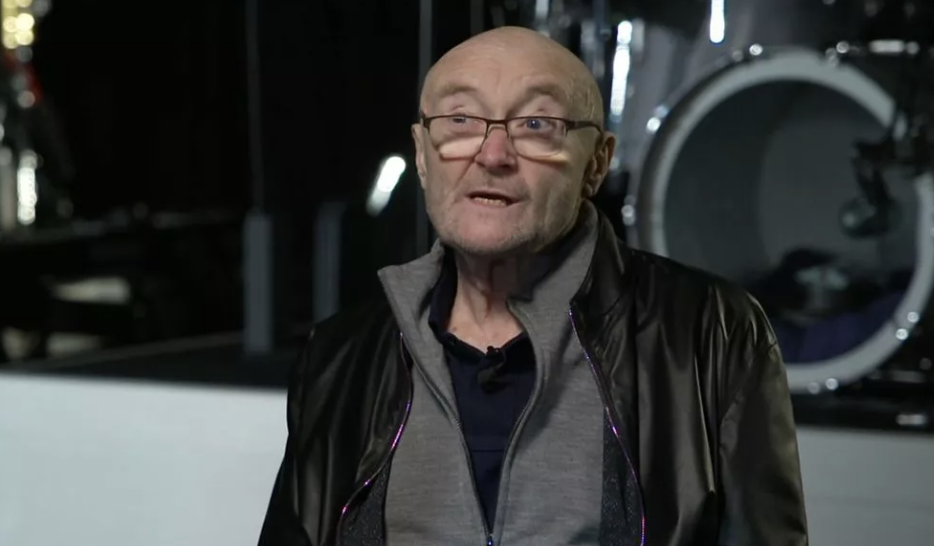
Phil Collins has said he now relies on a 24-hour live-in nurse as he manages what he described as “ongoing” health problems after a run of serious medical setbacks that have left the former Genesis frontman and drummer unable to play drums and needing assistance to walk.
In a new interview recorded for the BBC podcast series Eras with broadcaster Zoe Ball, Collins said the last few years have been defined by repeated surgeries and complications that have affected his mobility and day-to-day routine. “I have a 24-hour live-in nurse to make sure I take my medication as I should do,” he said, adding: “I’ve had challenges with my knee … I had everything that could go wrong with me, did go wrong with me.”
Collins, who turns 75 later this month, has kept a relatively low profile since Genesis finished its farewell “The Last Domino?” tour in 2022, but has periodically spoken about the cumulative impact of injuries, nerve damage and surgeries that have followed decades of performing. The BBC interview is due to be released as part of the Eras series in the coming days.
The singer described a difficult period that included multiple knee operations. According to accounts of the interview, Collins said he has undergone five separate knee surgeries, with the interventions forming part of a broader sequence of health problems that led to extended time in hospital.
He told the BBC that he can now walk, though only with assistance. “I can walk,” he said, “albeit with assistance, you know, crutches or whatever.”
Collins has also linked some of his health issues to past drinking, saying in the interview that alcohol was part of how he coped as his condition worsened. He said he has now been sober for two years. “I was never drunk, although I fell over a couple of times,” he said. “But it is just one of those things that happened and it all caught up with me, and I spent months in hospital.”
People magazine, which summarised the BBC conversation, reported that Collins described kidney problems he associated with previous alcohol use, alongside other complications that developed while he was receiving treatment. The publication said Collins also spoke of contracting COVID-19 in hospital during his recovery from surgery.
For fans, Collins’ health has been most visible in the way it reshaped Genesis’s final performances. During the band’s last run of shows, he sang seated, while his son Nic Collins took over the drumming role that had been central to his father’s stage identity for more than five decades.
Collins’ inability to play drums has been widely attributed to long-term nerve damage stemming from injuries and surgeries following the band’s 2007 reunion tour. Rolling Stone Australia, citing the BBC interview, said Collins has dealt with “severe nerve damage” for more than a decade, and that treatment left him without feeling in his fingers, making it impossible to grip objects normally, let alone perform at the kit. The report also referenced a gait abnormality known as foot drop, which can affect walking and balance.
In the BBC interview, Collins suggested his condition has improved compared with the worst stages of his recovery, describing himself as “totally mobile and healthy” following the most recent surgeries, even as he acknowledged he still depends on support.
The comments arrive amid ongoing public concern about Collins’ health, driven in part by the contrast between his former reputation as a tireless live performer and the limitations that have increasingly defined his public appearances. Collins rose to global fame first as Genesis’s drummer and later as the band’s frontman, while simultaneously building one of the most successful solo careers of the 1980s and 1990s, marked by chart-topping albums and songs that became fixtures of radio and film soundtracks.
His distinctive approach combined pop hooks with a drummer’s sense of timing, and his live shows, whether with Genesis or solo, were defined by precision and stamina. That reputation has made his retirement from drumming particularly stark for longtime listeners, many of whom associate him as closely with the kit as with the microphone.
Collins has not released an album of original songs since 2002’s Testify, and his last studio LP of any kind was 2010’s Motown covers project Going Back. He continued touring for years after, including a solo run between 2017 and 2019, before Genesis reunited again for its final tour.
Now, he has offered a cautious hint that he may return to music-making in some form, though he has also expressed ambivalence about whether his health and motivation will allow it. In the BBC interview, he said he would like to return to the studio in a low-pressure way. “[I’d like to] have a fiddle about and see if there’s more music,” he said, adding: “you’ve gotta start doing it to see if you can do it.”
People reported that Collins also spoke about losing the drive he once had to make new music, describing how prolonged illness has affected his appetite for studio work.
The picture that emerges is of an artist balancing a desire to remain connected to music with the practical realities of ageing and chronic health complications. Collins’ remarks suggest the presence of professional, round-the-clock care is now part of what allows him to maintain stability as he manages medication and ongoing issues, even as he frames his current condition as improved compared with recent years.
While Collins did not outline every medical detail, his descriptions were blunt about the cumulative nature of his problems. He characterised the period as “difficult” and “frustrating”, reflecting on the way repeated setbacks have narrowed his independence.
For a musician whose career was built on relentless motion, from marathon studio sessions to world tours, the shift has been profound. Yet in the same breath as he detailed the need for a live-in nurse and the strain of multiple surgeries, Collins also described incremental progress, including regained mobility with assistance and a tentative willingness to see whether new music is possible.
The BBC interview, and the attention it has drawn, underscores how closely Collins’ health has become intertwined with his public story in the later phase of his career. But it also suggests that, even with the constraints he now lives under, he is still measuring his future in musical terms: what he can do, what he might try, and what he is prepared to accept if the physical limits do not shift any further.