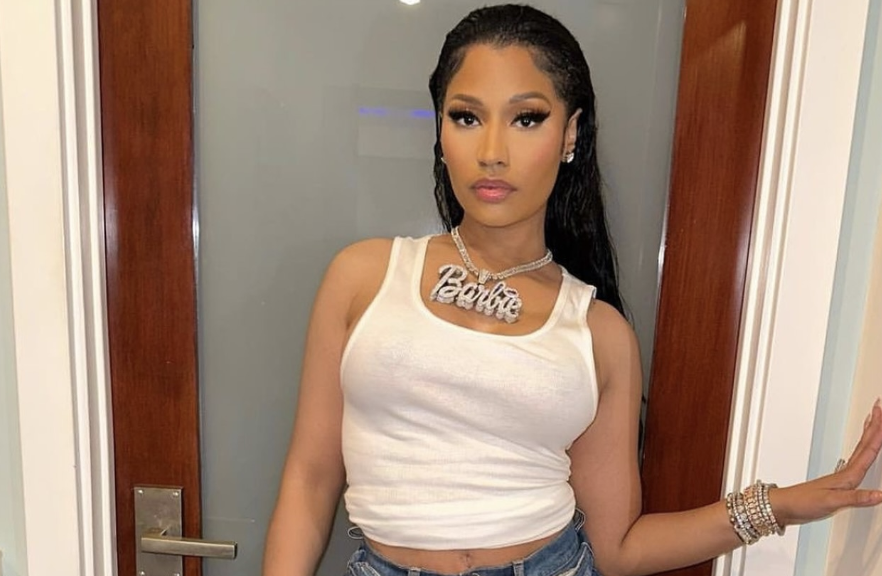
A social media post Nicki Minaj wrote in 2018 saying she arrived in the United States “as an illegal immigrant” has resurfaced this week, fuelling a fresh round of online backlash and renewed debate about the rapper’s political positioning after recent high-profile appearances alongside pro-Trump figures.
The resurfaced post, originally shared as Minaj condemned the Trump administration’s “zero tolerance” border policy and family separations, has circulated widely across platforms in recent days, with critics pointing to an apparent contrast between her earlier comments and her more recent political alignment.
In the 2018 message, Minaj wrote: “I came to this country as an illegal immigrant @ 5 years old.” She went on to describe fear at the thought of children being separated from their parents, adding: “I can’t imagine the horror of being in a strange place & having my parents stripped away from me at the age of 5. This is so scary to me. Please stop this. Can you try to imagine the terror & panic these kids feel right now?”
The post was made as outrage spread over images and reports from US border detention facilities, and as public figures demanded an end to family separations. Minaj’s comments at the time framed her own childhood move from Trinidad and Tobago to New York as shaping her reaction to the policy and its impact on children.
The renewed attention has coincided with online calls for the rapper to be deported, including petitions that have attracted tens of thousands of signatures, according to reporting by multiple entertainment outlets. Supporters of the petitions have framed them as retaliation for Minaj’s recent rhetoric and political alliances, while others have dismissed the campaigns as performative or legally meaningless.
Some of the commentary has focused on Minaj’s current citizenship status after she discussed it publicly in recent years. In September 2024, she said during a livestream: “I’m not a citizen of America. Isn’t that crazy?”
Minaj, born Onika Tanya Maraj in Trinidad and Tobago in 1982, has long spoken about moving to the United States as a child and growing up in Queens, New York. She has previously described arriving in the US at the age of five, a period she has linked to her family’s efforts to build a life in America.
The reappearance of her 2018 post has become entangled with a broader, polarised conversation online about immigration, celebrity politics and hypocrisy, with supporters and critics trading competing interpretations of what Minaj meant by “illegal immigrant,” and what it implies about her personal history.
The renewed scrutiny also comes amid recent controversies involving Minaj’s social media activity, including a public dispute with former CNN anchor Don Lemon that drew widespread attention after he criticised her language and referred to her immigration status. That exchange helped propel the resurfaced 2018 post into wider circulation, according to entertainment coverage tracking the online backlash.
Minaj has not, in the recent reports circulating this week, announced any change to her legal status in the United States. Public discussion has centred on her own past statements, including the 2018 post and the 2024 livestream remarks, which have been repeatedly reposted by critics in recent days.
The controversy is unfolding against the backdrop of Minaj’s long and often turbulent relationship with public politics. Over the past decade, she has moved between satire, provocations and explicit commentary, and has faced intense backlash at various times from different parts of her audience, including over her views on vaccines and more recent culture-war debates.
Minaj is one of the most commercially successful rappers of her generation, known for hits including “Super Bass,” “Starships” and “Anaconda,” and for a career that has spanned pop and hip-hop collaborations, headline tours and major award recognition. Her highly organised fanbase, often referred to as the Barbz, has played a central role in amplifying her releases and defending her online, while also becoming a focal point in controversies when critics accuse her of stoking harassment campaigns.
The revived focus on her immigration comments has prompted renewed conversation about the legal and social meaning of undocumented status for children brought to the United States by parents, as well as the political symbolism attached to celebrity identities in a climate of sharper immigration enforcement rhetoric. While the petitions circulating online have been promoted as a direct response to her recent public stances, legal experts have long noted that internet petitions do not themselves initiate immigration enforcement actions, and any such actions are governed by US law and federal agencies rather than public campaigns.
Minaj’s 2018 post itself was written as an appeal for empathy, urging an end to family separations and asking readers to imagine the fear of children uncertain whether they would see their parents again. That framing has become a central point in the argument now playing out online, with some users saying the post shows she once identified with the plight of immigrant families, and others arguing it clashes with her more recent political messaging.
As the debate continues, the controversy illustrates how older posts can be weaponised in contemporary political disputes, particularly when a public figure’s alliances or rhetoric appear to shift over time. In Minaj’s case, the viral spread of a single line from 2018 has pulled her childhood migration story back into the centre of public attention, alongside questions about her current status and the motivations behind the online campaigns now targeting her.