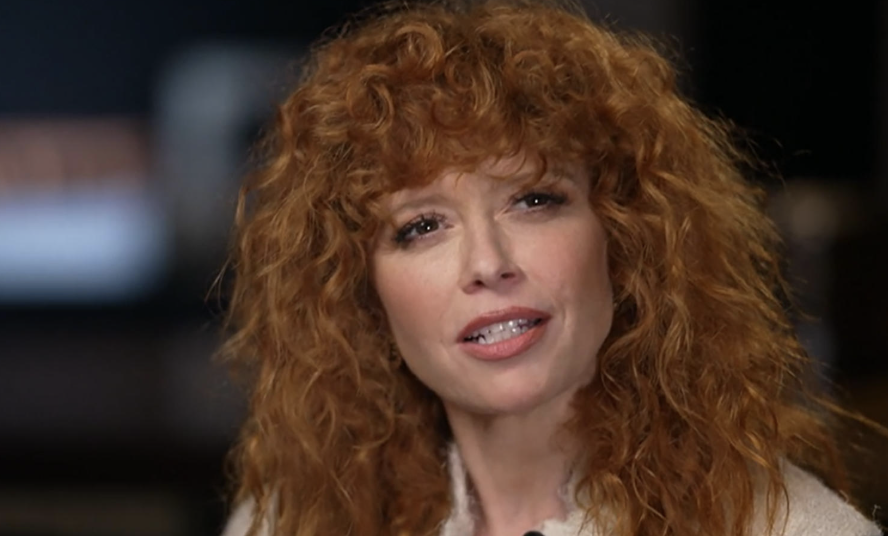
Natasha Lyonne has said she has relapsed after years of sobriety, using a brief series of posts on social media to disclose what she described as a setback in recovery and to urge others not to give up.
The US actor and filmmaker, known for roles in Orange Is the New Black and the Netflix series Russian Doll, posted on X on 23 January: “Took my relapse public more to come.”
A few hours later, she followed with a longer message about recovery, writing: “Recovery is a lifelong process. Anyone out there struggling, remember you’re not alone. Grateful for love & smart feet.”
In the same thread, Lyonne added: “Stay honest, folks. Sick as our secrets. If no one told ya today, I love you.” She continued with language aimed at people who may be facing addiction or relapse, writing: “No matter how far down the scales we have gone, we will see how our experience may help another. Keep going, kiddos. Don’t quit before the miracle. Wallpaper your mind with love. Rest is all noise & baloney.”
Her comments quickly drew responses from fans and other social media users, many of whom shared their own experiences of sobriety and relapse, while others posted messages of support and encouragement. The posts also prompted wider discussion online about relapse, shame, and the pressures that can follow public disclosure, particularly for people in the entertainment industry whose personal lives are frequently scrutinised.
Lyonne’s decision to address the issue publicly came after years in which she has spoken candidly, at times reluctantly, about addiction and recovery. In a 2017 interview with The Guardian, she acknowledged that her history had become a recurring topic in coverage of her work, saying: “I’m such an open book that I have no problem talking about it and speaking freely, but I’ve sort of said my piece on the subject.” In the same interview, she spoke about the emotions that can sit behind addiction, adding: “The truth is, at the back of that addiction are feelings that so many of us have, that don’t go away.”
Her comments this week did not specify substances, timelines, or circumstances around the relapse, and she did not provide details about treatment plans beyond describing recovery as ongoing. The brevity of the initial post, paired with the promise of “more to come”, left some supporters and commentators urging caution against speculation, while others focused on the wider point she made in subsequent messages about honesty and continued effort.
Lyonne, who grew up in New York and began acting as a child, became widely known to film audiences in the late 1990s and early 2000s, including a role in the American Pie franchise. She has also built a career as a writer, director and producer, and in recent years has taken on high-profile creative roles behind the camera as well as on screen.
Her relapse disclosure has renewed attention on a turbulent period in the mid-2000s when she faced serious health problems and legal issues amid addiction. In the past, she has spoken about that period in stark terms. In an interview cited by LADbible, Lyonne described her condition at the time of entering rehab as life-threatening, saying: “It’s weird to talk about. I was definitely as good as dead, you know? A lot of people don’t come back.” She continued: “That makes me feel wary, and self-conscious. I wouldn’t want to feel prideful about it. People really rallied around me and pulled me up by my f***ing bootstraps.”
The Independent also reported that Lyonne reflected on the consequences of addiction and the role of support in recovery, repeating the same Entertainment Weekly quote and noting her broader history of serious medical issues after getting sober, including open-heart surgery in 2012 to correct damage linked to a heart infection.
Lyonne’s recent prominence has come through work that has often blended comedy with darker themes. In Orange Is the New Black, she played Nicky Nichols, a character whose story includes addiction and recovery in prison, and her performance became a notable part of the show’s long run. In Russian Doll, which she created and starred in, she played a woman trapped in a repeating cycle of death and survival, a premise that many viewers interpreted as touching on trauma, change, and self-destruction, though the series is not presented as a direct account of her life.
In her posts this week, Lyonne’s language focused less on explanation and more on encouragement, echoing the tone used in many recovery communities where relapse is often discussed as a risk that can occur even after long periods of abstinence. Social media users responding under her post described relapse as “part of recovery” and encouraged her to return to support networks, language that mirrors common messages within peer-led programmes. Those reactions, while supportive, reflect individual viewpoints, and experts generally stress that addiction and recovery experiences vary widely and that treatment and support should be tailored to the individual.

Lyonne’s post also touched on a project she referenced as motivation. In her thread, she wrote: “Gonna do it for baby Bambo,” which LADbible reported appeared to refer to an upcoming film focus involving hockey player Sophie “Bambo” Braverman. The reference was not explained further in her posts, but it was taken by some followers as a sign she was looking to work, routines or responsibilities as stabilising anchors.
While celebrity disclosures about addiction can trigger waves of commentary, health professionals and recovery advocates often warn against treating any one person’s experience as a template. Lyonne did not present her story as universal, instead framing it as a reminder that “you’re not alone” and that recovery is ongoing. Her language also directly addressed stigma, an issue frequently raised by people in recovery who say shame can deter them from seeking help quickly after relapse.
In her Guardian interview in 2017, Lyonne spoke about addiction in more existential terms, linking it to pressures that can sit beneath self-destructive behaviour. “Isn’t everyone entitled to a moment of existential breakdown in a lifetime?” she asked in that interview, before adding: “Adulthood is making peace with being kind to oneself when a response to life that’s so much more organic and immediate would be to self-destruct.”
For many fans, the starkness of her message this week lay in its simplicity: an acknowledgement of relapse without dramatics, paired with an insistence that the work of recovery remains real and worth continuing. Her posts did not announce a pause in work or provide any formal statement through representatives, and there has been no further public update beyond what she wrote on X.
In the UK, people seeking confidential advice about drugs can contact Frank. In the US, support is available through the Substance Abuse and Mental Health Services Administration helpline.