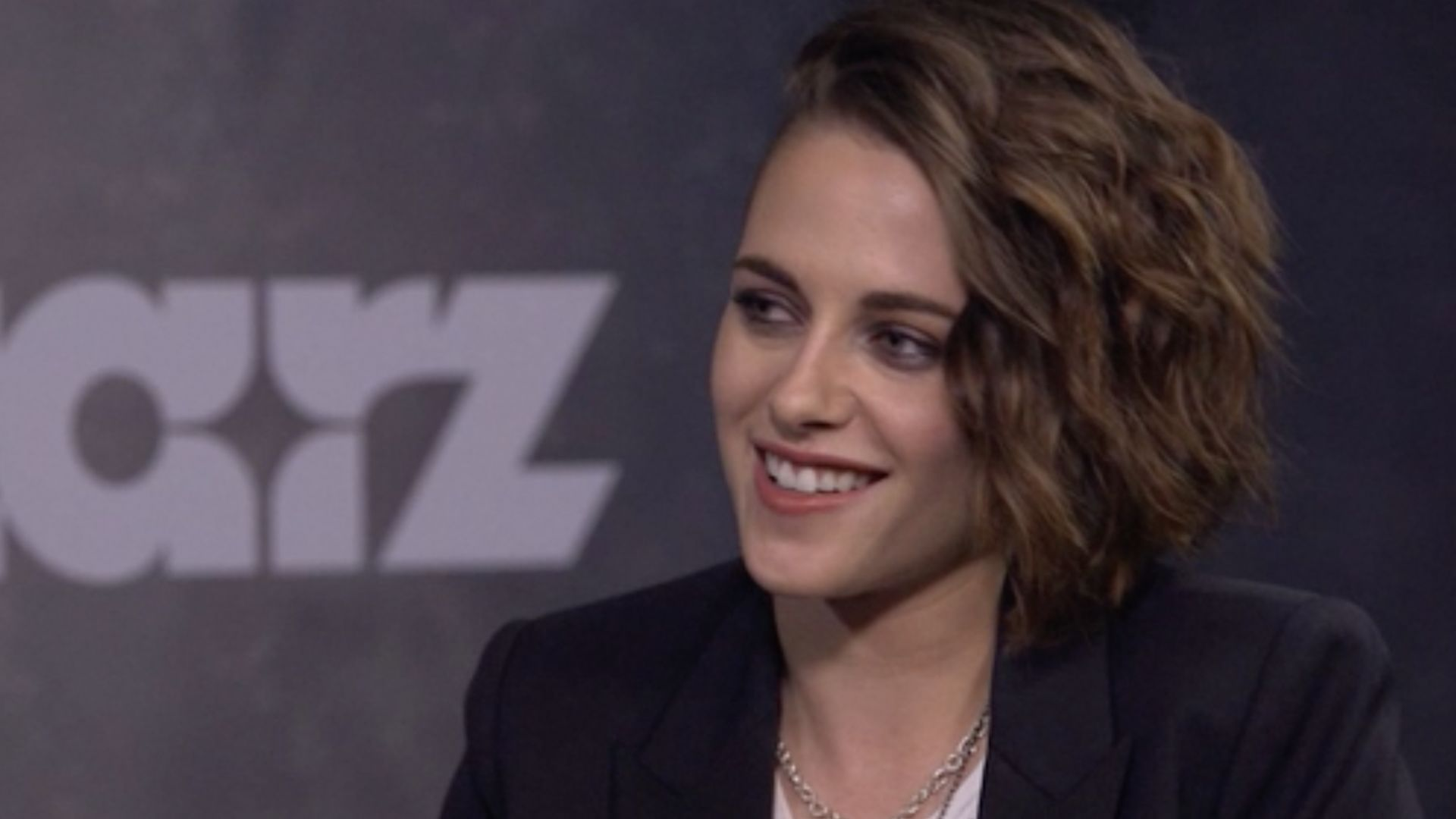
Kristen Stewart has criticised President Donald Trump’s proposed tariffs targeting films made outside the United States, saying the political climate and uncertainty for the industry mean she can “no longer work freely” in her home country and is considering spending more of her career abroad.
In an interview with The Times, Stewart, 35, said her feature directorial debut, The Chronology of Water, was filmed in Latvia because making it in the US would have been “impossible”, describing the current moment as one in which “reality is breaking completely under Trump”.
Stewart’s comments come as Trump has repeatedly raised the prospect of imposing steep tariffs on movies produced overseas, framing the issue as an effort to stop film-making work moving beyond US borders. In late September 2025, he renewed a threat to impose a 100% tariff on “any and all movies” made outside the United States, without laying out details of how such a levy would be implemented or when it would take effect.
Industry uncertainty has been sharpened by the fact that the modern studio system relies heavily on international shoots, foreign partners and cross-border financing, and it is common for American productions to film in Europe and elsewhere in pursuit of locations, tax incentives and specialist crews. Stewart, who has spent much of her career oscillating between big-budget franchise work and independent film-making, suggested those conditions are now colliding with politics in a way that can make mounting a project in the US more difficult.
Speaking about her own plans, Stewart said she was “probably not” going to remain in the US in the long term, while also indicating she did not want to sever ties entirely. She said she would like to continue making films in Europe, and then bring them to American audiences, using language that underscored both her frustration and determination to keep working.
The Chronology of Water, Stewart’s first feature as a director, is based on the memoir by the American writer Lidia Yuknavitch and stars Imogen Poots. Production took place in Latvia and Malta in 2024, and the film later secured distribution in multiple territories, including a UK and Ireland release scheduled for 6 February 2026.
Stewart’s shift into directing follows years in which she has spoken publicly about the pressures and scrutiny that accompanied her early fame. She rose to global prominence as Bella Swan in the Twilight films, one of the defining blockbuster franchises of the late 2000s and early 2010s, and has since pursued a career marked by auteur-led projects and awards attention, including her portrayal of Diana, Princess of Wales in Spencer.
In the Times interview, Stewart also addressed gendered treatment in the film business, arguing that actresses are often taken less seriously than directors, and describing an industry culture that can be dismissive of women’s craft and authority. She said that stepping behind the camera altered the way people spoke to her, and that she wanted to keep building work that reflects women’s experiences without compromise.
The political dimension of her remarks adds to a long-running, unusual public history between Stewart and Trump. In 2012, years before he entered the White House, Trump weighed in on the tabloid storm surrounding Stewart and her then-boyfriend, Twilight co-star Robert Pattinson, after she was photographed kissing the married director Rupert Sanders. Trump posted a series of messages urging Pattinson to end the relationship, and later wrote: “Everyone knows I am right that Robert Pattinson should dump Kristen Stewart.”
Pattinson later described Trump’s interest in the episode as strange, while Stewart has also referenced it in interviews, portraying it as an early example of a powerful public figure inserting himself into a young woman’s personal life. The resurfacing of those posts in recent years has fed a broader narrative around celebrity and politics colliding, particularly as Trump’s statements and policy proposals continue to prompt responses from prominent figures in the entertainment industry.
Trump’s tariff rhetoric has been framed by him as part of a broader push to protect domestic production, with the president asserting that the American movie business is being undercut by foreign competition and incentives. Supporters of the idea have argued that tariffs could encourage more productions to base shoots and spending in the US, while critics say film-making does not fit neatly into the same mould as manufacturing, and warn of knock-on effects for distribution, partnerships and the international market for American content.

For Stewart, the issue appears less about partisan sparring and more about practical consequences for the work she wants to make. Her debut as a director is built around an intimate, autobiographical story and required international backing, and she has suggested that the current political climate, and the uncertainty created by high-profile threats against overseas production, have contributed to an environment in which taking a project abroad feels not only easier, but necessary.
Despite her criticism of Trump, Stewart’s remarks also pointed to an attachment to American audiences and to the idea of continuing to make work that connects back to the US, even if it is developed and shot elsewhere. In that sense, her comments captured a tension that many film-makers and performers have expressed in recent years: the desire to keep working across borders, while navigating political pressures that can suddenly reshape the economics and logistics of production.
Whether Trump’s proposed film tariffs ever materialise remains unclear, but Stewart’s intervention highlights how the debate has already influenced decisions and expectations in the industry. For a filmmaker launching a directing career with a project built outside the traditional Hollywood studio pipeline, the prospect of policy driven by “America-first” production logic has become, in her telling, a factor that cannot be ignored.