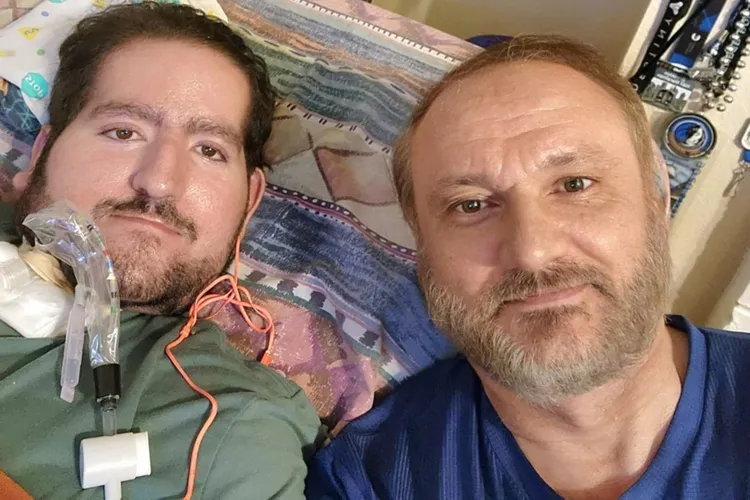
Maher Tarabishi, a 62-year-old Jordanian national living in Texas, has been denied a request for temporary release from US immigration custody so he can attend the funeral of his son, Wael Tarabishi, who died last week after complications linked to Pompe disease, according to the family and their attorney.
Tarabishi was detained on 28 October during what his family and lawyer describe as a scheduled check-in at an Immigration and Customs Enforcement office in Dallas, after years of appearing for mandatory annual appointments without incident. His attorney, Ali Elhorr, told People magazine that Tarabishi had asked for a humanitarian release to attend his son’s funeral and that the request was denied on 27 January. Elhorr said Tarabishi remains held at the Bluebonnet Detention Center in Anson, west of Dallas.
Wael Tarabishi was 30 and had a severe form of Pompe disease, a rare inherited condition that can cause progressive muscle weakness and serious respiratory complications. People reported that Wael died on 23 January from complications related to the illness and that Maher Tarabishi had been his primary caregiver. The family says Wael required round-the-clock care, and relatives stepped in after Maher Tarabishi was taken into custody.
In the weeks after Tarabishi was detained, Wael’s health deteriorated. According to Shahd Arnaout, Tarabishi’s 25-year-old daughter-in-law, Wael developed a high fever in November and was hospitalised, where he was diagnosed with sepsis and pneumonia in both lungs. Arnaout told People he later returned to hospital in December when his feeding tube came out, and he died a little more than a month later.
Arnaout and other relatives have accused immigration authorities of worsening the family’s crisis by removing Wael’s main caregiver at a critical time. People quoted Arnaout as saying: “They may not kill Wael with a bullet, but they killed him inside by taking the only person he asked for.” She added: “Maher was his caregiver, his father, his best friend, his everything.”
KERA News, citing a family news release and social media statements, reported that Wael spent about a month in intensive care at Mansfield Medical Center and became unconscious after a second surgery. The family statement cited by KERA said: “He passed without his beloved father, primary caregiver and constant life companion, Maher by his side.”
The denial of Tarabishi’s request has put renewed attention on the case, which has been developing since his detention in October. In November, The Guardian reported that Tarabishi had attended required annual check-ins for 17 years and that family members said the government had allowed him to remain in the United States under a supervision order because he was Wael’s primary caretaker after his asylum claim was denied.
The Department of Homeland Security has defended Tarabishi’s detention, while disputing the family’s portrayal of him. People reported that Homeland Security assistant secretary Tricia McLaughlin said in a statement that Tarabishi belonged to the Palestine Liberation Organization, describing it as a terrorist group. The family and attorney reject that allegation and say he has no criminal record and no ties to any terrorist organisation.

In its earlier reporting, The Guardian said ICE had described Tarabishi as a “criminal alien” and claimed he was a member of the Palestine Liberation Organization, while the family insisted he had lived in the United States for decades and had complied with legal requirements. The Guardian quoted a statement attributed to Wael Tarabishi, given to a local news station, saying: “My father has lived in the United States for decades and has never committed a crime.” It added: “He has never been part of any terrorist organization. He has always followed the law, paid his taxes and attended every immigration appointment on time.”
People reported that, according to Elhorr, Tarabishi entered the United States lawfully on a visa in 1994. Elhorr said a deportation order was issued in 2006 after an asylum application was denied, and that Tarabishi later remained in the country to care for Wael after his official diagnosis that same year.
KERA reported that the family has also raised concerns about the handling of Tarabishi’s immigration case, saying they recently learned his asylum application had been filed by an attorney who was “fraudulently practicing law without a license.” KERA said the family’s statement claimed this was uncovered during a review after his detention began, and that Elhorr filed a motion with the US Board of Immigration Appeals to reopen the case. KERA quoted the family statement as saying: “Like the other victims of this fraudulent attorney, Maher’s immigration case was denied and he was ordered removed based on the asylum application that was filed on his behalf.”
The family has used social media to push for political intervention and has urged supporters to contact elected officials. KERA reported that Arnaout posted online calling for action to help Tarabishi attend the funeral. In comments to KERA last month, she said: “I feel like this is all on ICE, because if my father-in-law was next to him right now, none of that would happen.”
People reported that Wael’s funeral was scheduled for Thursday and that the family launched a GoFundMe to support Tarabishi’s legal defence. The case has also drawn attention because of the circumstances described by relatives: a man who, they say, routinely complied with immigration supervision requirements, who was detained at a check-in while caring for a medically fragile adult son at home.
Pompe disease is a rare genetic disorder caused by the body’s inability to break down glycogen properly, leading to damaging build-ups in cells and progressive weakening of muscles. Severe cases can involve life-threatening respiratory issues and frequent complications that require hospital care, including infections and problems linked to feeding and breathing support.
For the Tarabishi family, the dispute now centres on whether immigration authorities will reconsider and allow Maher Tarabishi a temporary release, or any other accommodation, following his son’s death. As of 27 January, according to his attorney and the family, Tarabishi remained in custody and was not permitted to attend the funeral.