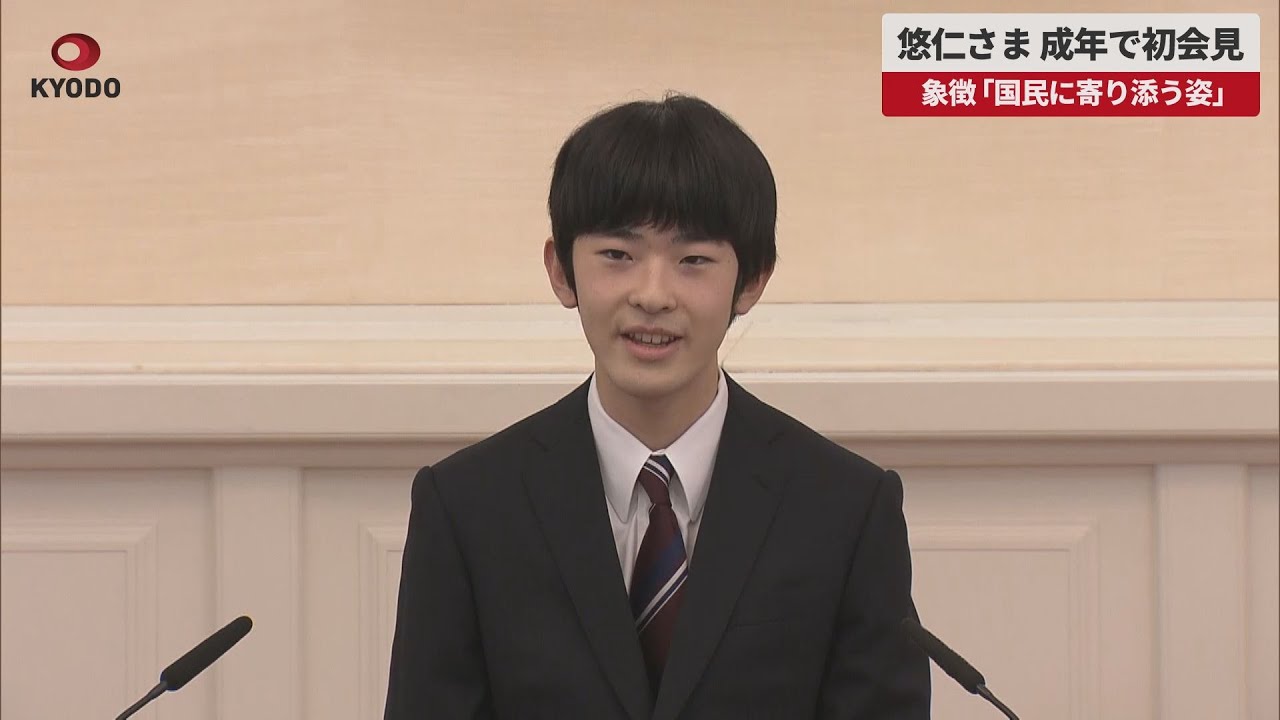
Prince Hisahito of Japan has turned 19, marking a significant milestone for the country’s imperial family and renewing attention on the future of the Chrysanthemum Throne amid longstanding concerns about a shortage of male heirs.
Hisahito, born on September 6, 2006, is the son of Crown Prince Akishino, the younger brother of Emperor Naruhito. His birth was widely regarded as a pivotal moment for Japan’s monarchy because he was the first male child born into the imperial family in more than 40 years. Under Japan’s current Imperial House Law, succession to the throne is restricted to male heirs, placing Hisahito at the centre of discussions about the monarchy’s long-term stability.
Although Hisahito has reached 19, he will not formally be considered an adult under Japanese law until he turns 20, which remains the legal age of adulthood in Japan. That threshold carries particular cultural and social importance, with many Japanese citizens marking the occasion through Coming of Age ceremonies. For members of the imperial family, reaching adulthood is also associated with an expansion of public duties and ceremonial responsibilities, carried out under strict protocol.
Hisahito is currently second in line to the throne, following his father Crown Prince Akishino, who became heir presumptive after Emperor Naruhito ascended the throne in 2019. Naruhito has one child, Princess Aiko, but she is ineligible to inherit the throne under existing law, which excludes women from succession. As a result, Hisahito remains the only young male heir in the imperial family’s next generation.
The issue of succession has been a persistent subject of debate in Japan for decades. With the imperial family shrinking in size and the number of eligible male heirs limited, some lawmakers and scholars have called for reform of the Imperial House Law to allow women to ascend the throne. Proposals to permit female succession or to retain women in the imperial family after marriage have been discussed intermittently but have stalled amid political resistance and concerns about altering long-standing tradition.
Hisahito’s existence has eased immediate pressure to reform succession laws, but experts note that it has not resolved the underlying demographic challenge. Beyond Crown Prince Akishino and Hisahito, there are no other young male heirs poised to carry the line forward, raising questions about continuity over the coming decades.
Public appearances by Hisahito have been relatively limited, in keeping with the imperial household’s practice of shielding younger members from intense public scrutiny. He has been educated at schools associated with the University of Tsukuba and has occasionally been seen attending official events alongside his parents. The Imperial Household Agency has said that his public role will remain carefully managed, particularly while he continues his education.
Japan’s monarchy, regarded as the oldest hereditary monarchy in the world, occupies a symbolic role under the country’s postwar constitution. The emperor has no political power and serves instead as a unifying figure for the nation. Even so, matters of succession carry constitutional significance, as they are intertwined with national identity, tradition and legal continuity.
Emperor Naruhito’s accession followed the abdication of his father, Emperor Emeritus Akihito, in 2019, the first abdication in more than two centuries. That transition brought renewed attention to succession rules and the limited pool of eligible heirs, particularly given the emperor’s lack of a male child.
As Hisahito approaches legal adulthood, attention is expected to grow around his future role within the imperial family. While any formal increase in duties would typically come after he turns 20, his position as the youngest male heir ensures that he remains a focal point in discussions about the monarchy’s future.
For now, his 19th birthday serves as a reminder of both the continuity provided by his presence and the unresolved questions facing Japan’s imperial institution. Debates over succession reform, gender and tradition are likely to persist, even as the imperial household continues to emphasise stability and adherence to established custom.