President Donald Trump has come under renewed scrutiny after a racist video posted to his Truth Social account depicted former President Barack Obama and former first lady Michelle Obama as primates, a portrayal widely condemned as dehumanising and rooted in a long history of racist imagery directed at Black people. The post, which also promoted false claims about the 2020 election, was taken down after it triggered backlash from Democrats and Republicans and prompted a rapid series of shifting explanations from the White House.
The video, which was shared late on 5 February, ran for about a minute and centred largely on allegations of “voter fraud” and claims about election machines. Near the end, it included a brief clip that Reuters described as “apparently AI-generated” showing dancing primates with the Obamas’ faces superimposed. ITV News said the scene showed the couple “smiling and dancing” to “The Lion Sleeps Tonight,” a song associated with The Lion King franchise.
The White House initially attempted to brush aside criticism, with press secretary Karoline Leavitt describing it as an “internet meme” and urging reporters to move on. “Please stop the fake outrage and report on something today that actually matters to the American public,” she said.
As condemnation grew, the administration changed course. A White House official later said the post had been removed because it had been uploaded in error, telling Reuters: “A White House staffer erroneously made the post.” Reuters reported that officials declined to identify the staffer involved, while noting that only a small number of senior aides have access to Trump’s social media account.
Trump, speaking to reporters on 6 February, said he had not watched the entire clip before it appeared on his account. “I didn’t see the whole thing,” he said. “I looked at the first part, and it was really about voter fraud in the machines, how crooked it is, how disgusting it is. Then I gave it to the people. Generally, they look at the whole thing. But I guess somebody didn’t.”
Asked if he condemned the ape imagery, Trump replied: “Of course I do.” But he refused to apologise for sharing it. “I didn’t make a mistake,” he said, adding that he looks at “thousands of things.”
The post drew condemnation from civil rights advocates and some within Trump’s own party. Reuters reported that Republican Senator Tim Scott of South Carolina, a close ally of the president, criticised it publicly. “Praying it was fake because it’s the most racist thing I’ve seen out of this White House,” Scott wrote on X. “The President should remove it.”
Derrick Johnson, president of the NAACP, described the post in an emailed statement as “blatantly racist, disgusting, and utterly despicable.”
The Obamas did not immediately respond. A spokesperson for the couple declined to comment, according to Reuters.
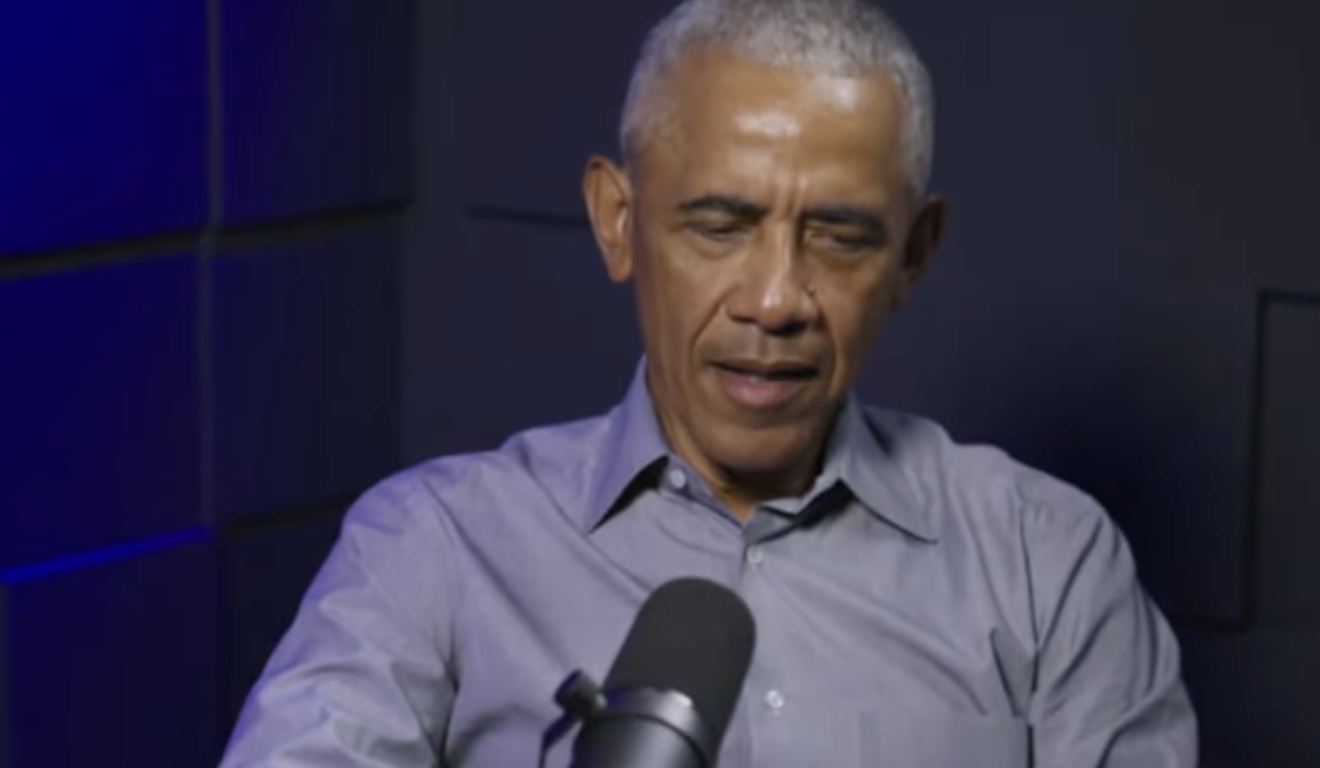
Obama, who served as president from 2009 to 2017 and remains one of the most prominent figures in Democratic politics, later addressed the controversy in an interview released on 14 February with political commentator Brian Tyler Cohen. Obama did not name Trump directly when the video was raised, but he described the behaviour in stark terms. “It’s important to recognize that the majority of the American people find this behavior deeply troubling,” he said.
Obama framed the incident as part of a broader erosion of standards in political life, arguing that provocative content is being deployed for attention even as many Americans expect public figures to show restraint. “It is true that it gets attention, that it’s a distraction, but as I’m traveling around the country … you meet people [and] they still believe in decency, courtesy, kindness,” he said. “And there’s this sort of clown show that’s happening in social media and on television.”
He added that the willingness to engage in conduct widely seen as offensive reflected a shift in the expectations once associated with high office. “And what is true is that there doesn’t seem to be any shame about this among people who used to feel like you had to have some sort of decorum and the sense of propriety and respect for the office. That’s been lost,” Obama said.
The incident has also revived attention on the way Trump uses social media to communicate, amplify claims, and share content produced by supporters. Reuters reported that the president has nearly 12 million followers on Truth Social and that his posts can carry significant political and diplomatic consequences. The Reuters report also noted that the video contained false claims about the 2020 election result being fraudulently taken from him, a central theme Trump continues to press despite repeated rejections by courts and election officials.
In subsequent comments, Trump continued to defend the broader thrust of the post while acknowledging the disputed segment at the end. Reuters reported him saying the video included some images “people don’t like,” adding: “I wouldn’t like it either.”
Days later, Trump was asked whether the staff member blamed for the upload had been disciplined. “No, I haven’t,” he said, according to People magazine. He repeated that the clip was primarily about election fraud, describing it as “a very strong” video, and referenced the explanation that it was connected to The Lion King framing.
The clash comes against a long and fraught political history between Trump and Obama. Reuters noted Trump’s past promotion of the false “birther” conspiracy theory that Obama was not born in the United States, a claim Obama and officials repeatedly refuted during and after his presidency.
For Democrats, the episode has been treated as a stark example of racist rhetoric becoming more overt in mainstream politics. For Republicans who criticised it, the controversy has posed a test of how far party figures are willing to confront a president whose online presence remains central to his political identity and mobilisation strategy.
For Obama, the moment offered a different kind of contrast, one he emphasised directly in his comments about decency and the loss of “decorum” around the presidency. While he avoided naming Trump, his remarks signalled that he views the incident as more than an isolated offensive clip, instead placing it within a broader argument about what Americans should expect from leaders and what happens when the boundaries of acceptable public conduct shift.
As the White House continues to blame a staff error while the president refuses to apologise, the controversy has underscored how quickly the administration can move from dismissal to retreat, and how difficult it can be to contain the fallout from content circulated at the highest level of US government, even when it is removed.