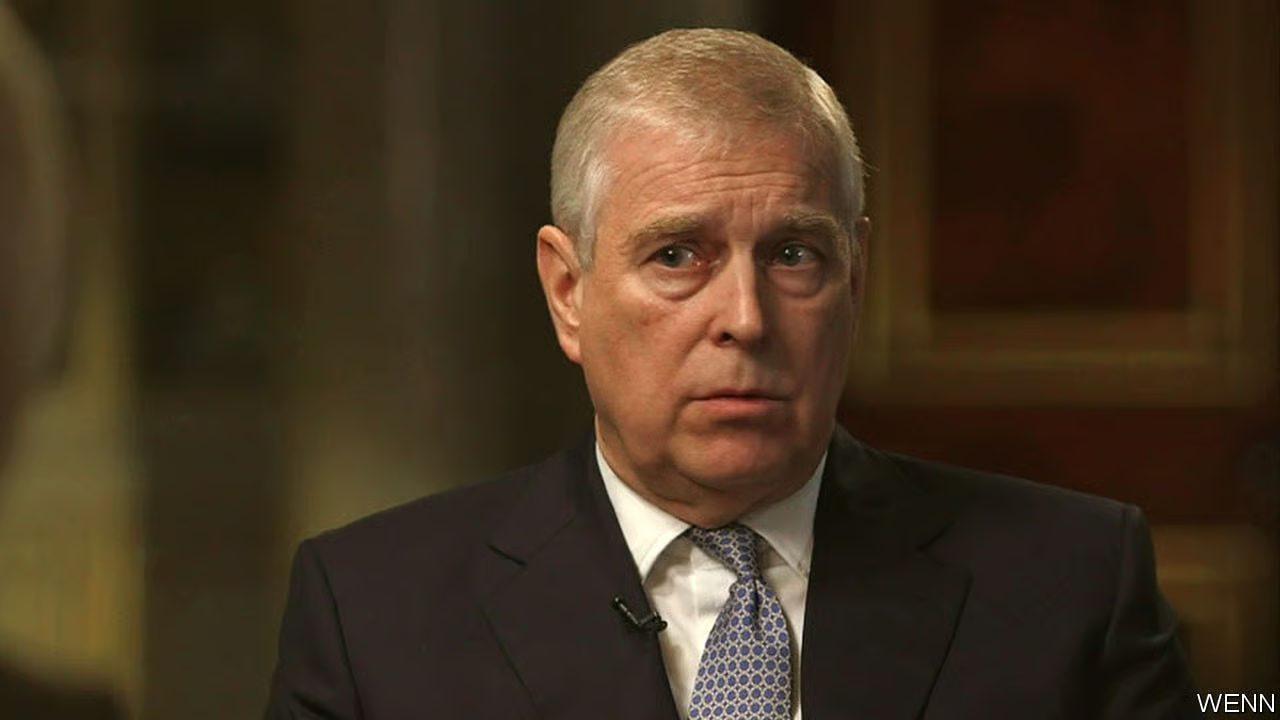
Andrew Mountbatten-Windsor, the Duke of York, could face a maximum sentence of life imprisonment if charged and convicted over allegations relating to misconduct in public office, legal experts have confirmed, following his arrest by police earlier this week.
The 66-year-old was detained by officers from Thames Valley Police on 19 February and questioned on suspicion of misconduct in public office. He was released later the same day after spending several hours in custody and remains under investigation. No charges have been brought.
Police confirmed that the arrest forms part of an ongoing inquiry into allegations connected to his conduct while serving in an official capacity. Detectives are understood to be examining whether information obtained during his time as a UK trade envoy was improperly shared.
Misconduct in public office is a common law offence in England and Wales. It applies where a public officer wilfully neglects to perform their duty or wilfully misconducts themselves to such a degree as to amount to an abuse of the public’s trust. The offence is considered serious and, while sentences vary significantly depending on the circumstances, it carries a theoretical maximum penalty of life imprisonment.
Legal specialists note that in practice, life sentences are reserved for the most severe examples of criminal conduct. However, the potential maximum reflects the gravity with which the courts treat breaches of public trust, particularly when committed by individuals in positions of authority or influence.
The arrest marks an unprecedented development in modern British history. While members of the royal family have faced public scrutiny in the past, the detention of a senior royal on suspicion of a serious criminal offence is without modern precedent.
Investigators are understood to be reviewing material connected to previously released documents from United States authorities relating to the late financier Jeffrey Epstein. Mountbatten-Windsor has previously denied any wrongdoing in relation to past associations and has consistently stated that he did not engage in unlawful conduct.
Following his arrest, searches were reportedly conducted at properties connected to him, including residences linked to the Sandringham and Windsor estates. Police have declined to comment on specific evidence while the investigation remains ongoing.
The Crown Prosecution Service will ultimately determine whether there is sufficient evidence to bring charges. Prosecutors must apply a two-stage test: whether there is a realistic prospect of conviction and whether prosecution is in the public interest.
At present, Mountbatten-Windsor has not been charged and remains entitled to the presumption of innocence. Any decision to prosecute would likely trigger complex legal and constitutional considerations, given his former public role and the wider implications for the monarchy.
Buckingham Palace has not issued detailed comment on the arrest, beyond confirming that it is a matter for the relevant authorities.
The investigation continues, with police indicating that further updates will be provided if and when formal charging decisions are made.