Russia said it was in constant contact with Iran’s leadership and condemned what it described as “outright aggression” against Tehran after Iranian state media announced that Supreme Leader Ayatollah Ali Khamenei had been killed in U.S. and Israeli strikes, a development that has intensified fears of a wider regional conflict and prompted fresh warnings from Moscow about escalation.
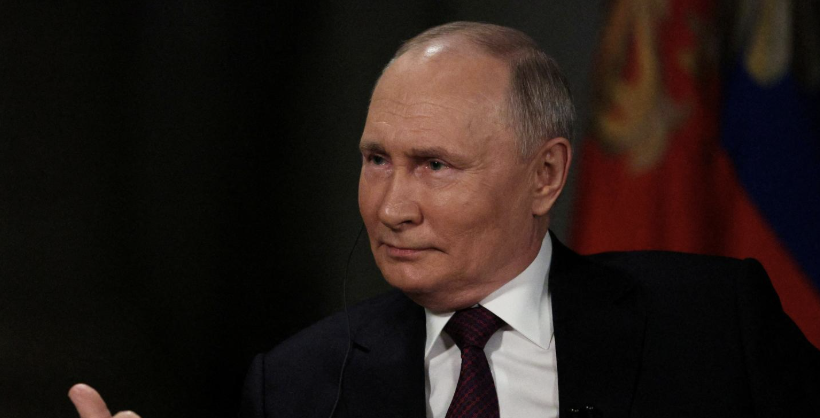
In a message of condolence to Iran’s President Masoud Pezeshkian, Russian President Vladimir Putin described the killing as “a murder” committed in “cynical violation of all norms of human morality and international law”, according to a Kremlin statement cited by Reuters. Putin said: “Please accept my deep condolences in connection with the murder of the Supreme Leader of the Islamic Republic of Iran, Seyed Ali Khamenei, and members of his family, committed in cynical violation of all norms of human morality and international law.”
Putin’s remarks came as Iran, Israel and the United States traded further strikes and as the conflict spilled across borders in the Gulf and the eastern Mediterranean. Reuters reported that Israel expanded its military action to include strikes in Lebanon after Iran-backed Hezbollah launched missiles and drones towards Israel, saying it was retaliating for Khamenei’s killing. Israel said it was attacking sites connected to Hezbollah in Lebanon’s southern suburbs of Beirut, with Lebanese state media reporting dozens of casualties.
The Kremlin said on Monday it was “deeply disappointed” by how events had unfolded and suggested that negotiations between Washington and Tehran, mediated by Oman, had appeared to be progressing before the strikes. Kremlin spokesman Dmitry Peskov said Russia was analysing the situation and drawing its own conclusions. “As for the negotiations mediated by Oman between the United States and Iran, we can certainly express our deep disappointment that, despite reports of significant progress in these negotiations, the situation has nevertheless deteriorated into outright aggression,” Peskov told reporters, according to Reuters.
Peskov said Putin was due to make an international phone call later on Monday related to Iran, without specifying who would be on the line. “I can only say that we are in constant contact with the Iranian leadership and are discussing the situation surrounding that country. At the same time, we are continuing our dialogue with the leadership of the countries affected by the conflict, including the Persian Gulf states,” he said.
Russia has cultivated closer ties with Iran in recent years, including through a strategic partnership, while also positioning itself as an actor in Middle East diplomacy. Reuters described Khamenei as “the third Russian ally to be toppled in the past 15 months”, following the falls of Moscow-backed leaders in Syria and Venezuela, and said his death represented a strategic setback for the Kremlin in a region where it has sought greater influence.
The killing also underscored the personal dimension of the relationship between the two states’ leaderships. Reuters reported that Putin has long kept up contacts with Khamenei and that his first visit outside the former Soviet Union since the start of Russia’s 2022 war in Ukraine was to Tehran, where he met the Iranian leader. Putin’s condolence message also included praise of Khamenei as an “outstanding statesman” who contributed to developing relations between Russia and Iran to “the level of a comprehensive strategic partnership”, Reuters reported.
Iranian state media said Khamenei, 86, was killed on Saturday in air strikes by Israel and the United States. In the aftermath, Iran faced questions over succession and stability at the top of the Islamic Republic’s political and clerical system. Reuters reported that Pezeshkian said a leadership council composed of himself, the judiciary head and a member of the Guardian Council had temporarily assumed the duties of Supreme Leader.
The immediate regional consequences have been severe. Reuters reported that witnesses heard loud blasts in Dubai, the Qatari capital Doha and areas near Abu Dhabi, while Kuwait said its air defences had intercepted hostile drones. The U.S. embassy in Kuwait issued warnings for people to take cover due to the threat of missile and drone attacks, Reuters reported. The agency also reported that a drone strike hit Britain’s Royal Air Force base at Akrotiri in Cyprus overnight, causing limited damage and no casualties, in what it described as the first attack on the base since 1986 and a marked escalation.
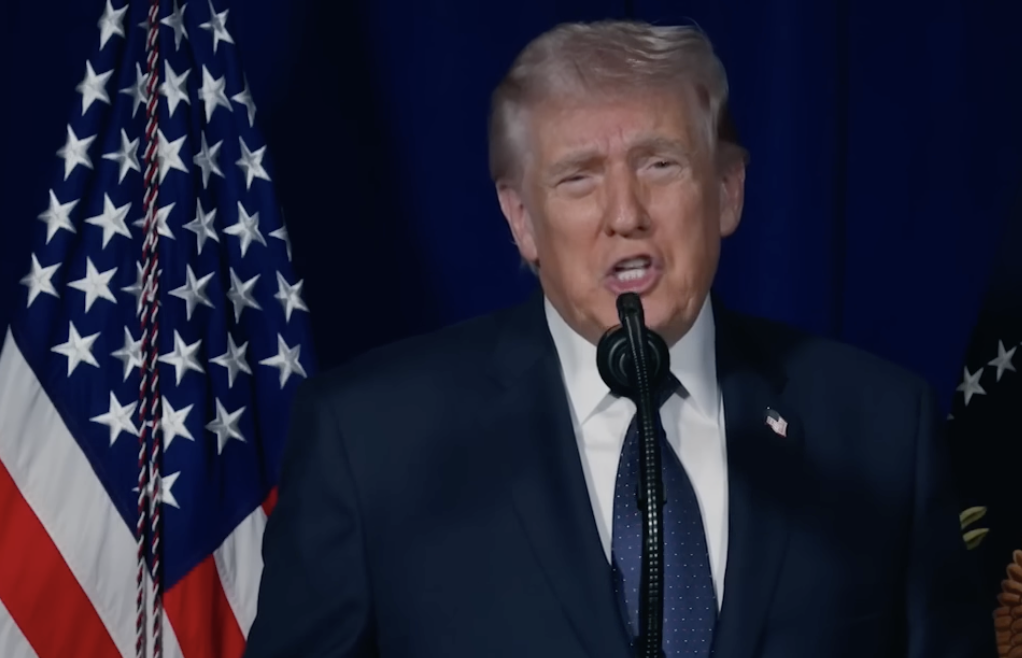
In Washington, a White House official told Reuters that the military campaign would continue. “President Trump said new potential leadership in Iran has indicated they want to talk and eventually he will talk. For now, Operation Epic Fury continues unabated,” the official said. Reuters also reported that Trump said in interviews on Sunday that the U.S.-Israeli assault could continue for at least four weeks, and that the first U.S. casualties of the campaign were confirmed on Sunday, including the deaths of three service personnel.
Against that backdrop, the Mirror report that prompted renewed attention in Europe focused on rhetoric emerging from pro-Kremlin media figures and commentators. The report said Russian propagandists had threatened revenge strikes on Europe in response to Khamenei’s death, while noting that Moscow had hinted at possible retaliation. Such claims, when they come from television punditry rather than formal government statements, can be difficult to verify independently and do not necessarily reflect operational intent, but they contribute to a climate of anxiety about whether the conflict could expand beyond the Middle East.
Russia’s formal diplomatic messaging has emphasised condemnation and warnings of wider catastrophe. The Mirror cited statements attributed to Russia’s Foreign Ministry criticising the U.S.-Israeli operation in Iran and describing it as a “pre-planned and unprovoked act of armed aggression” against a sovereign UN member state, and warning of a trajectory toward humanitarian and economic disaster. Reuters also reported the Russian Foreign Ministry had accused the United States and Israel of plunging the Middle East “into an abyss of uncontrolled escalation”.
While Moscow has aligned itself with Tehran on several geopolitical fronts, it has also been careful about the limits of its commitments. Reuters noted that the published strategic partnership between Russia and Iran does not contain a mutual defence clause, and reported that Russia has repeatedly said it does not want Iran to develop an atomic bomb, fearing that would trigger a nuclear arms race across the region.

For Europe, the concern is twofold: the direct security risk from any spillover, and the indirect effects through energy markets, aviation disruption and heightened instability in neighbouring regions. Reuters reported that global air travel was heavily disrupted, with major Middle Eastern airports affected, including Dubai, and that oil prices had surged as traders assessed the risk of supply disruptions around the Gulf and the Strait of Hormuz.
As fighting continued, Reuters reported that Hezbollah’s entry into the conflict prompted Israeli strikes in Lebanon and widened a confrontation that began with U.S. and Israeli attacks on Iran, and that Iran said it launched new waves of missiles toward Israel. Iran’s Islamic Revolutionary Guards Corps said the missile wave targeted Israeli government and military and security centres, Reuters reported, while Israeli officials described ongoing operations, including strikes on Iranian targets.
The scale and duration of the conflict will likely determine whether the current escalation hardens into a longer war, or whether back-channel diplomacy produces a pause. For Russia, the death of a long-standing partner in Tehran presents both a strategic blow and an opportunity to argue that U.S. policy is destabilising the region. For Iran, the killing of its Supreme Leader represents a profound shock to the state’s governing structure while it is under military pressure. And for Europe, the mixture of real military developments and inflammatory rhetoric has sharpened uncertainty over how far the conflict could spread, and what new risks might follow if further retaliation targets international interests beyond the region.