US President Donald Trump has said Iran would be “obliterated” if it or its proxy forces attempted to assassinate him, as security officials assess the risk of retaliation following a sharp escalation in fighting that has included US and Israeli strikes on Iranian targets and the reported killing of Iran’s supreme leader, Ayatollah Ali Khamenei.
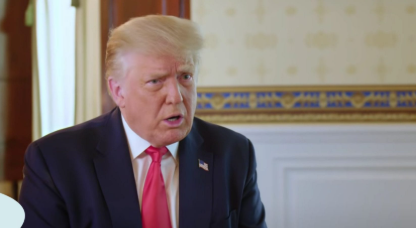
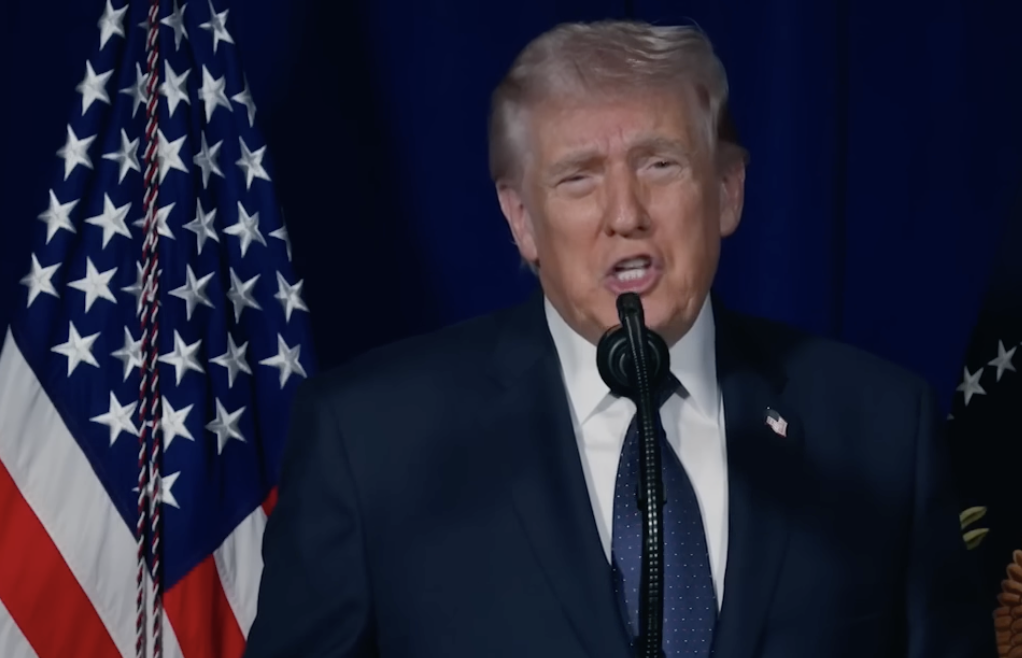
The comments resurfaced in recent hours after a clip from February 2025 began circulating online, showing Trump responding to a question about what would happen if Iran, Hamas or Hezbollah tried to kill him.
“That would be a terrible thing for them to do,” Trump says in the footage. “Not because of me, if they did that they would be obliterated… that would be the end.” He adds that he had “left instructions” and warned there would be “nothing left” of Iran in that scenario.
The renewed attention on the clip comes amid heightened tensions after the weekend’s military action and subsequent retaliation across the region, as well as public discussion of how the United States would respond to a direct threat against the president.
A US intelligence assessment has warned that Iran and Iran-aligned actors could pursue targeted attacks, including against US interests, following Khamenei’s death, with officials also bracing for cyber activity by pro-Iranian “hacktivists,” according to Reuters.
Trump, speaking in a telephone call with ABC News reporter Jonathan Karl, suggested he believed Iran had sought to target him previously and framed the reported strike on Khamenei as pre-emptive.
“I got him before he got me,” Trump told Karl, according to a post by the journalist. “They tried twice. Well I got him first.”
The White House has not publicly provided evidence for the president’s claim of two foiled attempts, but US authorities have previously described Iranian-linked plots and threats directed at US officials and political figures, including Trump.
In November 2024, the US Justice Department announced murder-for-hire and related charges involving an alleged Iranian asset, Farhad Shakeri, and said Shakeri had been tasked by the Iranian regime with surveilling and plotting to assassinate then President-elect Donald J. Trump. Iran has repeatedly denied directing assassination efforts against US officials.
The longstanding hostility between Washington and Tehran intensified after the United States killed Iranian military commander Qasem Soleimani in a drone strike in Baghdad in January 2020, an event Iranian officials have cited in vows of retaliation. Security analysts have since warned that threats against senior US figures can persist for years, even when direct action is constrained by distance and capability.
In the LADbible report that drew together the resurfaced clip and the wider escalation, the outlet noted that Iran is not understood to possess missiles able to reach the US mainland, while also pointing out that threats could take other forms. The article also described how concerns about an attempt on Trump’s life had risen alongside fears of a wider regional war.
Questions about the constitutional implications of a president being killed or dying in office have also re-emerged, amid a separate wave of public speculation online about succession and continuity of government.
Under the US Constitution’s Twenty-fifth Amendment, if a president dies, resigns, or is removed from office, the vice-president “shall become President.” If the vice-presidency is vacant, the new president nominates a replacement who takes office after confirmation by a majority vote in both houses of Congress.
In this case, that would mean Vice-President JD Vance would assume the presidency immediately upon Trump’s death, followed by the selection of a new vice-president through the constitutional process.
The renewed debate over assassination risk has played out against a fast-moving and volatile regional backdrop, in which the United States has sought to deter further Iranian retaliation while also defending US personnel and allies.
The DHS threat assessment cited by Reuters said a large-scale physical attack inside the United States was considered unlikely in the near term, but warned of potential targeted activity and increased cyberattacks.
In practical terms, US security planning around threats to the president involves the Secret Service, intelligence agencies, and local law enforcement partners, with protective posture adjusted based on threat streams. American officials have repeatedly said they do not discuss many protective measures publicly, citing operational security.
Even so, public statements like Trump’s, promising overwhelming retaliation, can carry strategic weight because they are read by adversaries, allies, and domestic audiences as signals of intent.
Trump’s “obliterated” remark is consistent with his long-standing approach of blending deterrent threats with claims that he has prepared specific military instructions in advance. In the resurfaced February 2025 clip, he says he had “left instructions,” without detailing what those instructions were.
At the same time, the use of such language risks further escalating tensions at a moment when miscalculation is already a concern, with multiple actors involved across several theatres and a significant risk of retaliatory attacks on US forces and facilities in the region.
On Sunday, Trump’s comments to ABC’s Karl again appeared designed to project strength and inevitability, portraying the reported strike on Khamenei as having removed a direct personal threat.
Whether Iran would attempt to target a sitting US president remains a subject of intense scrutiny. Iran’s leadership has previously denied involvement in alleged plots and has often framed its posture as defensive and retaliatory rather than expansionist, even as it has supported proxy groups across the region. Western intelligence agencies, meanwhile, have repeatedly said Iran maintains networks and capabilities that can be used for covert operations.
The Justice Department’s 2024 announcement demonstrated how US prosecutors and investigators have sought to disrupt alleged Iranian-linked operations before they can advance, using criminal charges to expose networks and deter further activity.
For US officials, the immediate challenge is to manage both external threat vectors and domestic security concerns, while avoiding steps that could widen the conflict further. The Reuters assessment warned that retaliation may come through cyber means as well as attempts to strike US or allied interests abroad.
For Trump, the controversy now sits at the intersection of a real security environment and an information ecosystem in which old clips can become new flashpoints. The February 2025 video has been recirculated widely in recent days, with supporters presenting it as proof of deterrence and critics warning it adds fuel to an already combustible situation.
The White House has not issued a detailed public briefing specifically addressing the resurfaced clip, but the president’s more recent comments to Karl have underscored that he views the risk as serious enough to reference publicly.
As tensions continue, the possibility of Iran-linked retaliation, whether through proxies, covert activity, or cyber operations, remains a key focus for US security agencies, with officials warning that events in the Middle East can have unpredictable security repercussions far beyond the region.