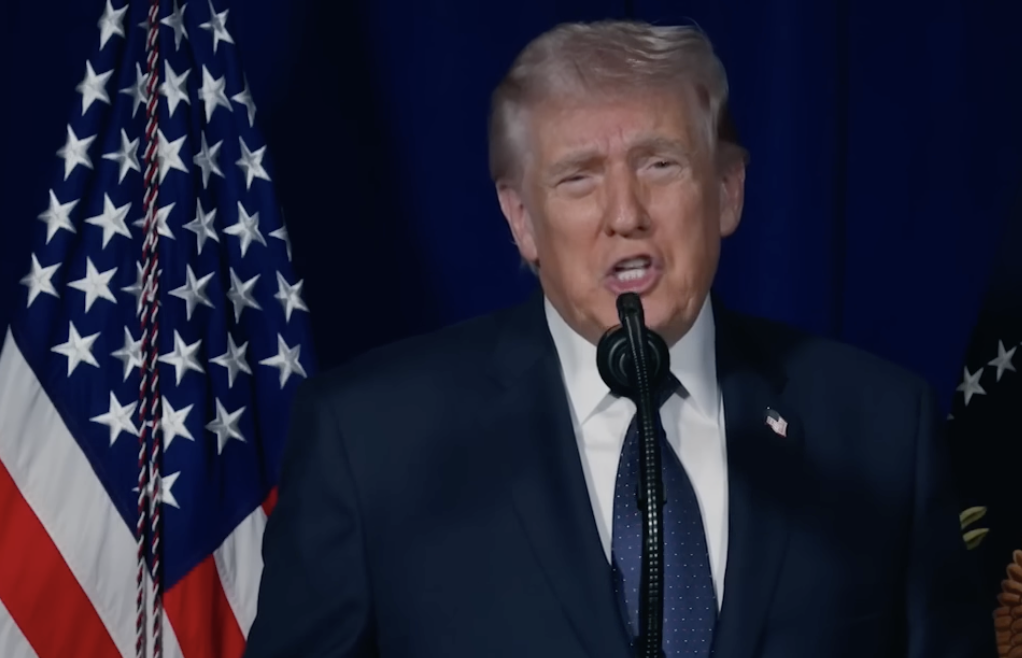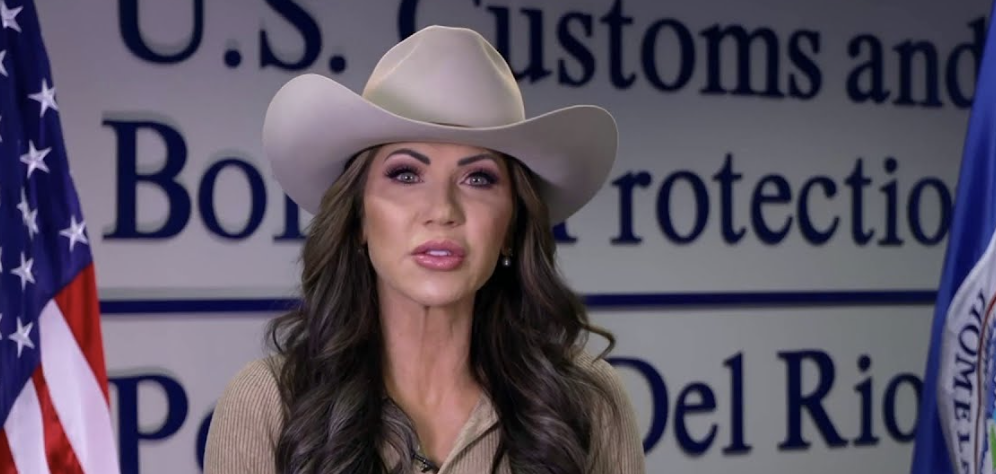
Donald Trump has removed Kristi Noem as U.S. homeland security secretary after a turbulent week in which the former South Dakota governor came under fierce scrutiny over immigration enforcement, spending decisions, and the role of Corey Lewandowski, a longtime Trump ally who held an influential position around her at the Department of Homeland Security. Trump said Senator Markwayne Mullin of Oklahoma would replace her, while Noem would move into a new post as special envoy for “The Shield of the Americas,” a Western Hemisphere security initiative the administration says will be unveiled later this month.
The dismissal came after days of bruising testimony on Capitol Hill. Lawmakers had pressed Noem over fatal federal operations in Minneapolis, a controversial advertising campaign tied to her department, and persistent questions about Lewandowski’s role inside DHS. Reuters reported that Trump had grown angry after Noem told Congress that he had approved a roughly $220 million border security advertising campaign that prominently featured her, only for him to later say he had not signed off on it. “I never knew anything about it,” Trump told Reuters, directly undercutting Noem’s account under oath.
That dispute over the ad campaign appears to have badly damaged Noem at a moment when she was already under pressure. According to Reuters, the campaign had drawn bipartisan criticism because it was awarded without a standard competitive bidding process and because of the extent to which it showcased Noem herself. The controversy became part of a broader portrait of a department accused by critics of weak internal controls, heavy politicisation and an unusual concentration of influence around a small circle of aides.
The most politically explosive moment of Noem’s week, however, came in a House hearing when Representative Sydney Kamlager-Dove, a California Democrat, raised rumours of a relationship between Noem and Lewandowski. Asked whether she had had sexual relations with him during her tenure at DHS, Noem did not give a direct yes or no answer. Instead, she responded, “I am shocked that we’re going down and peddling tabloid garbage in this committee today.” Kamlager-Dove replied that if a federal official was “sleeping with their subordinate,” that official should want to answer clearly. The exchange immediately intensified attention on allegations that had circulated around Republican politics for years, though they remain allegations and have long been denied by Noem.
For Trump, the episode was especially awkward. Reports in recent weeks had suggested he was already unhappy with the optics surrounding Noem and Lewandowski, both of whom are married to other people. The Independent reported in February that the president had become uncomfortable with their relationship, while Noem had previously described the affair allegations as a “disgusting lie.” By the time she faced the House Judiciary Committee this week, the rumours were no longer a background Washington story. They had become part of a nationally televised hearing about whether a cabinet secretary was exercising proper judgment while running one of the largest and most politically sensitive agencies in the federal government.
Lewandowski himself had been a source of controversy inside DHS well before the hearing. Though described as an unpaid special government employee, he was portrayed in reporting by ProPublica and Reuters as exercising extraordinary influence over staffing, contracts and day-to-day operations. ProPublica reported that Noem told Congress Lewandowski had no role in approving contracts, while current and former officials and internal records reviewed by the outlet contradicted that claim. Reuters separately reported that Lewandowski had entered the cockpit of a government jet during a flight and later played a role in the firing of a pilot over a dispute involving a missing blanket, further feeding accounts of dysfunction around the secretary’s office.
Noem’s fall is striking because she had once appeared to embody the style Trump wanted at DHS. She was one of the most visible faces of his immigration crackdown, travelled to enforcement operations, adopted aggressive rhetoric on border policy, and made herself a central public symbol of the administration’s hard line. Reuters described her as a high-profile figure in the deportation drive, while Time said the move marked the first removal of a cabinet secretary since Trump returned to office. In many ways, Noem had tried to become one of the administration’s most loyal and recognisable political communicators.

But loyalty and visibility were not enough to protect her once multiple controversies converged. Reuters reported that her tenure had already been weakened by declining support for Trump’s immigration policies, outrage over the Minneapolis operations, bipartisan criticism in Congress and Democratic impeachment articles. Even some Republicans had begun calling for her removal. The cumulative effect was to leave Noem politically exposed at the precise moment when her testimony raised new questions about candour, internal management and personal conduct.
Noem, 54, rose from South Dakota politics to become a national Republican figure, serving in the U.S. House before winning the governorship of her state. Her image as a combative conservative with strong appeal to the party’s base made her a frequent subject of vice-presidential speculation during Trump’s orbit in recent years. She is married to Bryon Noem, and the couple have three children. Her family life became part of the public conversation again this week because her husband had been present during part of the congressional proceedings before leaving the room shortly before the question about Lewandowski was asked, a detail that gave the hearing an even more dramatic edge.
Trump’s decision to move Noem rather than simply cast her out entirely also reflects his habit of mixing punishment with public ambiguity. In announcing the change, he praised Senator Mullin as a “MAGA warrior” and said Noem had “served us well,” according to reporting on the announcement. Mullin told reporters it was “an honor to be nominated” and that he was excited to get to work, though he acknowledged he still had to go through the confirmation process. Noem, for her part, later posted that she was honoured to continue serving the president in her new role focused on regional security and countering cartels.
Yet the speed and timing of the decision left little doubt that this was a forced removal. The president announced the move just before Noem appeared at a law enforcement conference in Nashville, where she reportedly took the stage without addressing her ouster and continued speaking as though she remained in charge of DHS. That image, a cabinet secretary delivering remarks while her dismissal was already public, captured the abruptness of her downfall after months of spectacle, controversy and internal unease.
Whether the final blow was the ad dispute, the congressional grilling, the deaths tied to federal operations, or the renewed focus on Lewandowski, the result was the same. One of the most prominent enforcers of Trump’s immigration agenda has been pushed out of the department she helped define. The White House is now betting that Mullin can steady an agency battered by scandal while keeping the administration’s border agenda intact. For Noem, the story ends not with the political ascent she once seemed to be plotting, but with a removal that turned personal rumours, management questions and public contradictions into a career-breaking crisis.