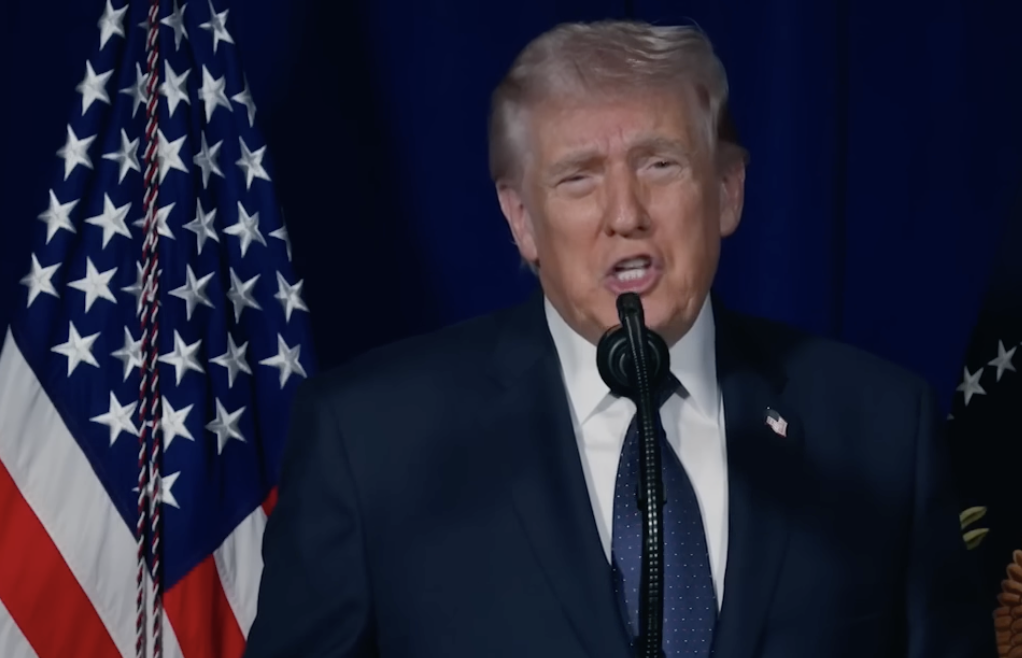
President Donald Trump has said Americans should worry about the possibility of Iranian retaliation on U.S. soil, offering a blunt acknowledgement of the domestic risks attached to the expanding war with Iran as he defended a conflict that has already killed American service members and drawn fresh scrutiny in Washington. In a Time cover story published on March 5 under the headline Trump’s War, Trump was asked whether it was reasonable for Americans to be concerned about being attacked at home. “I guess,” he replied. He added: “But I think they’re worried about that all the time. We think about it all the time. We plan for it. But yeah, you know, we expect some things.” He then offered an even starker assessment of the human cost of the conflict, saying: “Like I said, some people will die. When you go to war, some people will die.”
The comments came as the United States entered the sixth day of a widening military campaign against Iran, a conflict that Time characterised as the kind of foreign war Trump had long promised to avoid and Reuters reported had already killed more than 1,000 people across the region. The war has quickly become one of the defining crises of Trump’s second presidency, not only because of the scale of the military action itself but because of the questions it has raised about its objectives, its duration and the risks of blowback beyond the Middle East. Trump has sought to frame the operation as necessary and fast-moving, while critics have pressed for clarity on what success would look like and how the administration intends to keep Americans safe.
The immediate backdrop to Trump’s remarks was the killing of six U.S. service members in a retaliatory drone strike on a U.S. military facility at Port Shuaiba in Kuwait. Reuters reported that the Pentagon identified Major Jeffrey O’Brien, 45, and announced the believed death of Chief Warrant Officer 3 Robert M. Marzan, 54, after first naming four other members of the same Army Reserve command who were killed in the attack. Those previously identified were Captain Cody A. Khork, 35, Sergeant 1st Class Noah L. Tietjens, 42, Sergeant 1st Class Nicole M. Amor, 39, and Sergeant Declan J. Coady, 20. Both O’Brien and Marzan served in the 103rd Sustainment Command out of Des Moines, Iowa, part of the Army’s logistics and supply operation. The attack marked the first American combat deaths publicly tied to the war and underscored how quickly the conflict had moved from an overseas strike campaign to a war with direct U.S. casualties.
Trump’s language in the Time interview suggested that the administration was not ruling out the possibility of further violence reaching Americans outside the battlefield. He did not attempt to reassure the public that the homeland was insulated from reprisal. Instead, he leaned into a message of permanence and preparedness, saying fears of attack are something Americans and the government think about “all the time.” That answer was notable not only for its bluntness but because it came at a moment when the administration was publicly pressing the case that the war was justified and manageable. His remarks gave an unusually direct answer to a question many presidents try to soften during wartime.
The domestic political fallout was already visible in Congress on the same day. Reuters reported that the House of Representatives rejected an effort to require Trump to obtain congressional authorisation for hostilities against Iran, voting 219 to 212 largely along party lines. Supporters of the resolution said it was an attempt to reclaim Congress’s constitutional role in authorising war and to force the administration to explain why the U.S. was fighting, what the endgame was and how Americans would be protected. Representative Gregory Meeks described the conflict as “a war of choice, launched by this administration without authorization, without clearly stated objectives or a defined endgame, and without explaining how they intend to keep Americans safe.” The measure failed, but Reuters noted that the War Powers Resolution still requires unauthorised military action to end within 60 days unless Congress approves it, placing pressure on the White House as the fighting continues.
Trump has meanwhile given every sign that he sees the war in sweeping terms that extend beyond airstrikes and immediate battlefield goals. In a separate Reuters interview published the same day, he said the United States would have to be involved in choosing Iran’s next leader after the killing of Ayatollah Ali Khamenei at the start of the war. “We’re going to have to choose that person along with Iran. We’re going to have to choose that person,” he said. He added: “We want to be involved in the process of choosing the person who is going to lead Iran into the future, so we don’t have to go back every five years and do this again and again. We want somebody that’s going to be great for the people, great for the country.” He also said it would be “wonderful” if Iranian Kurdish forces launched attacks on Iran’s security forces from Iraq, and he said of such an offensive, “I’d be all for it.”
Those remarks offered a broader picture of Trump’s approach to the war. Rather than presenting the campaign as a limited action aimed at a narrow security objective, he spoke in terms of reshaping Iran’s future leadership and backing additional pressure from forces on Iran’s borders. He also dismissed concerns about energy costs, telling Reuters that any increase in petrol prices was secondary to the importance of the conflict and saying, “If they rise, they rise. But this is far more important than having gasoline prices go up a little bit.” He added that the war was moving “ahead of schedule, and much stronger than anybody would have ever expected.”
The language marks a sharp contrast with the anti-war and anti-interventionist image Trump used for years to define himself politically. Time’s description of Trump’s War on its homepage framed the conflict in exactly those terms, saying that although Trump campaigned as a president of peace, he had governed as the opposite and had drawn the United States into the kind of conflict he long pledged to avoid. That contrast matters because Trump’s political identity has long rested in part on the claim that he was less eager than predecessors to entangle the United States in major overseas wars. The Iran conflict now poses a direct test of that identity, particularly as the costs become more visible and the administration concedes that Americans could face dangers well beyond the front line.
There were already signs on March 5 of how anxieties about the war could spill into domestic security fears. The People report noted that Trump’s comments came days after a mass shooting in Austin, Texas, that killed three people, including the gunman, and injured 14 others. According to the report, the FBI was investigating whether the shooting had a terrorism nexus after indicators linked to the suspect and his vehicle. While no direct causal connection was established between that attack and the war, the timing intensified public concern about whether the conflict could inspire or accelerate violence inside the United States. Trump’s answer, rather than dismissing such fears, effectively acknowledged them.
For now, Trump appears determined to press on, even as the casualty count rises, Congress debates its authority and the public is left to absorb a president’s unusually unvarnished assessment of wartime risk. His comments did not promise safety. They did not set out a detailed strategy for preventing retaliation at home. Instead, they amounted to a warning that the consequences of war are not theoretical and not always distant. With six U.S. service members already dead in Kuwait, more than 1,000 people reported killed across the wider conflict and the administration openly discussing Iran’s future leadership, Trump’s words have placed the stakes in stark terms. The danger, he suggested, is real. So is the cost.