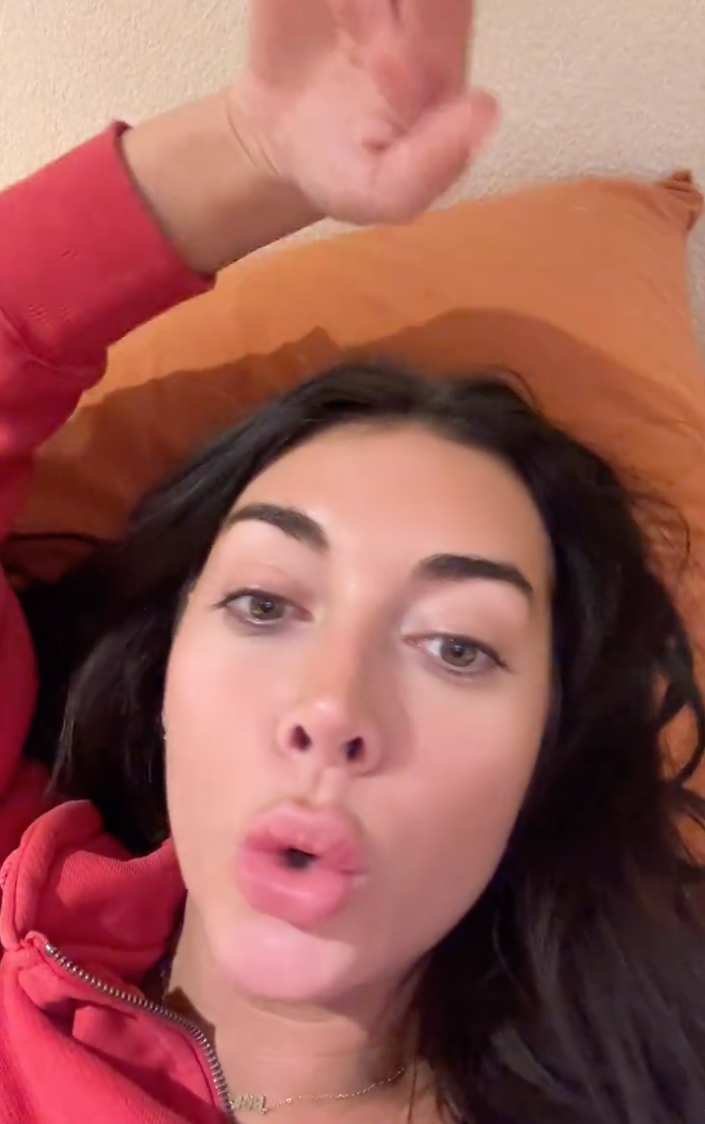
Brianna LaPaglia, the Barstool Sports personality better known online as Brianna Chickenfry, has ignited another round of debate over celebrity weight-loss drugs after posting a blunt TikTok in which she said many people around her were taking Ozempic despite not needing it and warned, in her own words, that they were “all gonna die.” The video, posted on 10 March, quickly spread beyond TikTok and drew attention not only because of its language but because LaPaglia tied the issue to her own history of disordered eating and severe anxiety.
In the video, LaPaglia said, “No tea, no shade, no hate, just some field research,” before claiming, “Every single bitch I know is on Ozempic. People that do not need Ozempic.” She added that while she personally “could lose a couple,” she did not believe she needed the drug, and ended with the warning that has since dominated headlines: “You’re gonna die.” Her remarks were not framed as a medical explanation or a formal public-health argument. They were delivered in the style that has made her popular online, direct, profane and highly personal, but they landed in the middle of an already heated public conversation over GLP-1 medications and their growing use for cosmetic weight loss.
Ozempic is the brand name for semaglutide, a GLP-1 receptor agonist used to treat adults with type 2 diabetes, and official prescribing information lists gastrointestinal side effects as well as more serious risks including gallbladder problems. In the UK, the Medicines and Healthcare products Regulatory Agency has also warned healthcare professionals and patients about the potential for misuse of GLP-1 receptor agonists and reminded prescribers to discuss serious but less common risks, including pancreatitis and gallbladder disorders. A Baptist Health explainer cited by Page Six similarly lists kidney and gallbladder complications among the potential risks associated with use for weight loss. LaPaglia’s phrasing was clearly hyperbolic, but the broader issue she was gesturing toward, off-label use by people without medical need, is one regulators and clinicians have publicly acknowledged.

What gave the video more weight than a routine celebrity outburst was LaPaglia’s decision to place it alongside her own account of food, weight and mental health. In late February, she appeared on the “Real Pod” podcast and said she had suffered from what she described as an “anxiety-induced eating disorder,” explaining that she was constantly nauseous and would sometimes throw up after eating. Apple’s listing for that episode identifies it as “Brianna ‘Chickenfry’ LaPaglia on Eating Disorder Recovery & Choosing Herself After Heartbreak,” and syndicated coverage quoting the episode reported her saying she would avoid food because she felt so sick from anxiety.
According to the same reporting, LaPaglia said she hit what she regarded as rock bottom in 2023, when she was at her lowest weight and her physical condition had become alarming. Page Six reported her saying she was anemic, bruised and so overtaken by anxiety that she could barely eat, while later describing the moment she realised how unhealthy she had become. She said it took four to five months to regain what she considered a healthy weight and healthier mindset, and that she had since put on 25 pounds. Those details matter because they explain why her comments on Ozempic were not simply about appearance or celebrity culture. She was speaking from the vantage point of someone who has publicly described dangerous weight loss as part of a wider mental-health crisis, not as a goal.

LaPaglia has built her public profile on that kind of oversharing. Barstool Sports describes her as a creator and podcast host behind “PlanBri Uncut” and “BFFs,” the latter of which she co-hosts with Josh Richards. Her online persona has long mixed humour, confrontation and personal disclosure, and over the past two years her private life has become part of her public identity. Much of that attention came through her highly publicised relationship and breakup with country singer Zach Bryan, whose October 2024 announcement of their split was followed by LaPaglia saying she felt “blindsided.” Later coverage of her comments on podcasts and social media described her reflecting on the breakup as emotionally devastating. That background helps explain why recovery, self-image and public scrutiny have remained central themes in her recent interviews and posts.
Her television appearances have expanded that profile beyond podcast audiences. Reporting in late 2025 described her as one of the more surprising competitors on Fox’s “Special Forces: World’s Toughest Test,” a show that placed internet personalities and athletes alike in a military-style training environment. Even when discussing that experience, interviews continued to return to the difficult year that had preceded it, including heartbreak, intense internet attention and the effort to re-establish a healthier sense of self. Seen in that context, the Ozempic video fits a broader pattern in LaPaglia’s public messaging, where she has repeatedly tried to separate physical thinness from wellbeing and reject the idea that weight loss automatically signals health or success.
The reaction online has been divided. Some social media users backed the broader substance of her point, arguing that there is growing social pressure, particularly among young women and in image-driven industries, to use GLP-1 drugs for aesthetic reasons rather than medical need. Others criticised her language as reckless, stigmatising or medically imprecise, especially for people who use Ozempic or similar drugs under a doctor’s care. There is a distinction between misuse and prescribed treatment, and that is one public-health authorities have tried to maintain as the drugs have become more culturally visible. LaPaglia’s video blurred that line rhetorically, even if her stated target was people taking the drug when they “do not need” it.
That distinction is likely why the story travelled so quickly. The public argument over Ozempic is no longer just about medicine. It is also about beauty standards, access, class, celebrity influence and what people are willing to do to become thinner in a culture that rewards it. LaPaglia, whose career has grown through an ability to say the quiet part out loud in the crudest possible terms, effectively turned that debate into a personal accusation against the world she inhabits. Her claim that “every single” person she knows is on the drug was anecdotal and impossible to verify, but it resonated because it echoed a wider suspicion that weight-loss injections have become normalised in social and entertainment circles.
For LaPaglia herself, the more revealing point may be the one beneath the headline. Her remarks were not just about Ozempic. They were about the fear of watching people chase the same external result she once reached through illness, anxiety and disordered eating, and mistake it for health. In public, she has described that period as one in which her body was breaking down while others were reacting to how thin she had become. Her latest video, whatever its flaws in tone or medical precision, was consistent with the argument she has been making in recent weeks: that being smaller is not the same as being well, and that a culture obsessed with getting thinner can flatten the difference between recovery and harm.