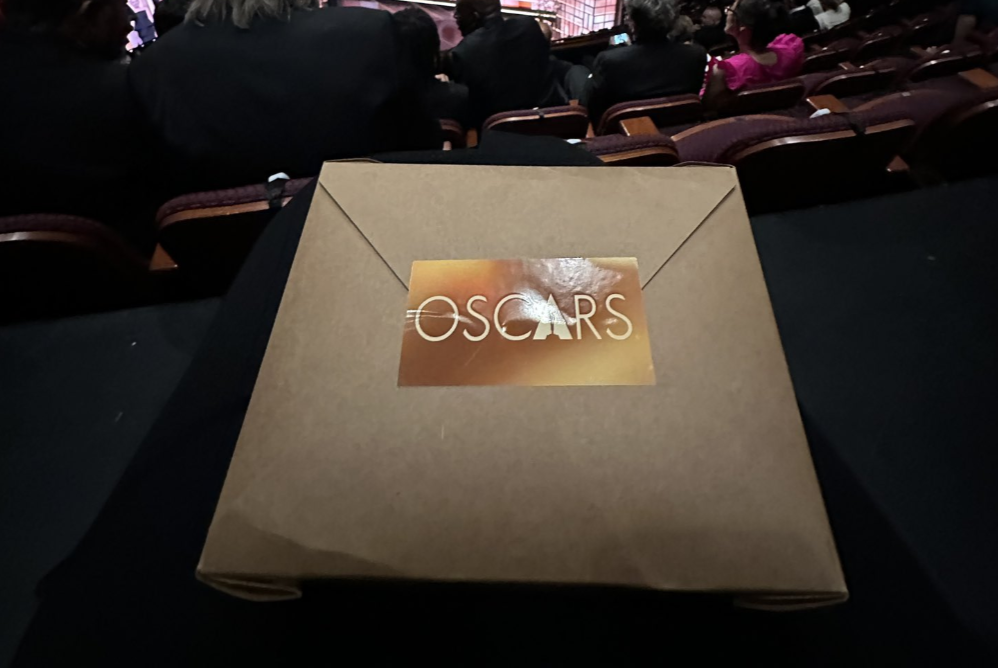
The backlash over this year’s Oscars In Memoriam segment has turned one of the Academy Awards’ most solemn traditions into a fresh row over who gets remembered on the night and who is left for the extended online tribute. At the centre of the criticism are Eric Dane and James Van Der Beek, two actors whose deaths only weeks ago were met with widespread grief, but whose names were absent from the televised montage during the 98th Academy Awards on 15 March. According to TMZ, a source with direct knowledge said the Academy receives hundreds of submissions each year from families, friends and colleagues, with an executive committee representing every branch reviewing names and making recommendations for the broadcast within the limits of the show’s running time. The same source said all submitted names are included on the Academy’s online memorial page for the year.
That explanation has done little to calm anger from viewers who saw Dane and Van Der Beek as obvious inclusions, particularly because both men had recent deaths that were still raw for fans and colleagues. The controversy was sharpened by the fact that the 2026 segment was longer than usual and included major standalone tributes to Robert Redford, Diane Keaton and Rob Reiner, with producers Raj Kapoor and Katy Mullan having previewed an expanded In Memoriam ahead of the ceremony. Viewers on social media questioned how a longer segment could still omit performers whose deaths had dominated entertainment headlines only last month.
Van Der Beek died on 11 February at the age of 48 after a public battle with stage 3 colorectal cancer. He had revealed his diagnosis in November 2024 and became one of the most visible recent celebrities speaking about bowel cancer at a comparatively young age. His death was announced by his family, and in the weeks that followed tributes painted a picture of a performer whose career had stretched far beyond the teen-heart-throb image that made him famous in the late 1990s. Although he remained most closely associated with Dawson’s Creek, Van Der Beek also built a film résumé that included Varsity Blues, Rules of Attraction, Texas Rangers and Formosa Betrayed, making his omission from a film-industry memorial harder for many fans to understand.
His career had long been tied to a particular era of American popular culture, but in recent years he had also become more open about the pressures of family life, illness and work. Kevin Williamson, the creator of Dawson’s Creek, said after Van Der Beek’s death that the two had reconnected in a “very special” way in the years before he died, while his wife Kimberly announced his death on Instagram and described the courage he showed through his illness. The circumstances of his death, and the fact that it followed months of public discussion about the rising incidence of colorectal cancer in younger adults, meant that for many viewers he was not a marginal figure at all, but someone whose absence from the telecast felt immediate and jarring.
Dane’s omission drew a similar reaction, though the debate around his career also revived a familiar distinction between television fame and film recognition. Dane died on 19 February at the age of 53 after a battle with ALS, nearly a year after publicly confirming his diagnosis. He told People in April 2025, “I have been diagnosed with ALS,” adding that he was grateful to have his family beside him as they faced what he called “this next chapter.” While he was most widely known for Grey’s Anatomy and more recently Euphoria, his film work included X-Men: The Last Stand, Marley & Me, Valentine’s Day, Burlesque, Bad Boys: Ride or Die and other titles across two decades. For supporters, that was more than enough to justify a place in the Academy’s on-air memorial.
The emotional force of Dane’s death also gave the omission a particular sting. Rebecca Gayheart said this month that the family was still “in a state of shock” after his death, and described the support they had received from across the entertainment industry. Reports in the days after his death said he had spent part of his final months working with voice technology designed to help preserve communication as ALS progressed. That personal story, combined with the public awareness campaign around the disease that followed his diagnosis, meant some critics saw the absence not merely as an editorial slight but as a missed moment to acknowledge both the actor and the illness that killed him.
One of the clearest public defences of the Academy’s choices came indirectly through Shonda Rhimes, who reacted after Dane was left out and suggested the Oscars tend to focus first on film even when an actor’s best-known work sits elsewhere. That point helps explain the institution’s logic, but it does not resolve the wider complaint. Van Der Beek and Dane were not television-only figures, and neither was being remembered simply because of nostalgia. Both had worked in films, both had recognisable screen legacies, and both died only weeks before the ceremony. In that sense, the criticism was not just about celebrity status but about the Academy’s judgment over what counts as enough cinematic contribution to merit a few seconds in the room.
The Academy’s broader defence is that these choices are never simple. According to the account given to TMZ, the committee process involves weighing hundreds of submissions and making recommendations against severe time limits, even though the online memorial remains available throughout the year. That explanation fits a problem the Oscars have faced repeatedly. The In Memoriam segment has become one of the ceremony’s most scrutinised sections precisely because omission can feel harsher than poor placement. Once a name is missing, viewers do not tend to think about committee procedures or broadcast timing. They think about the life, the death and the silence.
This year, the issue was amplified because the 2026 broadcast made room for major personal tributes to a handful of towering figures. Robert Redford was honoured by Barbra Streisand, while other celebrated names also received prominent recognition. That structure may have made for an emotional show, but it also intensified the visibility of everyone excluded. When audiences saw time devoted to individual salutes yet did not see Dane or Van Der Beek appear in the montage, the omissions looked less like the unavoidable result of a compressed package and more like deliberate choices about hierarchy.
For many viewers, that is the real story behind the reaction. This was not simply an argument over two missing names in an awards-show montage. It was a dispute over how Hollywood measures significance after death, and over whether recent grief and broad public recognition should count for more than institutional categories. Van Der Beek, who spent his final years confronting cancer in public, and Dane, whose ALS battle unfolded in front of the industry that knew him, were both mourned well beyond the projects that first made them famous. Their names may still sit on the Academy’s official online memorial, but the fury surrounding their absence from the live telecast suggests that for a large part of the audience, the question was never whether they were remembered somewhere. It was why they were not remembered when the world was actually watching.