House Democratic Leader Hakeem Jeffries sharply escalated his criticism of President Donald Trump on Sunday after Trump used a Truth Social post to describe Democrats as “the greatest enemy America has,” prompting Jeffries to respond on CNN that the president should “keep his reckless mouth shut before he gets somebody killed.” The exchange came during CNN’s State of the Union, where host Dana Bash read Trump’s post aloud and asked Jeffries for his reaction. Jeffries answered in a single sentence that quickly became the focal point of the interview and of wider political reaction to another burst of inflammatory rhetoric from Washington.
Trump’s wording, as read on air by Bash and echoed in multiple reports on Sunday, was: “Now, with the death of Iran, the greatest enemy America has is the radical left, highly incompetent Democratic Party.” Jeffries’ response did not come out of nowhere in the interview. Before that exchange, he had already accused Trump and Republicans of creating a climate in which, in his words, “life is more expensive, life is more chaotic, and life is more extreme,” while warning that the administration’s conduct was making conditions worse both politically and practically for ordinary Americans.
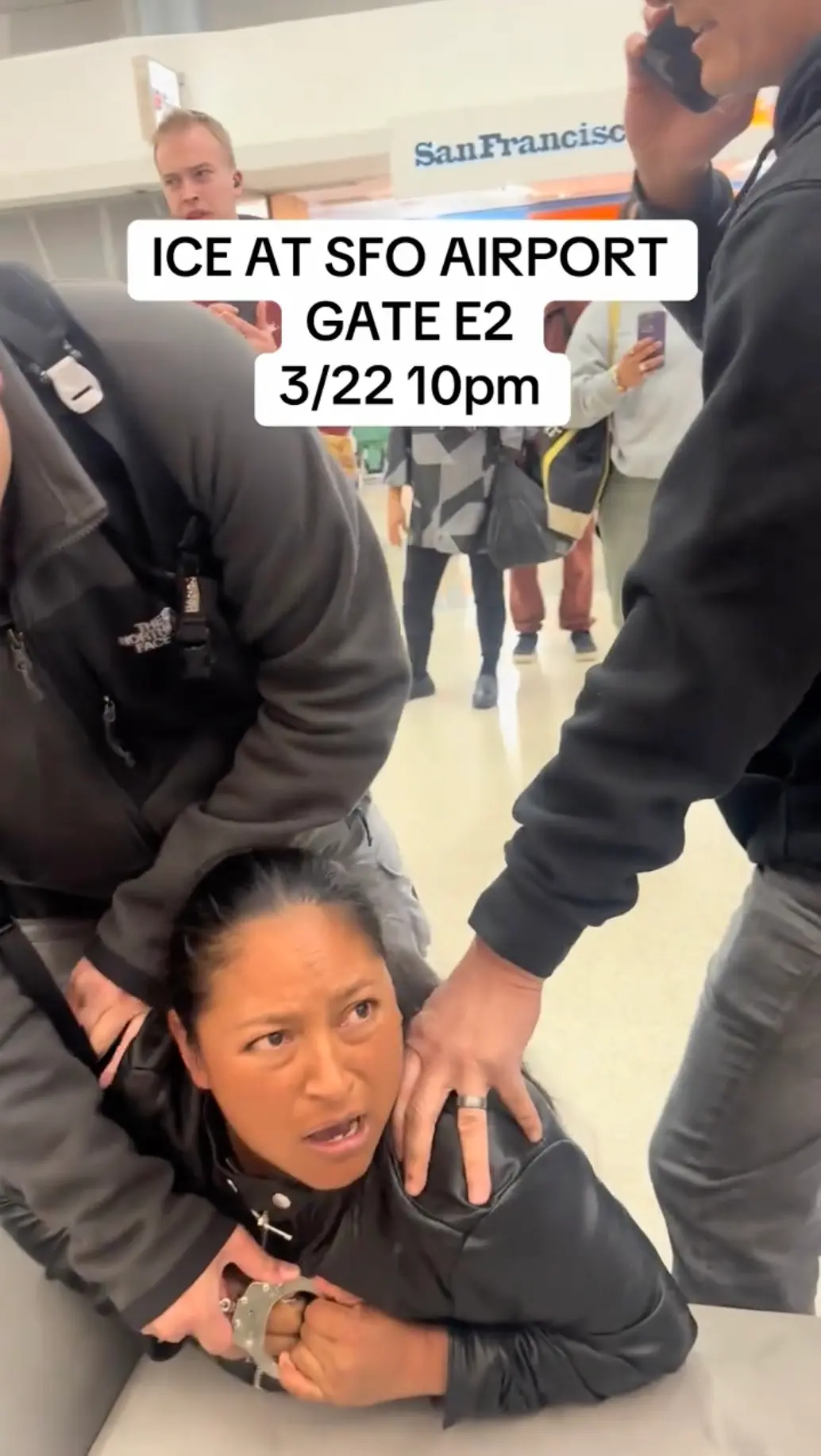
Much of the CNN interview focused on the Trump administration’s plan to deploy ICE personnel to airports during the Department of Homeland Security funding standoff. Jeffries argued that the “last thing that the American people need” was for “untrained ICE agents” to be sent into airports around the country. He said such a move could expose travellers to danger and deepen public disorder at already strained transport hubs. In his telling, the issue was part of a broader pattern in which aggressive immigration enforcement and partisan brinkmanship were colliding with day-to-day public services.
Jeffries also used the interview to press a wider Democratic case against the administration’s immigration posture. He said ICE was “out of control” and argued that it should operate like every other law enforcement agency in the country, including the use of judicial warrants and clearer limits on conduct at sensitive locations such as schools, hospitals, houses of worship and polling sites. He called for proper training, use-of-force policies, independent access to detention centres and the possibility of state or local investigation if federal agents broke the law. Those comments placed his remark about Trump’s “reckless mouth” within a larger argument that overheated language from the president was being matched by policies that Democrats say carry real-world consequences.
The confrontation also landed against the backdrop of the Trump administration’s military confrontation with Iran, which dominated much of the same CNN programme. Jeffries described the conflict as a “reckless war of choice” and said the administration had failed to present the public with a coherent vision, plan or exit strategy. He said there was strong opposition to continuing the war and signalled that Democrats planned to move a war powers resolution. That context mattered because Trump’s “greatest enemy” line appeared in a post tying domestic political opponents to a moment of international conflict, a combination Jeffries suggested could further inflame an already dangerous climate.
For Jeffries, the clash was another high-profile moment in a political rise that has made him one of the most prominent Democratic figures in Washington. The Brooklyn-born congressman has represented New York’s 8th congressional district since 2013 and became House Democratic leader in 2023, succeeding Nancy Pelosi. Reuters reported at the time of his election that he became the first Black party leader in either chamber of Congress, a milestone that cemented his place at the top of a new Democratic generation. His official House biography says he has led Democrats through several defining moments of the decade, while congressional records trace his education through Binghamton University, Georgetown and New York University.
Jeffries has often presented himself as a disciplined messenger, which made the bluntness of Sunday’s line stand out even more. Over the past few years he has generally mixed sharp partisan criticism with carefully structured arguments about democracy, costs, governance and Republican extremism. On Sunday, that formula was still visible in the interview, but it culminated in a response stripped of qualification. His core claim was that words from the president can carry consequences beyond social media or cable television, particularly when they frame domestic political opponents as enemies at a moment of war, rising public anxiety and intense disputes over immigration enforcement.
The exchange is also significant because it reflects how quickly political language in the United States has hardened. Trump’s statement did not merely attack Democratic policies or leaders. It cast the opposition party itself as the country’s foremost enemy, language that goes beyond ordinary partisan combat. Jeffries’ rejoinder, for its part, was equally severe in tone, accusing the president of speaking in a way that could get “somebody killed.” Neither side was engaging in the usual coded language of Washington. Instead, the moment laid bare the degree to which the country’s senior political figures are now speaking in terms of threat, danger and confrontation.
The immediate story, then, was not simply that a Democratic leader insulted a Republican president on television. It was that the exchange emerged from a combustible mix of war abroad, a homeland security funding crisis, a dispute over ICE tactics, and a presidential post that treated the domestic opposition as a greater danger than any foreign adversary. Jeffries chose to answer in language that was just as stark, and in doing so he ensured that the political argument would not be about stylistic outrage alone, but about whether words from the top of American politics are now actively feeding a more volatile and more dangerous public atmosphere.