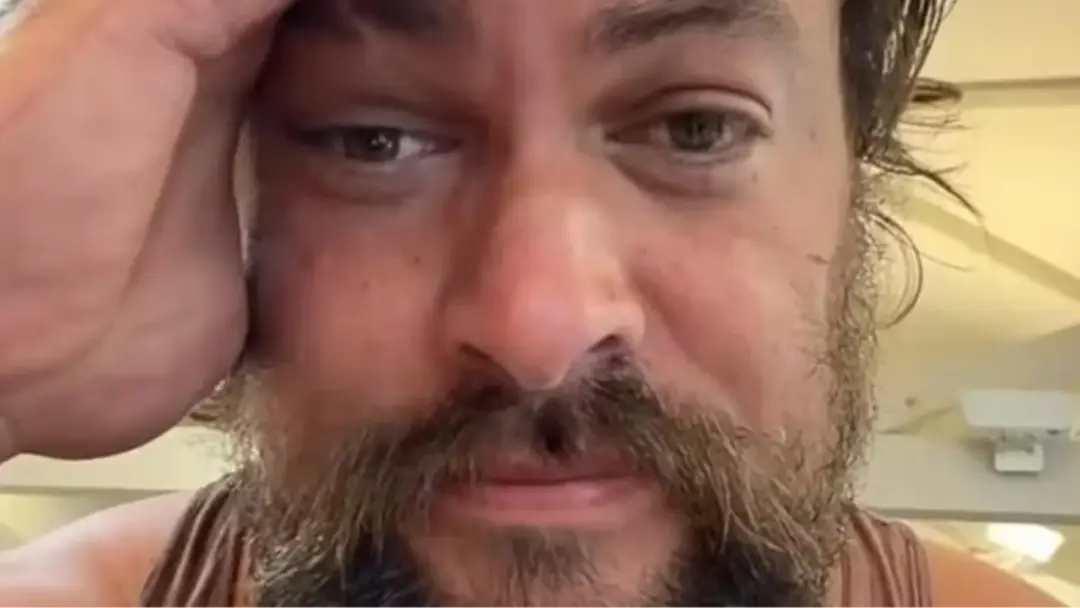
Jason Momoa has said he and his family were forced to leave Oahu’s North Shore as severe flooding swept through parts of Hawaii, with the actor using social media to describe a fast-moving emergency that officials have called the state’s worst flooding in more than 20 years. The Hawaii-born actor said in an Instagram video that his household had lost power and fled the area as conditions worsened, adding: “We’re safe for now, but there’s a lot of people who weren’t, so we’re sending all our love.” He also told supporters: “The North Shore is pretty gnarly right now. So hopefully everyone’s safe and getting out. Stay safe out there.”
The flooding came after days of intense rain across the islands, with Oahu among the hardest hit. Officials warned that the aging Wahiawa dam was at risk, triggering evacuation orders for communities downstream and an urgent public alert telling residents in the Waialua area to leave immediately because the remaining access road was at high risk of failure if rainfall continued. Governor Josh Green announced the closure of state departments on Oahu on March 20, saying “The safety of our residents and families must come first,” and urged people to heed evacuation orders and stay out of floodwaters.
Emergency crews were deployed by air and water as floodwaters pushed homes off their foundations, swallowed vehicles and cut off roads. The Associated Press reported that more than 230 people were rescued and that around 5,500 residents were under evacuation orders at the height of the crisis. No deaths were reported, but about 10 people were taken to hospital with hypothermia, according to Governor Green. Among those airlifted were 72 children and adults at a spring break youth camp on Oahu’s west coast after access roads were cut off.
Momoa’s account of the disaster was unusually personal. According to People, he said he and his family had been staying near Oahu’s North Shore when the flash flooding hit and were forced to leave after the power went out. The actor, who was born in Honolulu, also posted footage showing flooding near his father’s home, as well as landslides and fallen trees. In the same period, he appeared visibly emotional while speaking about the scale of the destruction around him.

The wider emergency was not confined to a celebrity household. Honolulu officials and the governor described catastrophic damage across homes, roads, schools and other public infrastructure, with Green saying the cost of the storm could exceed $1 billion. The Associated Press reported that the flooding damaged a community famous for surfing on Oahu’s North Shore, while additional storm impacts were also felt on Maui, where officials issued evacuation advisories for some Lahaina neighbourhoods because nearby retention basins were nearing capacity.
The storm system behind the flooding was described as a kona low, a winter weather pattern that can pull in warm, moisture-laden air and produce prolonged periods of heavy rain. Forecasts from the National Weather Service, cited by Hawaii’s governor, warned of flash flooding and severe thunderstorms continuing through the weekend. AP reported that parts of Oahu received 8 to 12 inches of rain overnight, with nearly 16 inches recorded near the island’s highest peak over a 24-hour period. Officials said the island had not seen flooding on this scale in two decades.
At the centre of official concern was the Wahiawa dam, an earthen structure dating back to 1906. State authorities have previously classified it as having “high hazard potential,” with the Associated Press reporting that a failure would result in probable loss of human life. The same report said the dam had been rebuilt after a collapse in 1921 and had been the subject of multiple deficiency notices from the state since 2009. The emergency sharpened attention on longstanding questions around its maintenance and ownership, with officials noting that legislation passed in 2023 authorised the state to acquire and repair it, though the transfer had not yet been completed.
Momoa’s response to the flooding did not end with his evacuation message. He and his girlfriend, actress Adria Arjona, later appeared in a video helping distribute aid with Zippy’s, the Hawaii-based restaurant chain. In a caption quoted by People, Momoa wrote: “These past weeks have been heavy. The storms, the flooding, the constant rain across Oʻahu have affected so many of our people, especially those already facing hardship.” He added: “We spent time on the west side, just trying to show love, bring some food, and remind our community that we see you, we stand with you, and you’re not alone. That’s what aloha is. It’s showing up for each other when it matters most.”
That public display of solidarity was consistent with Momoa’s long-standing identification with Hawaii. Born in Honolulu, he spent part of his early life in the islands before being raised in Iowa, later returning to Hawaii as a young man before his acting career took off. Over the years, he has remained closely associated with the state in public life, often invoking Hawaiian identity and community in interviews and on social media. In recent years he has also used his platform during earlier disasters affecting the islands, including the Maui wildfires, to direct attention toward relief efforts and local need.
The timing of the flood emergency also disrupted Momoa’s music plans. His band, ÖOF TATATÁ, had recently played in Hawaii and was due to perform again, but the group rescheduled its weekend show as conditions deteriorated. Just days earlier, People had reported on a Blue Note Hawaii performance where Momoa wrote that there was “Nothing like playing in Hawai‘i, surrounded by ohana & music,” and the outlet noted that he and Arjona had been publicly linked since May 2024. That image of celebration was quickly overtaken by a very different reality as Oahu moved into crisis mode.
By the time evacuation orders began to ease in some areas, the scale of the storm’s disruption had already become clear. Officials said roads had failed or were at risk, rescue crews had been stretched, and communities were dealing with both physical destruction and displacement. For Momoa, the story was not one of a distant weather event but of a local catastrophe hitting home. His message from the flood zone was simple and direct, focused less on his own circumstances than on those facing worse: “There’s a lot of people who weren’t” safe. As Hawaii continues assessing the damage, that remains the central reality behind the images and the celebrity attention, with thousands of residents left to recover from a storm that state leaders say could become one of the costliest natural disasters the islands have faced in years.