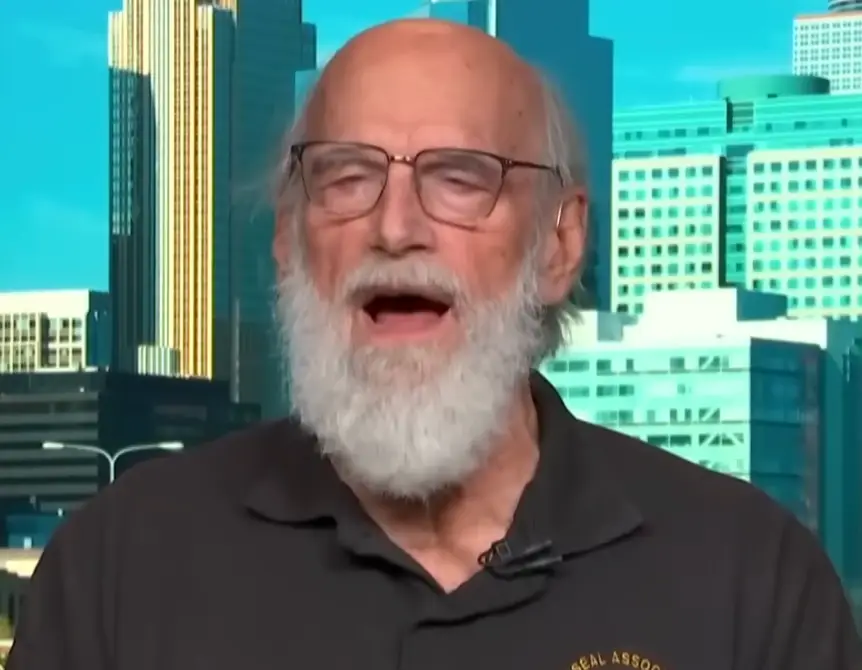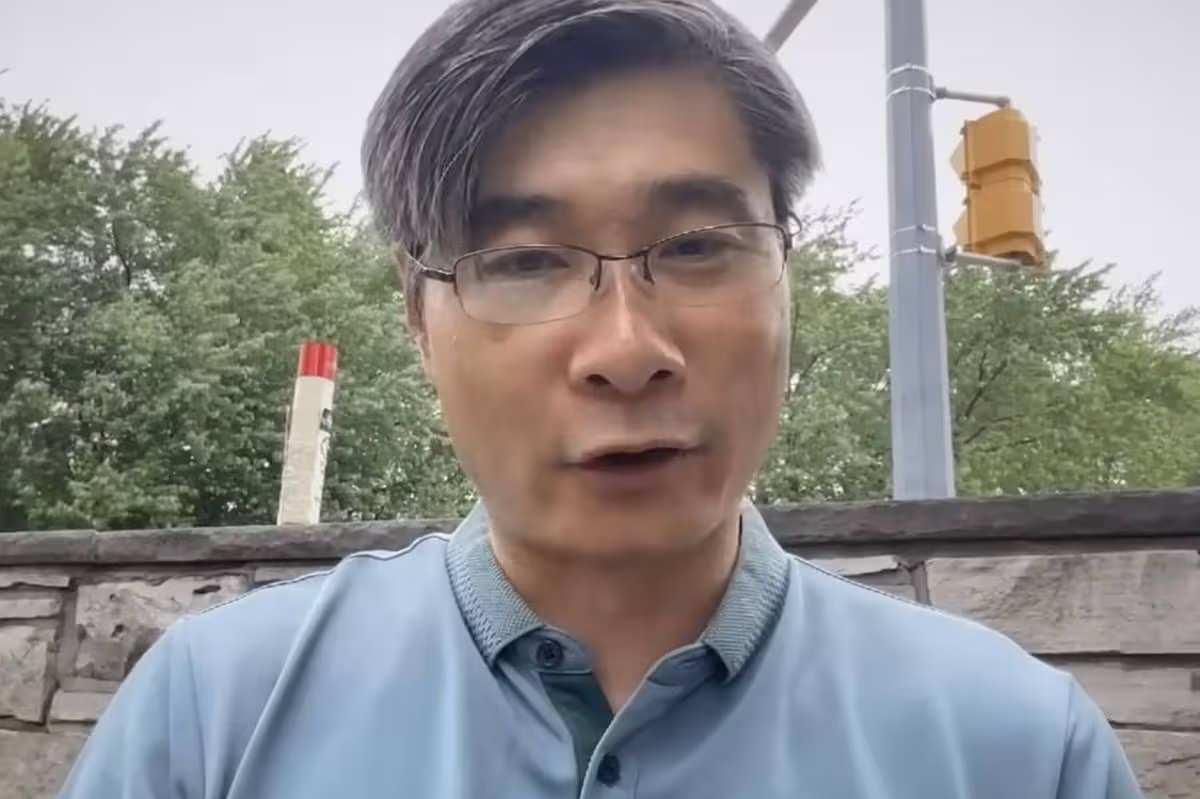
Long before his name began circulating far beyond his YouTube audience, Xueqin Jiang had already laid out the argument that has now made him a widely discussed figure in a rapidly escalating Middle East crisis. In lectures posted in 2024, Jiang said Donald Trump would return to the White House, that a second Trump presidency would bring the United States into war with Iran, and that the United States would lose that war. Two of those forecasts have now been overtaken by events, and the third has become the central reason his past remarks are being revisited.
Jiang, a Chinese-Canadian educator who teaches at Moonshot Academy in Beijing and runs the YouTube channel Predictive History, has built his public profile around the idea that history, incentives and game theory can be used to anticipate political outcomes. Public biographical material says he studied at Yale and has worked as a teacher and commentator, while his channel frames its project around the possibility of something close to Isaac Asimov’s “psycho-history”, the attempt to understand patterns in human affairs strongly enough to make meaningful forecasts about the future.
The remarks now drawing the most attention were repeated in an interview published this month by Breaking Points, in which Jiang was shown footage of his earlier prediction. “First is that Trump will win in November. Second is that United States will go to war against Iran. The third big prediction is that the United States will lose this war, which will forever change the global order,” he said in the clip replayed during that interview. He did not retreat from the forecast when asked about it again in March 2026. Instead, he doubled down, saying that in his view Iran held structural advantages that could turn an apparently superior American military position into a longer, more dangerous struggle of attrition.
His argument is not based on prophecy in the mystical sense suggested by viral headlines, but on a political reading of incentives, geography, ideology and military endurance. In the Breaking Points appearance, Jiang said: “The reality is that right now it’s a war of attrition between the United States and Iran. And Iranians have been preparing 20 years for this conflict.” He argued that Tehran’s leaders, allied groups and military planners had spent years preparing for exactly the kind of confrontation that is now unfolding, and that a war which looked manageable in its opening phase could become much harder for Washington to control if it widened, dragged on, or forced difficult decisions about the use of ground troops.

The wider backdrop to those comments is a conflict that has already become one of the defining international crises of 2026. Reuters reported this week that more than 2,000 people have been killed in the war launched by the United States and Israel on February 28. The fighting has shaken energy markets, intensified inflation fears and effectively closed much of the Strait of Hormuz to normal shipping, a development with consequences far beyond the immediate battlefield. Reuters also reported that Iranian officials and military figures have threatened retaliation against Gulf energy and desalination infrastructure if Iranian power facilities are attacked, underlining how quickly the war has moved beyond direct military targets and into the systems on which civilian life and the world economy depend.
That part of the crisis is important in understanding why Jiang’s analysis has resonated. He has repeatedly argued that Iran does not need to defeat the United States in a conventional sense to fundamentally damage American power, prestige and strategic coherence. If Tehran can keep the conflict costly, widen the economic pain, draw in allies and expose the limits of American force projection, then the war could still be judged a defeat in political and historical terms even without anything resembling a traditional battlefield surrender. That is the logic behind Jiang’s warning that a war with Iran could “forever change the global order,” a phrase that has helped drive the renewed interest in his earlier lectures.
His rise has also been shaped by the unusual path he took into public prominence. Jiang was already known in education and commentary circles before this moment, but the current attention has come through short clips, reposted interviews and social media discussion around whether he “called” one of the year’s most consequential wars. His Predictive History channel had already published a March 3 lecture focused specifically on the US-Iran war, and his arguments have been circulating online in both long-form interviews and heavily edited excerpts. That has given his comments a second life beyond their original audience, particularly among viewers looking for analytical frameworks that differ from day-to-day military or political reporting.
Even so, the present moment remains far from settled, and that matters when judging both the prediction and the story around it. On March 23, Trump said there had been talks between the United States and Iran involving envoy Steve Witkoff and Jared Kushner, and claimed there were “major points of agreement.” He said a deal could come soon and that he was postponing threatened strikes on Iranian power infrastructure for five days while talks continued. Iran’s Fars news agency, however, denied that there had been direct or indirect communications with the United States. That leaves the war in a volatile state where diplomacy, denial, escalation and market panic are all happening at once.
That uncertainty is part of why Jiang’s third forecast cannot yet be treated as either vindicated or disproved. His supporters point to the first two predictions and say they justify taking the third seriously. Sceptics note that wars do not resolve cleanly on the timeline of a viral clip, and that any prediction framed broadly enough can attract belief once real events begin to resemble it. But Jiang himself has been more specific than many internet commentators. He has argued that the core issue is not simply whether bombs fall or headlines intensify, but whether the United States becomes trapped in a conflict whose political cost exceeds any strategic gain.
For now, the facts that can be publicly verified are narrower but still striking. Jiang did publicly say in 2024 that Trump would win, that the United States would go to war with Iran, and that the United States would lose. Trump is back in office. The United States is at war with Iran. Jiang has restated his position in March 2026 without softening it. The war has already killed thousands, disrupted a vital global shipping route and forced world markets to react sharply to each fresh threat and diplomatic signal. Whether Jiang ends up looking prescient or premature will depend on how the conflict develops in the weeks and months ahead. What is already clear is that an educator who built a following by arguing that history has patterns is now being judged against one of the biggest geopolitical events in the world.