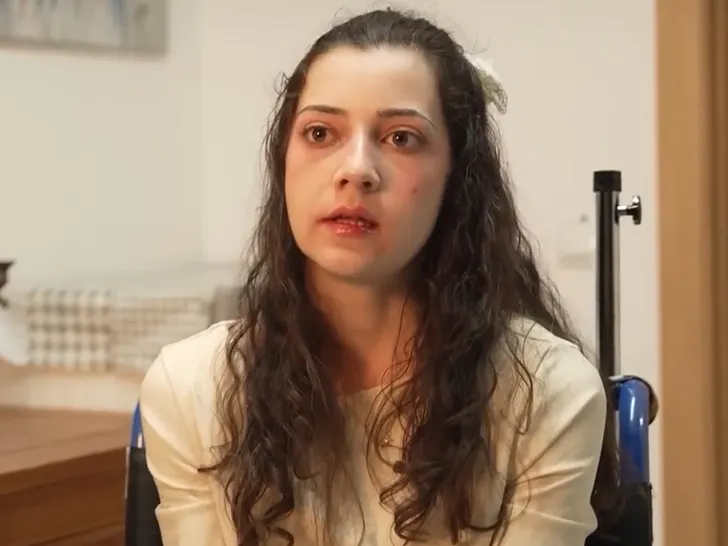
Noelia Castillo Ramos, a 25-year-old woman from Barcelona whose case has become one of the most closely watched tests of Spain’s euthanasia law, was due to undergo euthanasia on Thursday after a legal fight that stretched for more than a year and drew in lower courts, Spain’s Constitutional Court and, finally, the European Court of Human Rights. Her case has reignited debate in Spain over assisted dying, mental illness, family opposition and the extent to which the state can intervene when a patient says, repeatedly and publicly, that she wants to end what she describes as intolerable suffering.
Castillo Ramos had been approved for euthanasia in Catalonia in July 2024 after a specialist committee concluded that she met the legal requirements under Spain’s 2021 law, which permits euthanasia and assisted suicide for adults with serious and incurable conditions or severely debilitating illnesses causing unbearable suffering, provided they can give informed consent. The procedure had originally been scheduled for August 2024, but it was halted after her father, backed by the ultra-conservative legal group Abogados Cristianos, launched a court challenge to stop it.
According to court rulings and reporting on the case, Castillo Ramos was left paraplegic and in chronic pain after a 2022 crisis. Reuters reported that legal rulings said she had a psychiatric illness and had made several previous suicide attempts before the incident that left her paralysed. Medical reports cited in court said she was living with severe, chronic and incapacitating pain, with no prospect of improvement. That combination of permanent physical injury and ongoing suffering became central to the legal argument that she qualified under Spain’s euthanasia legislation.
As the case moved through the courts, her father argued that his daughter’s mental health problems impaired her ability to make a free and informed choice. He maintained that the state had a duty to protect vulnerable people and said she had changed her mind in the past. Abogados Cristianos adopted the same position, framing the case as one about protecting life rather than autonomy. But the courts repeatedly sided with Castillo Ramos, finding that her request had been examined by the required medical bodies and that there had been no breach of her fundamental rights. Spain’s Constitutional Court rejected her father’s appeal in February, effectively removing the biggest domestic legal obstacle to the procedure.
Even after that ruling, the fight did not end. In the final days before the scheduled procedure, supporters of her father sought intervention from the European Court of Human Rights. That attempt also failed. Catalan newspaper Ara reported that the Strasbourg court rejected the request to suspend the euthanasia, clearing the way for the procedure to go ahead. The ruling marked the end of a drawn-out legal process that had kept Castillo Ramos waiting for more than a year and a half after her original approval.
In the last phase of that fight, Castillo Ramos gave a television interview to Antena 3 in which she spoke openly about her physical pain, emotional exhaustion and frustration with the delay. “I want to go now in peace and stop suffering, period,” she said, according to Ara’s report on the interview. El País, which also reported on the broadcast, said she described having no desire “to go out, to eat, or to do anything,” and said sleeping had become difficult because of pain in her back and legs. In another remark reported by El País, she said: “I don’t want to be an example for anyone, it’s simply my life.”

Her public remarks were consistent with what she had told a judge earlier in the court process. According to Reuters and People, which cited earlier reporting by the BBC, Castillo Ramos told the court in 2025: “I want to finish with dignity once and for all.” That phrase has since become central to public understanding of the case, capturing both the persistence of her request and the broader debate over whether assisted dying should be available to people whose suffering combines physical disability, chronic pain and psychiatric illness.
Spanish reporting on the case has also shed light on the family rupture that ran alongside the legal dispute. El País said Castillo Ramos grew up in a highly unstable family environment and spent much of her childhood and adolescence in care. The newspaper reported that she linked the crisis in 2022 to a sexual assault, which she said triggered the downward spiral that followed. In her final interview, she spoke bitterly about the way parts of her family had opposed her decision, while also making clear that she saw the choice as her own and not a political statement.
Her mother’s position appeared more complicated than her father’s. TMZ, citing Spanish outlet Marca, reported that while her mother did not agree with the decision, she intended to remain by her side. El País reported that Castillo Ramos had invited relatives to say goodbye, but wanted to be alone at the moment of death. It also reported that she wanted to be dressed carefully and with dignity, saying she wanted to die “pretty” in her best dress. Those details, though deeply personal, underscored that the final act was not being presented by her as impulsive, but as something considered, planned and claimed as an expression of control after years in which she felt control had been stripped away.
The case has become especially significant because of the questions it raises about the boundaries of Spain’s euthanasia law. Reuters noted that Spain became the fourth European Union country to legalise euthanasia and assisted suicide in 2021. In 2024, 426 people received assistance in dying under the law, according to government data cited by Reuters. But Castillo Ramos’s case drew unusual attention because of her age, her psychiatric history and the determination of her father and religious campaigners to stop the procedure. It exposed the tension between two competing principles: the state’s duty to protect vulnerable people and the legal recognition that competent adults may choose to end unbearable suffering.
For supporters of assisted dying, the rulings in her favour were seen as confirmation that the law was functioning as intended, with multiple medical and judicial checks before a final decision. For opponents, the case became a symbol of what they see as the danger of extending euthanasia to people whose suffering cannot be separated neatly into physical or psychological categories. Abogados Cristianos made clear after the Constitutional Court defeat that it would continue to fight. “We will not abandon these parents. We will continue to fight to the end to defend their right to save their daughter’s life,” the group’s head, Polonia Castellanos, said in a statement quoted by Reuters.
But for Castillo Ramos herself, the public record shows a much narrower focus. In the final days before the procedure, she was not presenting herself as a campaigner or a symbol. She was speaking as a woman who said she was exhausted, in pain and ready for the legal battle around her body and future to end. After 601 days of waiting, according to Spanish reports, that moment appeared finally to have arrived.