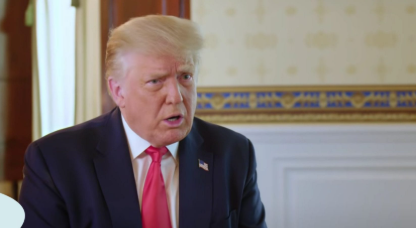
Donald Trump has said he is “absolutely” considering taking the United States out of NATO, reviving one of the most consequential foreign policy threats of his political career and sending fresh shockwaves through an alliance that has underpinned Western security for more than seven decades. The remarks came as tensions deepened between Washington and several European governments over the widening conflict involving Iran, with Trump accusing allies of failing to back the United States at a moment of crisis. (Reuters)
The latest dispute did not emerge in a vacuum. Trump has long questioned the value of NATO, complained that European members rely too heavily on American military power and money, and argued that the United States has carried a disproportionate share of the burden. In his latest comments, reported after an interview with Britain’s Daily Telegraph and confirmed in subsequent reporting by Reuters, Trump said he had never been convinced by the alliance and described it as a “paper tiger”, adding that Russian President Vladimir Putin saw it the same way. (Reuters)
This time, however, the threat is bound up not only with Trump’s long-standing ideological hostility toward the alliance but also with an immediate international rupture. According to Reuters and the Associated Press, Trump’s anger has been sharpened by the refusal of several NATO allies to support the United States more fully in the Middle East crisis, particularly around the conflict with Iran and the security of maritime routes linked to the Strait of Hormuz. European governments have pushed back against the idea that NATO should be used as a vehicle for offensive operations outside its core Euro-Atlantic mission, with France stating clearly that the alliance exists for collective defence in the Euro-Atlantic area, not for unrelated offensive campaigns. (Reuters)
That matters because NATO’s central premise is mutual defence, not automatic participation in every military action undertaken by the United States. Article 5 of the treaty says that an attack on one ally is considered an attack on all, but it has only been invoked once, after the September 11 attacks on the United States in 2001. NATO’s official treaty text also makes clear, through Article 13, that a member can leave by giving notice, after which withdrawal takes effect one year later. (NATO)
Trump’s comments therefore touch on a question that is both legal and deeply political: can an American president actually pull the United States out of NATO on his own? Under international treaty rules, the withdrawal mechanism is straightforward. Under American law, it is far more contested. Congress moved in 2023 to block any president from unilaterally withdrawing the United States from the North Atlantic Treaty without either a two-thirds Senate vote or an act of Congress. That measure was written into law amid fears that Trump, if returned to office, might try to leave the alliance. The statutory language says the president “shall not” withdraw the United States from NATO without congressional approval. (Reuters)
Even so, the issue is not settled beyond doubt. Reuters reported that allies of Trump argue the law could be unconstitutional, because the US Constitution is clear on how treaties are ratified but silent on how they are terminated. That leaves open the prospect of a constitutional clash if a president were to test the limits of executive power. Legal experts told Reuters that even if Congress attempted to block such a move, the real-world significance of a hostile president toward NATO could be enormous long before any final court ruling. In practice, the credibility of the alliance depends not only on treaty text but on whether allies believe the United States would actually honour its commitments. (Reuters)
That credibility is the real issue now confronting Europe. NATO was founded in 1949, in the early years of the Cold War, to bind North America and Europe into a common security structure against Soviet expansion. The United States has been the dominant military power in the alliance from the beginning, providing nuclear protection, massive logistical capability and a military backstop that many European states have built their defence planning around for generations. No sovereign member state has ever formally withdrawn from NATO, and the idea of the United States leaving has long been treated in Europe not as a routine policy disagreement but as an existential strategic shock. (NATO)
That is why Trump’s words have caused such alarm even before any formal step has been taken. The alliance has already been under strain from Russia’s war in Ukraine, questions over European defence spending and wider uncertainty about the direction of American foreign policy. Trump’s latest broadside adds another layer of instability by suggesting that Washington’s commitment to the alliance could be linked to allies’ willingness to support a separate US-led confrontation elsewhere. For many European capitals, that cuts against the basic logic of NATO itself, which is supposed to function through collective defence, shared consultation and agreed strategy rather than political coercion by its leading member. (The Guardian)
The immediate fallout has been sharp. France responded by stressing the alliance’s proper role and signalling that European governments would not accept an expanded interpretation of NATO’s responsibilities simply because Washington demanded it. Reporting from across Europe has shown leaders trying to steady nerves in public while also accelerating longer-term conversations about whether the continent needs to become less dependent on the United States. Those debates are not new, but they have taken on greater urgency each time Trump has suggested that America’s guarantees might no longer be reliable. (Reuters)
For Trump himself, the NATO issue also fits into a broader political identity he has cultivated for years. He has presented himself as the American leader willing to say aloud what others would not: that allies should pay more, that old institutions may no longer serve US interests and that post-war foreign policy orthodoxies deserve to be torn up. His criticism of NATO predates both his first presidency and his return to office. What is different now is the surrounding geopolitical environment. The alliance is dealing with a live European land war involving Russia, heightened instability in the Middle East and growing concern over China’s global role. In that context, even rhetorical threats from the American president carry extraordinary weight.
What would actually happen if the United States left NATO is impossible to reduce to a single immediate consequence. The legal process would take time. The political and military consequences would begin much faster. European states would face urgent pressure to expand defence spending, deepen independent planning and determine how far they could compensate for the potential loss of US power. Russia would almost certainly view such a rupture as a historic strategic opportunity. Markets, diplomats and military planners would all have to recalculate assumptions that have shaped transatlantic security since the end of the Second World War. Even the suggestion of such an outcome is therefore enough to shake confidence.
For now, Trump has not formally triggered any withdrawal mechanism. But his language has again made clear that the possibility is no longer treated in his orbit as unthinkable. Whether Congress, the courts, US allies or events on the ground could stop such a move remains uncertain. What is certain is that the threat alone has reopened one of the biggest questions in global security: whether the United States still sees NATO as a cornerstone of its power, or as a burden it may one day choose to abandon.