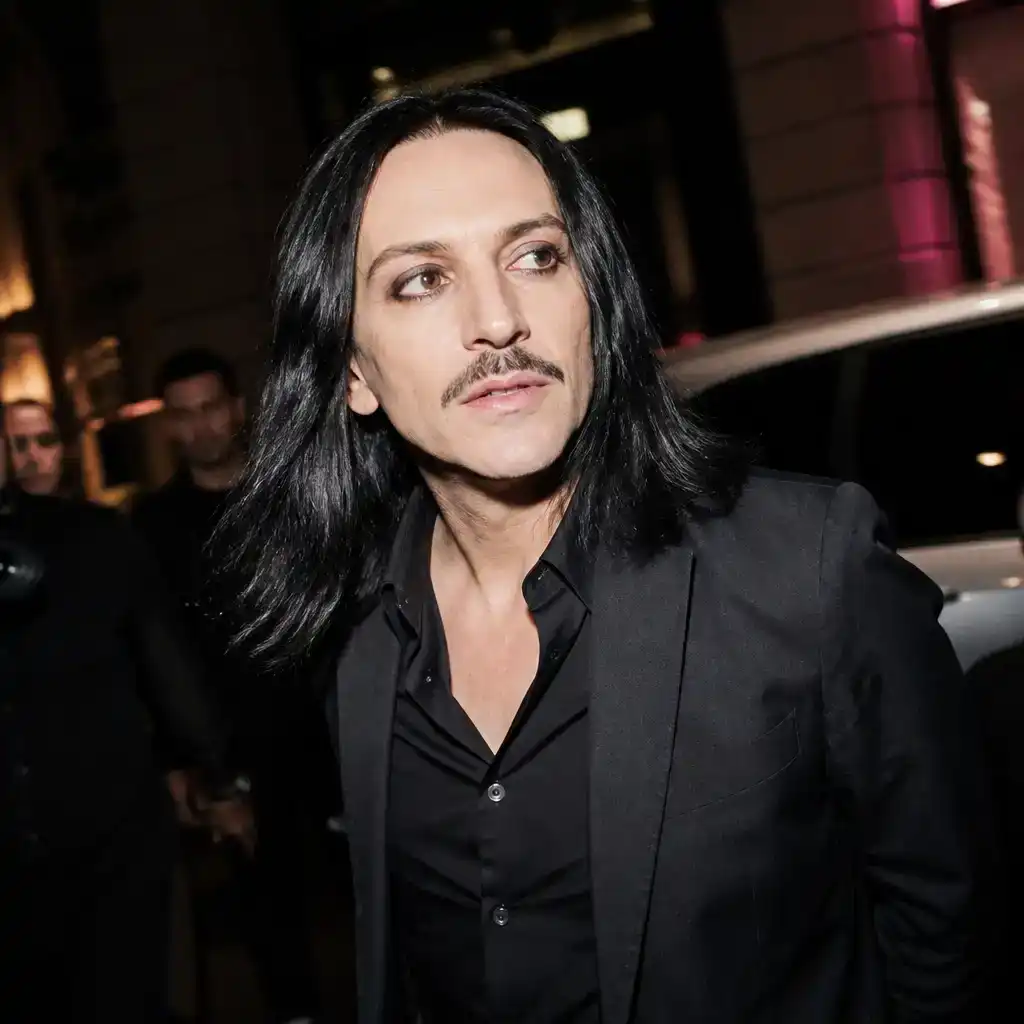
Brian Molko’s confrontation with phone users in Milan has spread across social media, but eyewitness reports suggest the Placebo crowd was rather less phone-obsessed than the viral clips imply. The singer erupted during the band’s November 6 concert at Unipol Forum after spotting people recording from the standing area, despite repeated requests for audiences to keep devices away.
Molko, 53, had another reason for being in a combustible mood. He told the crowd he had COVID-19 and had continued performing after being ill for two weeks. Days later, Placebo postponed concerts in Munich and Vienna after he was diagnosed with acute laryngitis.
What happened during the Milan concert?
The confrontation came after Placebo performed the 1996 track “Teenage Angst.” Molko began by thanking “almost all” of the audience for following the band’s request, noting that mobile phones were not part of the concert experience when the song was released.
“I’m here playing this concert for you, and you can’t put your fucking phone away?” he asked.
When some people continued recording, he pointed into the audience and warned that offenders could be removed.
“So if you and you and you can’t put your fucking phone away, when I’m up here with COVID-19, I’m talking to you, motherfucker, we are going to start removing people from the fucking audience, do you understand?”
It was not subtle. It was also not entirely representative of the full evening, according to journalists who attended. Fabrizio De Palma of Rolling Stone Italia reported that phone use remained “very reduced” for most of the performance and increased mainly during the encore. Andrea Zedda of Vanity Fair Italia similarly wrote that almost nobody used a phone for much of the show.
That complicates the idea that Molko spent the night facing a forest of screens. A smaller group appears to have ignored the request at precisely the moment most likely to be filmed, shared and stripped of context. Modern concert culture continues to provide its own evidence.
Why does Placebo want phones put away?
Before the anniversary shows, Placebo displayed messages asking fans not to film or take photographs. One read: “You’ll remember the moment, not the recording.”
A prerecorded appeal from Molko went further, explaining that filming makes it harder for the band to connect with its audience. He asked concertgoers to pursue “connection, communion, euphoria and transcendence” instead. That is a fairly ambitious programme for an evening out, but the central request was simple: keep the phone in a pocket.
Placebo relies on an honour-system policy. Fans are asked to cooperate, while security can intervene if someone refuses. Other performers, including Bob Dylan, have used sealed phone pouches that physically prevent recording inside venues.
The difference matters. A voluntary rule depends on thousands of people agreeing that their personal clip of a song is not essential. Placebo’s approach preserves convenience but leaves Molko to enforce the policy from the stage, which in Milan produced a recording of him angrily telling people to stop recording. The irony required no technical assistance.
What is the anniversary tour celebrating?
The concerts mark 30 years since Placebo’s self-titled debut album arrived in 1996. They do not mark the band’s 30th year, a distinction that has become blurred in some coverage.
The tour accompanies Placebo RE:CREATED, a project built by returning to the debut album’s master tapes and incorporating arrangements developed over the following three decades. Molko and bassist-guitarist Stefan Olsdal described it as “a celebration of where we began, and a meeting point between who we were then and who we are now.”
Setlists draw heavily from that record and 1998’s Without You I’m Nothing. They also include songs that had not appeared in Placebo performances for more than 20 years. In Milan, four additional touring musicians joined Molko and Olsdal on stage, according to Rolling Stone Italia.
That historical focus helps explain the strict phone request. The production is designed around revisiting early material as a shared live experience, not as several thousand vertical videos with variable sound quality.
Why were Munich and Vienna postponed?
On November 9, Placebo’s management announced that Molko had acute laryngitis and postponed that evening’s Munich concert, along with the Vienna show scheduled for November 10.
The statement said he had been experiencing “extreme flu symptoms” but continued performing because he did not want to disappoint ticket holders. His condition worsened after Milan, prompting the band to call a doctor. Molko and Olsdal apologised for the late decision and said they would try to rearrange both dates.
Venues in Munich and Vienna said replacement dates were still being sought and existing tickets would remain valid. Fans were advised to keep them while organisers worked out rescheduling or refund arrangements.
No medical source has established that Molko’s decision to perform while ill caused the laryngitis. Still, continuing a demanding tour while reporting COVID-19 and prolonged flu symptoms placed obvious strain on a schedule that had 13 dates remaining.
As of November 11, Placebo had announced no further cancellations. SentireAscoltare reported that the tour was due to resume in Budapest on November 13, followed by Prague on November 15 and Berlin on November 16. Whether Molko would recover in time remained unclear.