Warning: Major spoilers for Prime Video’s Carrie follow.
Carrie Season 2 will continue a story that Stephen King originally ended with considerable finality. Prime Video’s adaptation allows Carrie White to survive prom night and leave Chamberlain with Emaline, replacing the novel’s fatal conclusion with the beginnings of a broader supernatural franchise.
The eight-episode first season, released in full on October 7, stars Summer H. Howell as Carrie, Samantha Sloyan as her fanatically religious mother Margaret, Siena Agudong as Sue Snell and Alison Thornton as Chris Hargensen.
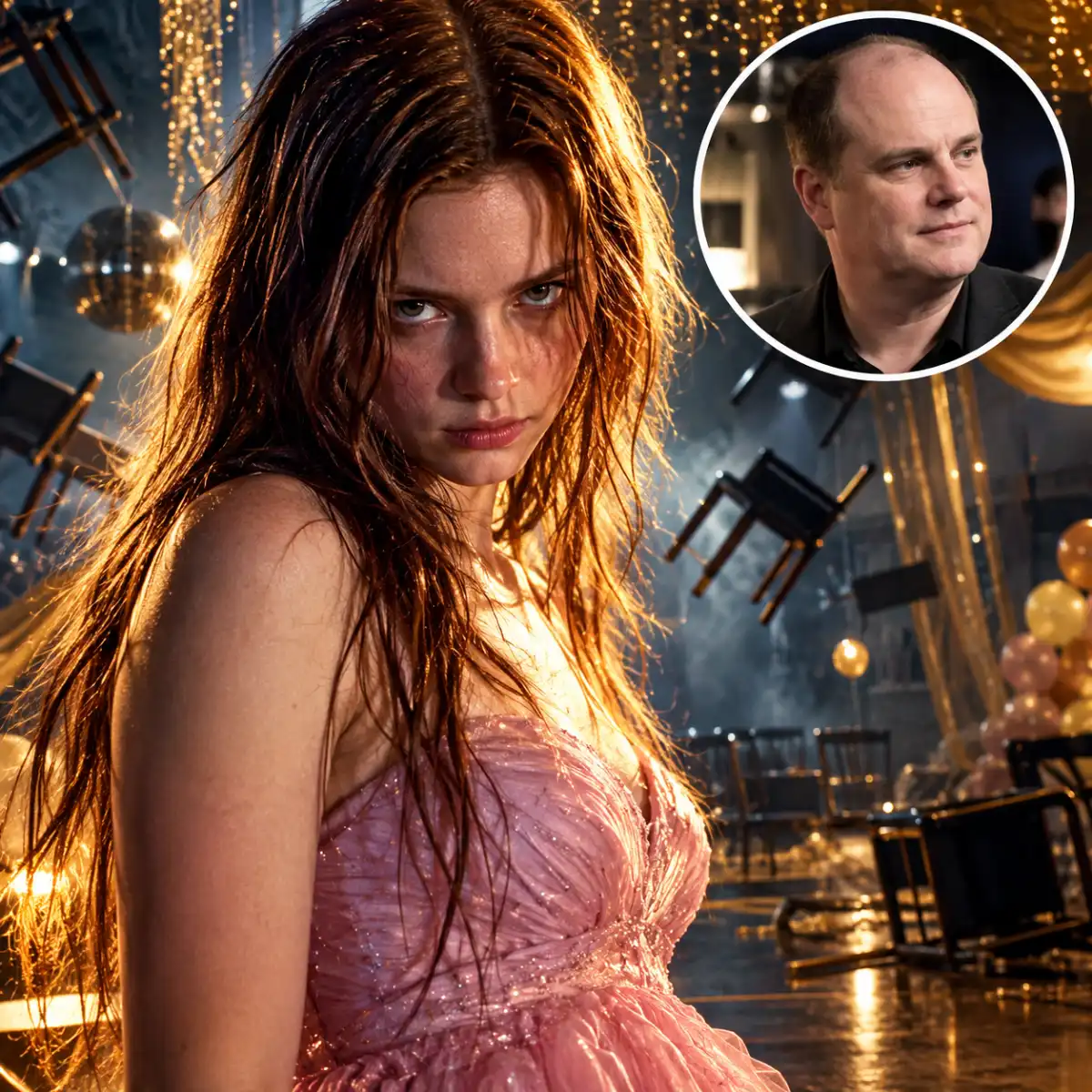
As in King’s 1974 debut novel, Carrie suffers relentless bullying at school and abuse at home before her telekinetic powers erupt during a catastrophic prom. Unlike the book, however, she does not bleed to death after destroying Chamberlain. She escapes with Emaline, who is revealed to have been astrally projecting rather than existing solely in Carrie’s imagination.
Why changing Carrie’s death matters
King wrote Carrie as a closed tragedy. Her brief hope of acceptance collapses, her power devastates the town and her death removes any possibility of recovery or a convenient next chapter.
Some viewers argue that allowing her to survive weakens that structure. One complaint shared on X said the new ending traded a definitive literary climax for “plot armor and potential franchise extensions.” Another argued that Carrie leaving with Emaline makes prom feel like the start of another story rather than the end of hers.
Critical reaction has been less uniform than the online backlash suggests. TheWrap described the departure as intriguing and argued that the first season can still stand alone. The A.V. Club was more sceptical, calling the ending “dubious.” So, not quite a universally discovered flaw, despite the internet’s reliable fondness for unanimous verdicts.
King himself has supported the series. Speaking to the Los Angeles Times, he praised its “kick-ass prom scene” and its use of social media as another destructive force in Carrie’s life.
The same survival trick appeared in 2002
This is not the first adaptation to spare Carrie. An NBC television movie released in 2002 also ended with her surviving and driving away, largely because producers conceived it as a possible pilot for an ongoing series. That continuation never happened.
The other major screen versions stayed closer to the fatal shape of King’s story, including Brian De Palma’s influential 1976 film and Kimberly Peirce’s 2013 adaptation. Prime Video is therefore revisiting an earlier commercial idea: if Carrie lives, her tragedy can become an expandable television property.
This time, the plan has already moved beyond a hypothetical pilot. Prime Video announced the renewal on October 22. Mike Flanagan will return as showrunner and remain an executive producer alongside King.
Amazon has not disclosed a release date, episode total or detailed storyline. Its announcement promises “new revelations, major character arcs” and twists, which is polished corporate language for keeping every useful detail under lock and key.
Flanagan planned a larger psychic mythology
Carrie’s survival was not added only after renewal became likely. Flanagan told TVLine that the creative team had always imagined “a story that goes far beyond the prom.” Before the renewal, he also said his ideal version would run for three seasons and follow a three-part arc.
Speaking to Inverse, Flanagan said the writers believed Carrie “deserved” to survive. He maintained that the first-season ending was designed to work even if Amazon declined to order more episodes.
The adaptation also expands the novel’s mythology by introducing multiple psychically gifted women. That makes Carrie’s escape more than a rewritten death scene. It shifts the premise from one abused teenager’s isolated tragedy toward a larger story about women with related abilities, their trauma and what they do after surviving it.
Howell has said she hopes Carrie can recover from her guilt, rage and trauma. Whether that recovery preserves the character’s tragic force or turns her into the centre of a supernatural franchise will depend on what Flanagan does next. For now, the change is deliberate, historically familiar and considerably more ambitious than simply sending Carrie back to school.