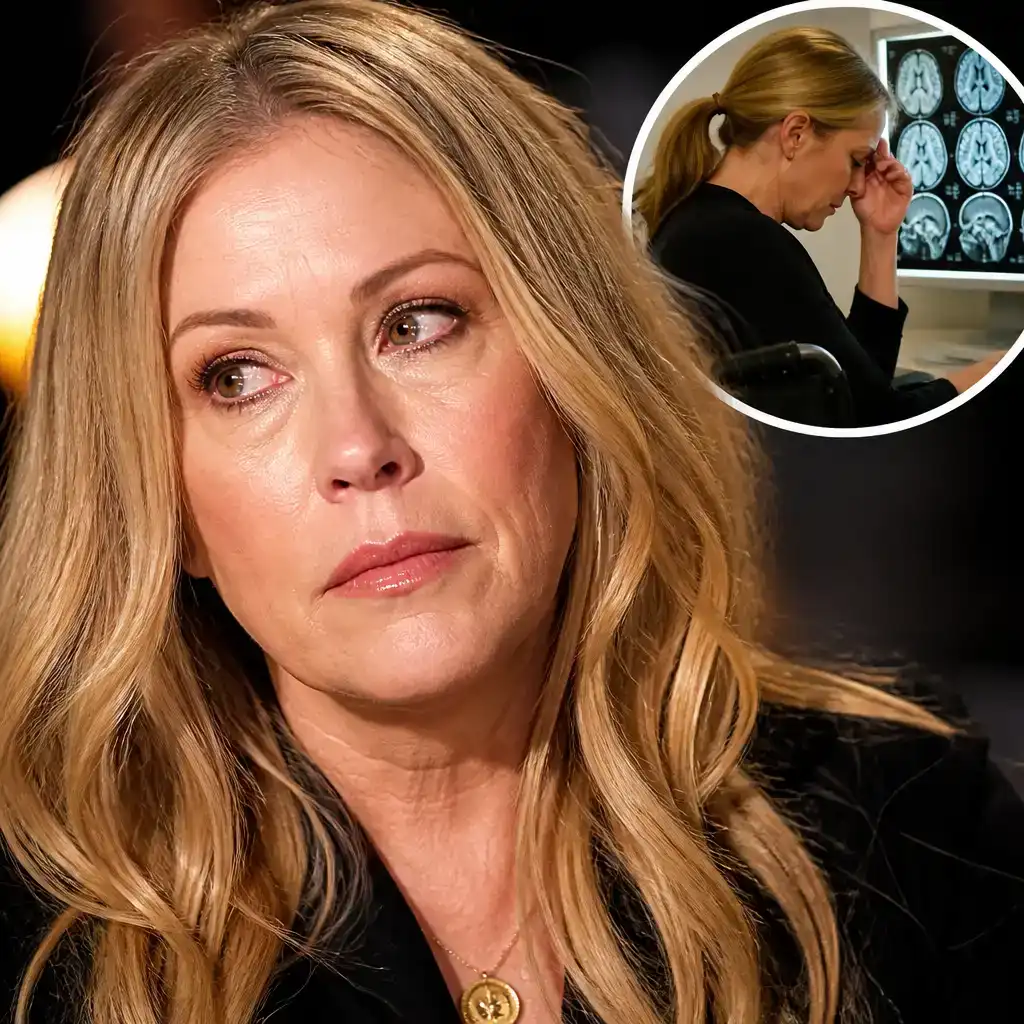
For five years, Christina Applegate believed she knew what was causing the symptoms that had transformed her life. Now, the actress says doctors have told her that her multiple sclerosis diagnosis was wrong, leaving her with the same debilitating health problems but no clear explanation for them.
The 54-year-old Dead to Me star revealed the development in two episodes of her podcast MeSsy, released on October 20, 2026. Speaking with co-host Jamie-Lynn Sigler, Applegate described learning that she apparently does not have the neurological condition she publicly disclosed in 2021.
Although the news might sound like a reason to celebrate, Applegate explained why she found it deeply unsettling.
"I haven't gotten better," she said, adding that some of her symptoms had become worse. Rather than providing relief, the revised medical assessment has left her searching for answers all over again.
Why Christina Applegate's symptoms haven't disappeared
Applegate's physical difficulties remain severe. She explained that she still needs a wheelchair for medical appointments and struggles to walk even short distances.
Her symptoms, which have included problems with mobility, balance and sensation, were previously attributed to multiple sclerosis. Following the reassessment of her diagnosis, their underlying cause remains undetermined.
That distinction is central to understanding her announcement. A doctor withdrawing a diagnosis does not mean the symptoms that led to it have disappeared. It means the medical explanation for those symptoms is being reconsidered.
According to Applegate's account, her doctors revisited the evidence supporting her original diagnosis after questions emerged during treatment. More detailed imaging and newer diagnostic methods helped challenge the earlier conclusion.
Her experience also highlights why diagnosing multiple sclerosis can be particularly complicated.
As the UK's MS Society explains, no single test can conclusively establish the condition. Neurologists assess symptoms, medical history, MRI findings and other investigations while considering alternative explanations.
The diagnostic guidelines were updated in 2025 to incorporate additional evidence, including an MRI feature known as the central vein sign, which can help specialists distinguish lesions associated with MS from those linked to other conditions.
These improvements do not mean previous diagnoses were necessarily incorrect. They provide doctors with additional tools for evaluating difficult cases, including situations in which a patient's symptoms and test results do not fit neatly together.
What happens next for Christina Applegate?
Applegate said she was preparing to undergo further medical investigations to establish what has been causing her symptoms since 2021. She also revealed that she was attending physical therapy three times a week.
For the actress, the uncertainty extends beyond medical treatment. Her original diagnosis influenced major personal and professional decisions, including how she managed her final season on Netflix's Dead to Me and her subsequent withdrawal from on-camera acting.
It also became an important part of her public identity. Through MeSsy, she and Sigler, who has lived with multiple sclerosis for decades, built a platform for discussing the realities of chronic illness.
Applegate acknowledged feeling as though she had disappointed the MS community following the news. Sigler reassured her that the reassessment did not erase her experiences or the conversations they had helped create.
There is currently no publicly confirmed alternative diagnosis explaining Applegate's symptoms. Nor has she announced a recovery or a return to acting.
Her account, discussed in the first part of the October 20 MeSsy release and a follow-up episode featuring neurologist Dr Marwa Kaisey, illustrates an important reality of medical uncertainty: discovering that one diagnosis was incorrect can be the beginning of another difficult investigation, rather than the end of an illness.