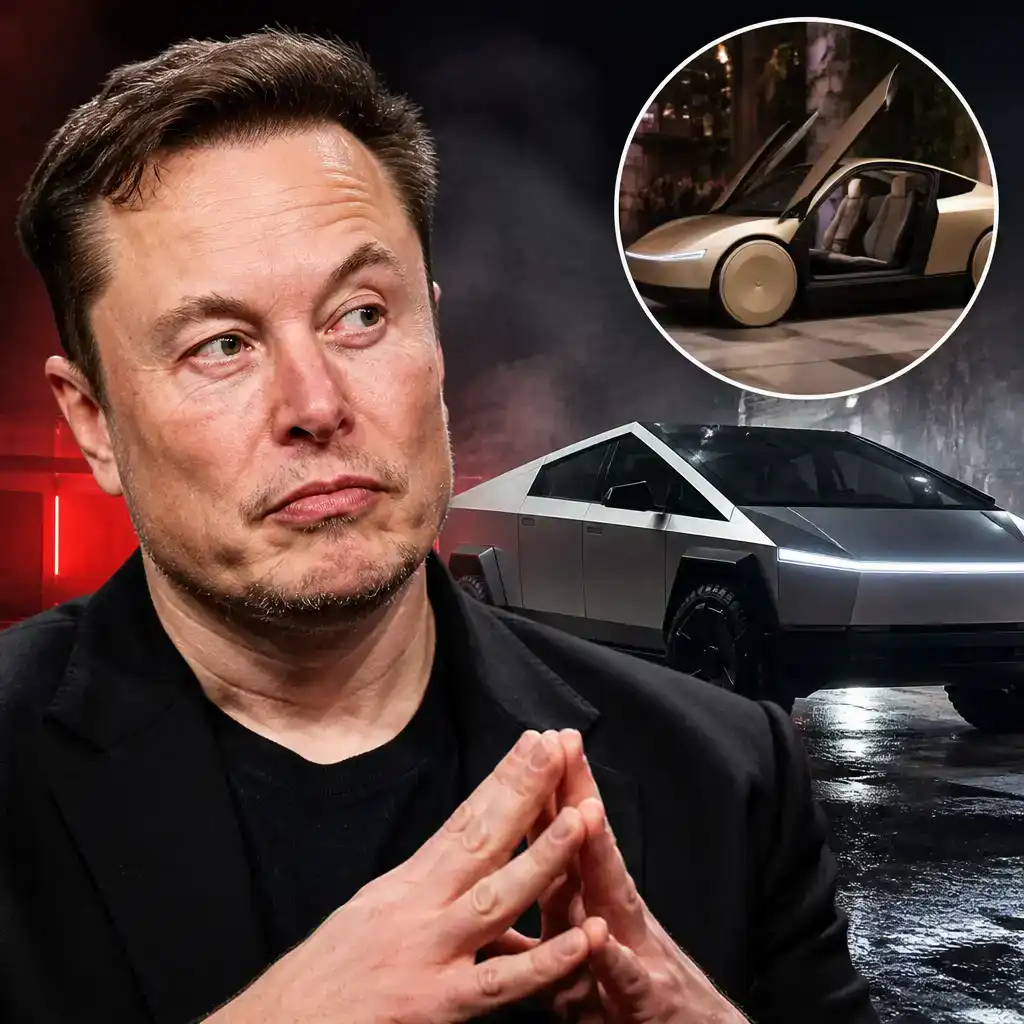
Tesla is preparing to end production of the Cybertruck, but Elon Musk insists the decision is not because the electric pickup is losing money. The company is instead prioritising its Cybercab robotaxi programme, a move that could leave some customers waiting for a Cybertruck receiving a refund rather than a vehicle.
In a post on X on November 9, 2026, Musk said Cybertruck production would stop in approximately eight months, placing the expected shutdown around June or July 2027.
He also claimed that the Cybertruck's order rate exceeds its current production rate, meaning Tesla may be unable to fulfil every outstanding reservation before the assembly line closes.
What makes the announcement particularly striking is Musk's insistence that the Cybertruck remains profitable. That explanation raises a question worth examining: why discontinue a vehicle that supposedly has more customers than Tesla can supply?
Why Tesla Is Ending Cybertruck Production Despite Musk's Profitability Claims
According to Musk, the decision comes down to how Tesla can make the most effective use of its manufacturing resources.
The Cybertruck's distinctive stainless-steel construction and specialised production requirements make it unusually complex to manufacture. Musk argues that directing those resources towards additional Cybercab production offers Tesla greater potential value.
That distinction matters. A vehicle can generate a profit on individual sales while still being a less attractive investment than another product competing for the same factory space, equipment and engineering resources.
However, Musk's profitability claim cannot currently be independently confirmed. Tesla does not publish separate profit margins for the Cybertruck, making it impossible to establish from its public financial disclosures exactly how much money the pickup generates.
Similarly, the financial benefits Musk expects from increased Cybercab production remain dependent on Tesla successfully scaling its autonomous vehicle business.
Cybertruck Sales Reveal a More Complicated Picture
While Musk maintains that Cybertruck orders exceed production, independent sales estimates reveal how far the vehicle has fallen short of Tesla's earlier ambitions.
According to Kelley Blue Book's third-quarter 2026 electric vehicle sales report, an estimated 11,586 Cybertrucks were sold in the United States during the first nine months of 2026.
That represents a 28% decline compared with the equivalent period in 2025. Sales during the third quarter alone reached an estimated 4,323 vehicles, down from 5,385 a year earlier.
Those figures contrast sharply with Musk's previous ambition of selling approximately 250,000 Cybertrucks annually.
There is another significant detail in Tesla's own financial reporting.
Its third-quarter production and delivery figures recorded 8,295 deliveries across its entire Other Models category, while its quarterly manufacturing update listed installed annual Cybertruck production capacity exceeding 125,000 vehicles.
Installed capacity does not necessarily equal achievable or current production, and Tesla's delivery category includes vehicles other than the Cybertruck. Nevertheless, the figures illustrate the considerable gap between the factory's stated capacity and the pickup's recent sales volumes.
Importantly, falling annual sales and an order backlog are not necessarily contradictory.
Tesla could have more outstanding orders than it intends to manufacture before closing the assembly line, particularly if production is being deliberately limited or reservations increased after the shutdown announcement.
What remains unknown is the size of that backlog, how many reservations represent confirmed purchases and whether recent demand would justify continued production beyond 2027.
What Happens to Customers Who Have Already Reserved a Cybertruck?
For prospective buyers, the most immediate consequence is the possibility that an existing reservation will never result in a delivery.
Musk said Tesla intends to manufacture as many Cybertrucks as possible before production ends. He has also indicated that the company will add an additional production shift to help fulfil outstanding orders.
Despite those efforts, he acknowledged that Tesla would need to return deposits to numerous customers.
The company has not publicly established how many reservations will be cancelled, which customers will be affected or a specific timetable for those refunds.
There is also an important distinction between a Cybertruck pre-order payment and a subsequent vehicle order fee.
Tesla's official Cybertruck support page states that customers can cancel a reservation before delivery and obtain a full refund of their pre-order payment. Its general vehicle ordering guidance, however, describes a separate non-refundable order fee.
Customers should therefore check which agreement applies to their purchase rather than assume that every payment is subject to identical refund conditions.
Anyone with an outstanding reservation can review their order status through their Tesla account or app and contact Tesla directly for clarification.
Cybercab Is Now Central to Tesla's Manufacturing Strategy
The decision also demonstrates how Tesla's priorities are shifting away from some conventional passenger vehicles towards autonomous transportation.
Cybercab, the company's purpose-built robotaxi, is central to Musk's plans for a future in which self-driving vehicles operate at a substantially larger scale.
Moving resources from Cybertruck production to Cybercab could help accelerate that ambition. But unlike Tesla's established passenger vehicle business, the long-term commercial potential of Cybercab still depends on widespread deployment, regulatory requirements and customer adoption.
As Reuters reported on November 10, the Cybertruck's departure also comes amid broader difficulties in the market for large electric pickups, where high prices and practical limitations have complicated manufacturers' efforts to attract buyers.
For Tesla, the decision marks the approaching end of one of its most recognisable and unconventional vehicles, less than four years after customer deliveries began in November 2023.
Whether the Cybertruck was sufficiently profitable to justify continued production remains an unanswered question. What Musk has made clear is that Tesla now considers expanding Cybercab production a more valuable use of its resources.