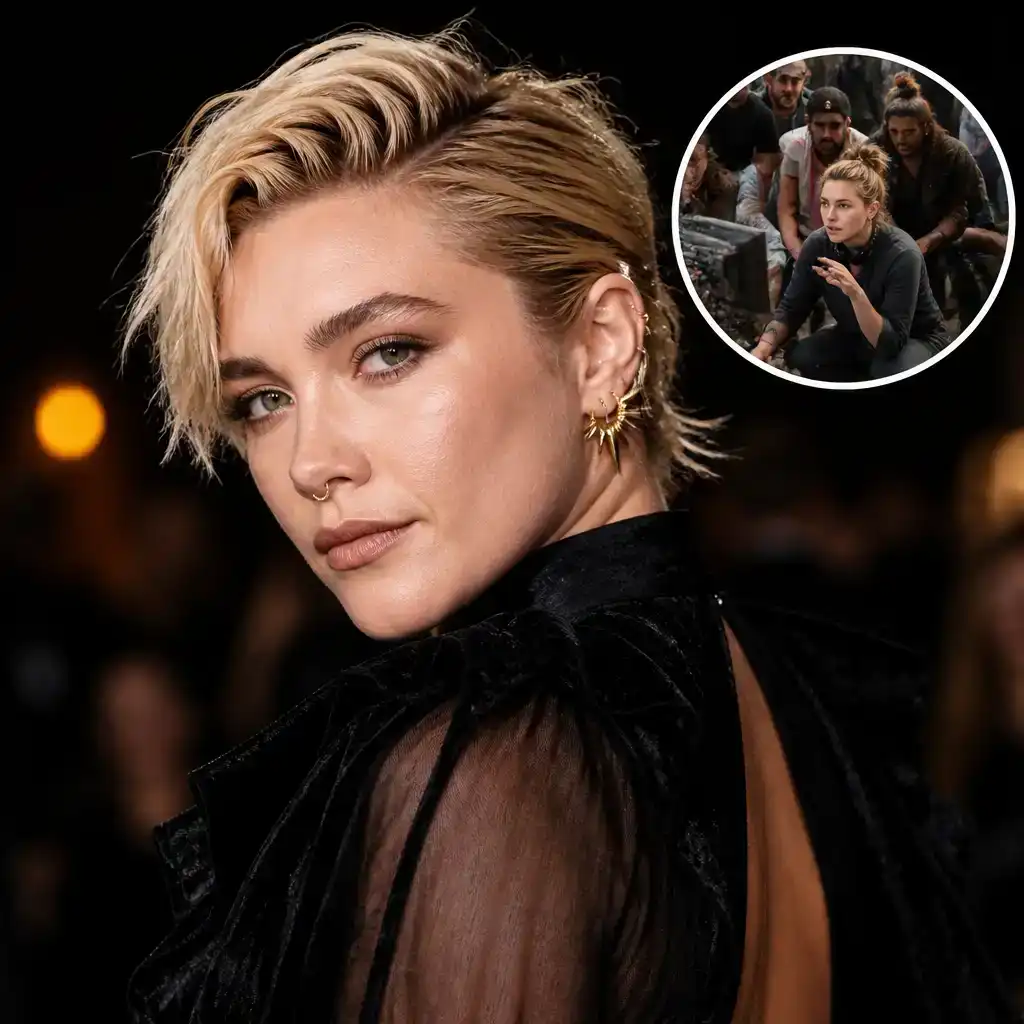
Florence Pugh has made it clear that success in Hollywood has changed more than her choice of roles. It has also given her the confidence to challenge behaviour she considers unacceptable on a film set, particularly when crew members are on the receiving end.
The Oscar-nominated actress, 30, outlined her expectations in an interview with ELLE, published on November 10 as part of the magazine's 2026 Women in Hollywood issue.
Her approach comes down to three straightforward rules: "Show up on time, don't be rude, don't be a misogynist."
But behind those expectations is a broader point about how Pugh believes people should be treated at work, regardless of their position in the industry.
Florence Pugh says she is no longer willing to tolerate bad behaviour
Reflecting on what she has learned throughout her career, Pugh explained that experience has made her increasingly comfortable protecting herself and exercising leadership on set.
She described becoming less willing to accommodate difficult attitudes or allow an individual's behaviour to disrupt the working environment for everyone else.
Her expectations extend beyond fellow actors and directors to the treatment of the people working behind the camera.
"I'm not allowing for people to be rude to the crew," she told the magazine.
That distinction matters. Film productions rely on camera operators, lighting technicians, costume departments, assistants and numerous other professionals whose contributions are essential, even when their names rarely receive the same attention as the stars.
Pugh's remarks place the treatment of those workers alongside punctuality and professionalism as a basic expectation rather than an optional courtesy.
She did not identify a particular colleague, production or incident as the reason for adopting those boundaries. Her comments were about the standards she increasingly expects throughout her career, not an accusation against anyone she has worked with.
Her expectations reflect a wider debate about working conditions in film
Pugh's position also reflects concerns that the British film industry has been addressing through formal workplace standards.
The British Film Institute's principles for preventing bullying, harassment and racism, developed with BAFTA and other industry organisations, specifically emphasise that workers deserve dignity and respect regardless of seniority.
Those principles cover freelancers and temporary workers as well as permanent employees, recognising that employment arrangements should not determine whether someone receives protection from inappropriate conduct.
They also call for clear procedures to report and investigate complaints, along with protection against retaliation.
There is an important distinction between those formal safeguards and the personal boundaries described by Pugh. A leading actor can influence the atmosphere of a production, but effective workplace protections also depend on employers establishing procedures that apply to everyone.
Pugh has not suggested that her own expectations replace those processes. What her interview illustrates is how she intends to use the influence she has acquired to challenge behaviour she considers unacceptable.
Why speaking out has become important to Pugh
Her comments about workplace conduct form part of a wider discussion in the ELLE interview about responsibility and finding the confidence to speak publicly.
During the conversation, which took place in September, the actress also discussed her decision to address allegations of sexual violence connected to a lawsuit involving Cornell University.
She explained that her willingness to speak out comes partly from her upbringing and her belief that people with a public platform have a responsibility to challenge injustice. The allegations discussed in that exchange were not presented as established findings.
For Pugh, the connection between her public advocacy and her approach to filmmaking appears to be a growing willingness to confront situations she believes are wrong, rather than remaining silent to avoid discomfort.
With major productions including Dune: Part Three and Avengers: Doomsday among her 2026 credits, she is speaking from an increasingly prominent position within Hollywood.
Her message to the people she works with is uncomplicated: professional success should not excuse disrespect, and the people making a film deserve consideration whether they appear on screen or not.