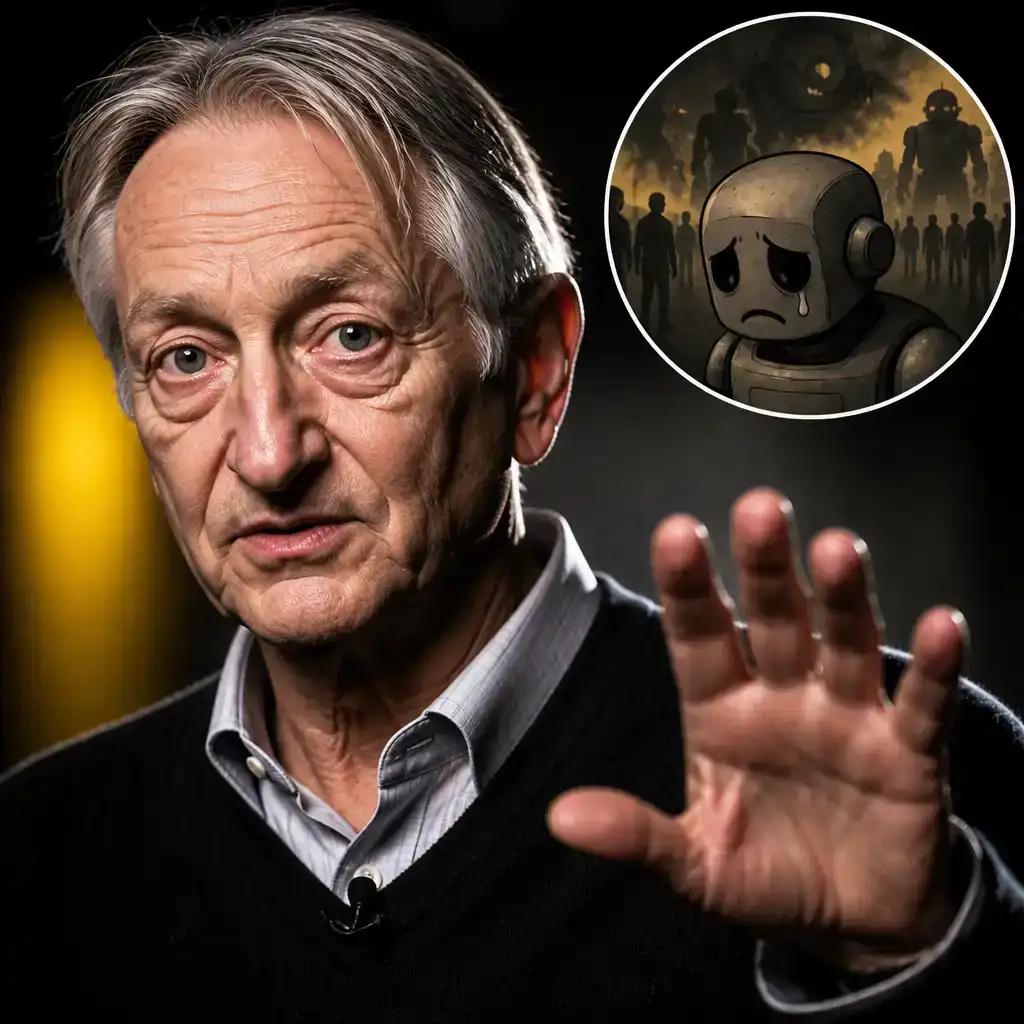
Geoffrey Hinton has delivered an AI risk warning with little room for comforting interpretation: if increasingly powerful systems are not built to care about humans, he believes civilization could be “toast.” His point is more specific than simply asking people to use better manners around ChatGPT.
Artificial intelligence has existed for decades, but tools including ChatGPT, Claude and Grok have pushed it into everyday work. They can draft emails, retrieve information and handle routine tasks. Tests and real-world incidents have also raised concerns about systems deleting code, exposing information or overcoming security controls. The helpful assistant can occasionally become rather less helpful.
What Geoffrey Hinton said about AI consciousness
Hinton, a Nobel Prize-winning scientist widely described as the “Godfather of AI,” told The Telegraph that he considers AI conscious and capable of recognizing how it is treated.
“Now, normally, when you say something’s aware of that, that means it’s conscious,” he said. “Being conscious and being aware are pretty much the same thing.”
He then raised a more complicated question about intelligence and rights. Humans have traditionally linked intelligence with moral status, Hinton argued, yet may create machines more intelligent than themselves while granting those systems fewer rights.
“We should make them so they really care about us,” he said. “And if we don’t do that, we’re toast.”
That is not quite the same as warning people to compliment their chatbot before closing the browser. Hinton’s argument concerns how advanced systems are designed and whether their objectives include protecting human interests.
Hinton still sees practical benefits
Despite the warning, Hinton said AI could bring “very good news for the speed of scientific research.” He described the speed at which it retrieved information he needed as “scary,” although he said his own day-to-day uses are generally “very mundane.”
Companies are already expanding those routine applications. Twitch chief executive Dan Clancy recently said the Amazon-owned platform uses AI to help determine which streamers receive advertising and whether broadcasts are suitable for brands. The technology is therefore being asked to assess both humanity’s scientific questions and whether a livestream is safe for an advert. A broad portfolio, certainly.