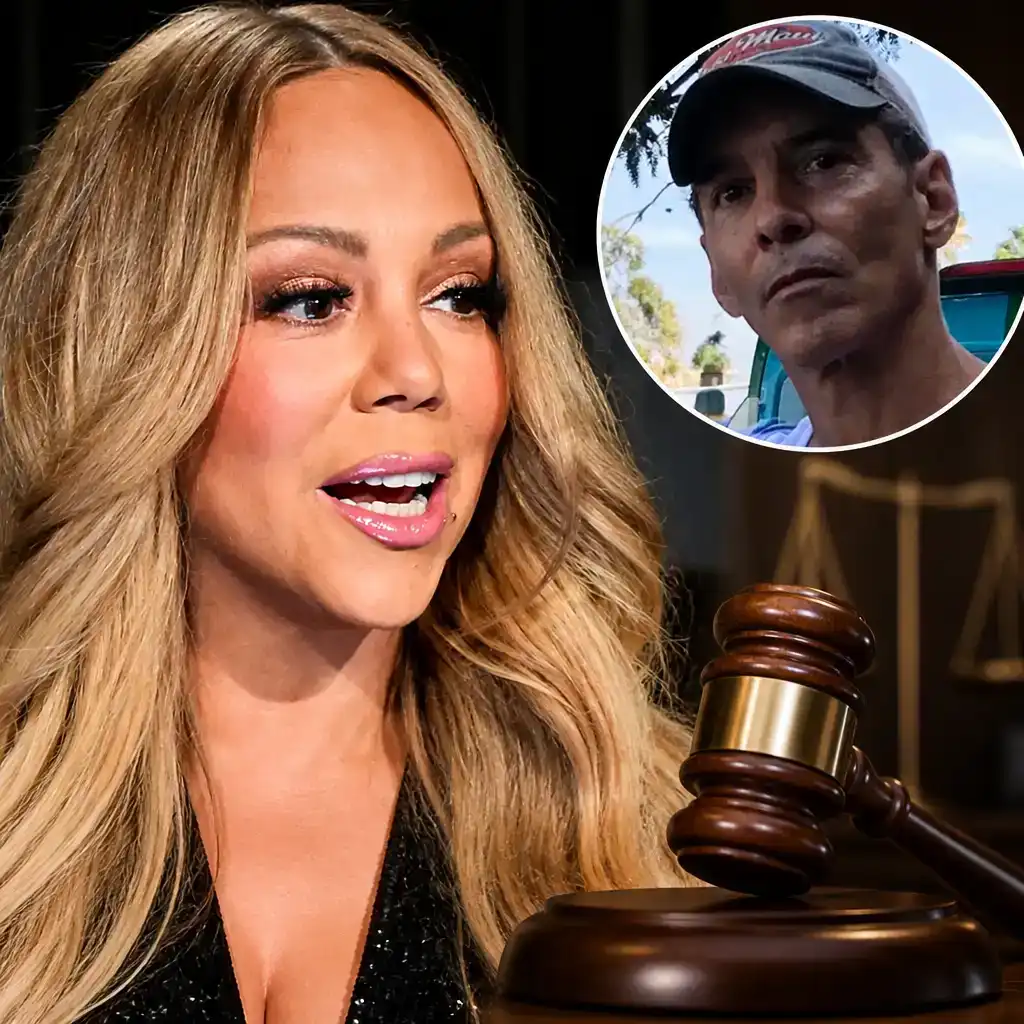
The Mariah Carey defamation lawsuit brought by her brother has been dismissed after five years of motions, appeals and disputes over what she wrote in her 2020 memoir, The Meaning of Mariah Carey.
On Monday, October 19, New York Supreme Court Justice Leslie Stroth rejected Morgan Carey’s two remaining claims. Rolling Stone reported that he had sought more than $20 million over passages he said falsely portrayed him as supplying cocaine and serving time in prison.
“The Court finds that Plaintiff has not sufficiently pleaded actual malice on the part of Defendant,” Stroth wrote. She also found that Morgan had failed to offer proof that his sister knowingly included false information.
Mariah Carey’s lawyer, John Rosenberg, said she was “gratified” that the court recognized her memoir dealt with issues of public interest and dismissed the claims in full. Morgan’s attorney, Richard Altman, called the decision “completely inconsistent with prior rulings in the case” and said an appeal would be filed “very soon.” No appeal had been located as of October 20.
What Morgan Carey challenged in the memoir
Morgan’s original case targeted nine passages from the memoir. They included claims suggesting he sold cocaine, behaved violently during the siblings’ childhood and had been imprisoned.
He argued that Mariah relied on information from their late mother without adequately checking whether it was true. He also claimed she prioritized the memoir’s commercial success over verification and damaged what he described as his previously “excellent and spotless reputation.” The court ultimately found those allegations did not establish that Mariah published statements while knowing they were false or seriously doubting their accuracy.
New York court records show the action began on March 3, 2021, followed by an amended complaint on July 6. Rolling Stone reported May 28, 2021, as the filing date. Either way, the case lasted considerably longer than the memoir’s publicity campaign, which is rarely the efficient part of celebrity publishing.
The lawsuit also named the book’s corporate and creative partners, including publisher Macmillan, co-writer Michaela Angela Davis and the Andy Cohen Books imprint.
How most of the case disappeared in 2022
In February 2022, Justice Barbara Jaffe dismissed every claim against Macmillan, Davis and Andy Cohen Books. She also threw out 14 of the 16 claims brought against Mariah.
That ruling removed the allegations involving passages about Morgan’s purported violence and other family events. Two disputed statements survived: one suggesting he supplied cocaine to nightclub patrons and another indicating he had been imprisoned.
The survival of those claims kept the case active through several more rounds of litigation. In October 2023, the Appellate Division upheld the partial dismissal. Morgan then sought either a default judgment or summary judgment, but both requests were denied in April 2024.
He later tried to expand the case with additional allegations, more detail about claimed financial losses and a new emotional-distress claim. Stroth addressed that effort in a December 2025 order filed on January 15, 2026. After years of procedural activity, the two claims that had survived the opening stage still had to clear New York’s actual-malice requirement. They did not.
Why New York’s anti-SLAPP law mattered
The final decision turned on New York’s expanded anti-SLAPP protections. Those rules apply to claims involving speech about matters of public interest and require a defamation plaintiff to meet the demanding actual-malice standard.
Morgan argued that Mariah failed to verify the disputed stories and relied too heavily on their mother. Stroth found that this was not enough. A weak verification process, even if established, does not automatically prove an author knowingly lied.
Rosenberg said the ruling has significance beyond the Carey family because it protects authors writing about subjects of public concern. That matters for memoirists, whose work often depends on personal recollections, family accounts and sharply conflicting versions of old events.
The ruling also produced a notable procedural reversal. In 2022, the court allowed the cocaine and imprisonment passages to remain in the case. Discovery disputes, attempted amendments and appeals followed. Four years later, those same claims failed because Morgan could not provide sufficient evidence of actual malice.
Five years of litigation therefore ended not with a trial over the family’s history, but with a judge finding that the legal standard had not been met. The memoir remains unchanged, while the proposed appeal may determine whether the family dispute returns to court for another round of paperwork.