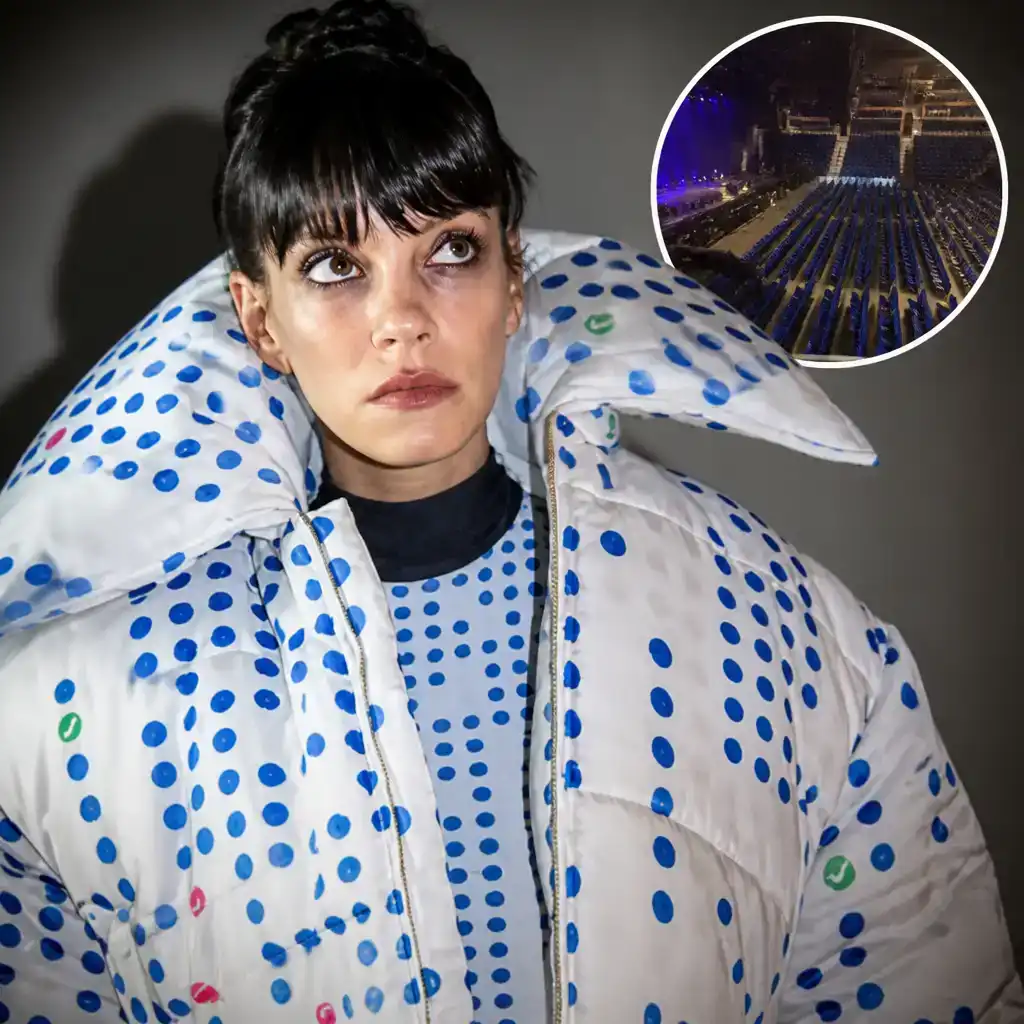
Lily Allen has turned one of the music industry's most embarrassing problems into a Halloween costume, dressing up as a Ticketmaster seating chart covered in unsold seats.
On Friday, October 30, the British singer shared a series of photos on Instagram, wearing a white puffer jacket and matching bodysuit decorated with blue dots. A black collar labelled "STAGE" completed the seating-chart illusion, while a thermometer in her mouth added another layer to the joke.
Her caption was wonderfully self-deprecating: "Never beating the allegations #bluedotfever."
But the outfit was more than a clever Halloween gag. It referenced an actual controversy surrounding her 2026 West End Girl tour, and one that Allen has already addressed publicly.
Why Lily Allen dressed as a Ticketmaster seating chart
The phrase "blue dot fever" has become an online nickname for concerts struggling to fill their venues. On Ticketmaster's interactive maps, blue dots generally represent seats still available to purchase. When large sections remain blue, screenshots can quickly become ammunition for people mocking an artist's ticket sales.
Allen experienced that scrutiny in July, when several dates on the North American leg of her West End Girl tour were moved from major arenas into smaller venues.
One particularly dramatic change involved Chicago, where a concert originally planned for the approximately 23,500-capacity United Center was relocated to the 3,500-capacity Chicago Theatre. Other cities, including Los Angeles and San Francisco, also saw venue changes, while a scheduled Montreal performance was cancelled.
Those venue capacities illustrate how significantly the tour was scaled back, although they should not be confused with confirmed ticket sales figures. A screenshot of available seats is not a complete accounting of how many tickets have actually been sold, either.
What Lily Allen actually said about the disappointing ticket sales
Unlike performers who might avoid acknowledging disappointing demand, Allen addressed the situation directly in a September interview with The Cut.
"The ticket sales weren't there," she admitted.
However, Allen explained that decisions about booking large arenas were heavily influenced by concert promoters and their projections of potential demand. She said she had questioned whether the originally planned venues were too ambitious.
She also revealed that approximately 50 crew members were relying on the tour for employment through October. Rather than cancelling the remaining performances entirely, she wanted to find venues better suited to the demand.
There is another detail that complicates the narrative of a disastrous tour. In the same interview, Allen discussed performing three sold-out concerts at London's O2 Arena, describing them as the biggest shows of her career in England.
That contrast matters. The disappointing sales in certain North American arenas were real, but they did not mean every stop on the tour was struggling.
Her Halloween costume also fits the visual identity of West End Girl. The blue-and-white polka-dot design echoes the jacket featured on the album's artwork, transforming an established part of the record's aesthetic into a joke about its commercial fortunes on the road.
For an artist whose recent live performances have been deliberately theatrical, turning a ticket-sales controversy into a wearable punchline is a particularly fitting response. The blue dots might not have disappeared, but Allen has made them part of the show.