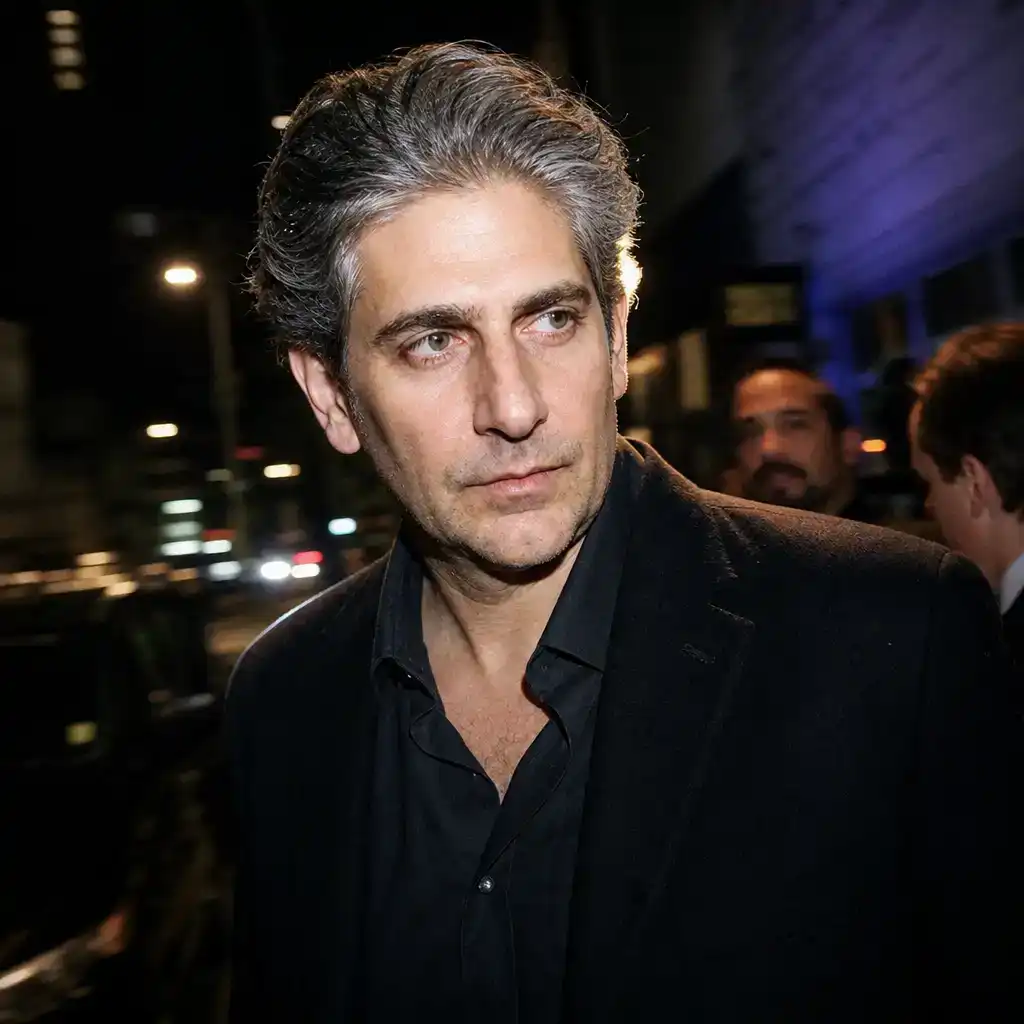
Michael Imperioli's declaration that homophobes were no longer welcome to watch The Sopranos has returned to social media more than three years after he first made it. But the actor's original message, and what happened afterwards, tell a more interesting story than the supposed ban itself.
On 6 November 2026, LGBTQ+ media outlet Gayety revisited the actor's comments, recalling his response to a controversial US Supreme Court decision. The post also acknowledged a detail easily lost when the original quote is shared on its own: Imperioli was making a satirical point, not announcing a genuine restriction on who could watch his work.
Why Michael Imperioli said homophobes couldn't watch The Sopranos
The controversy began on 1 July 2023, when Imperioli responded to the Supreme Court's ruling in 303 Creative LLC v. Elenis, delivered the previous day.
The actor, best known for playing Christopher Moltisanti in The Sopranos, announced on Instagram that he had decided to forbid bigots and homophobes from watching productions featuring him, including The Sopranos, The White Lotus and Martin Scorsese's Goodfellas.
He sarcastically thanked the Supreme Court for allowing him to exclude people whose views he opposed. His argument deliberately turned the idea of refusing service on ideological grounds back against those supporting the ruling.
The post attracted widespread coverage, but its satirical framing was not immediately understood by everyone. Imperioli subsequently deleted the original message and addressed the confusion.
The clarification that changed how his comments should be understood
On 4 July 2023, Imperioli explained his position in a follow-up Instagram statement, describing his original comments as a satirical and symbolic response to the direction he believed the Supreme Court was taking the United States.
As TheWrap reported at the time, the actor explained that some readers had missed the irony. He reaffirmed his support for freedom of speech, religious liberty and equal legal protections regardless of sexuality, gender, race or religion.
That clarification matters because the initial statement was never a practical attempt to stop anyone streaming a television programme. Imperioli was using an intentionally absurd exclusion to make his disagreement with the court's decision visible.
What the Supreme Court actually decided
There is another important distinction in the story. The Supreme Court did not establish a general right for businesses or celebrities to discriminate against anyone they dislike.
In its 6–3 decision in 303 Creative LLC v. Elenis, the court ruled that Colorado could not compel website designer Lorie Smith to create customised wedding websites expressing messages that conflicted with her beliefs. The majority treated those individually created websites as protected expression under the First Amendment.
The ruling addressed compelled speech, rather than creating an unrestricted exemption from anti-discrimination laws. The majority also acknowledged the importance of laws protecting equal access to public services.
Justice Sonia Sotomayor, joined by Justices Elena Kagan and Ketanji Brown Jackson, dissented. She argued that the majority's approach weakened protections against discrimination in commercial services.
Imperioli's joke drew its force from that disagreement. By suggesting he could exclude an entire category of viewers from existing films and television shows, he highlighted what he considered the troubling implications of the ruling, although the court's actual decision concerned a different legal situation.
The November 2026 resurfacing of his remarks is therefore a reminder of an important detail about the original controversy: the actor's objection was real, but the ban was not. His comments were a political statement made in July 2023, not a newly announced policy governing who can watch The Sopranos today.