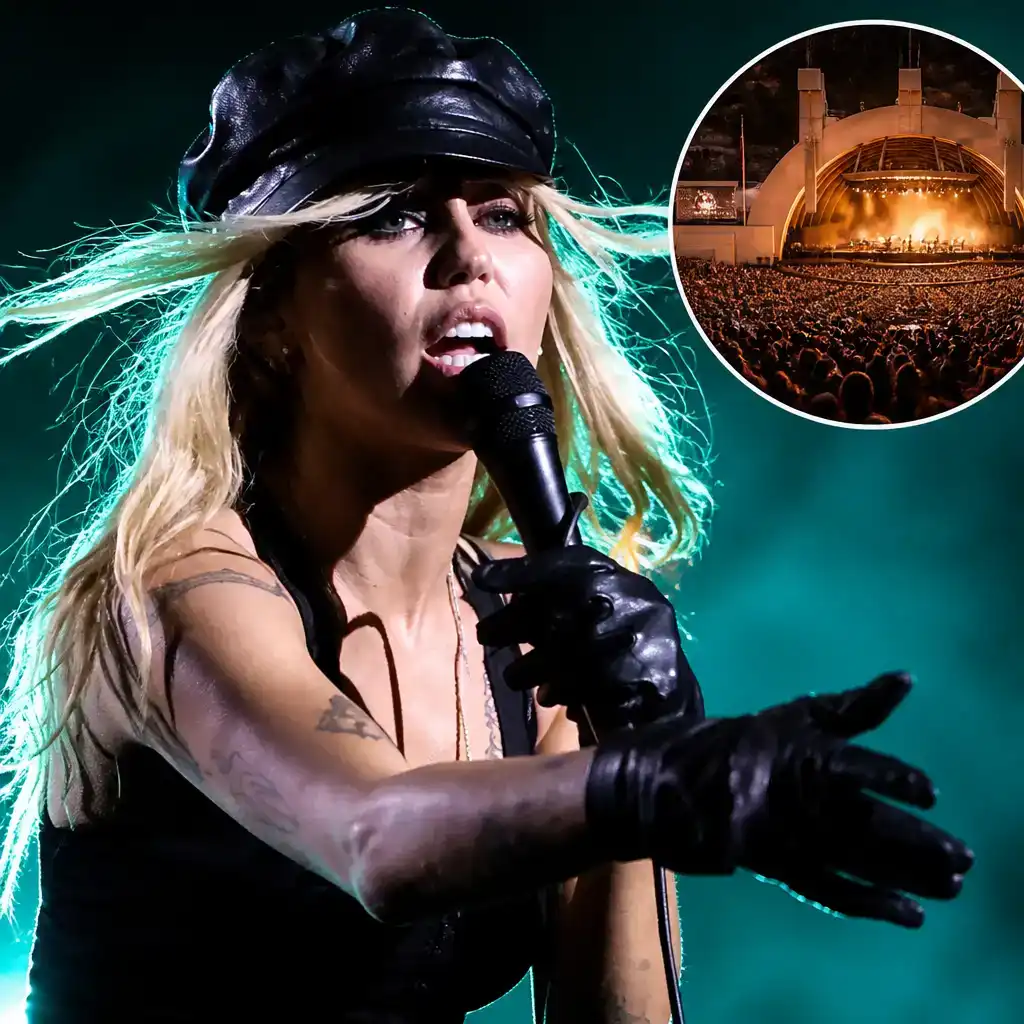
Miley Cyrus’s Hollywood Bowl concerts were supposed to mark a carefully managed return to major headlining performances. Instead, the two sold-out nights produced a familiar pop dispute: how much singing audiences should expect from the person whose name is on the ticket.
During the second show on October 18, Cyrus directly answered criticism of her opening performance two nights earlier. She said she had nearly refused to take the stage, but pushed through because she would not leave the crowd without a complete show.
“I’ve never heard that I don’t put my heart into something,” Cyrus told the audience in fan-recorded footage. She accused an unnamed commentator of chasing “clickbait” by questioning her commitment.
What prompted the criticism?
The October 16 concert was Cyrus’s first major headlining performance in about four years. The Los Angeles Times reported that she regularly handed sections of songs to the audience or her backing singers, including major hits such as “Party in the U.S.A.,” “Flowers” and “Wrecking Ball.” Its review called the latter an “anticlimax.”
Other assessments were more favourable. Rolling Stone Australia focused on Cyrus’s candour, performances of new material and tribute to her godmother, Dolly Parton. Online audience reactions were similarly divided, with some praising her voice and openness while others objected to the partial vocals, dark staging and restrained atmosphere.
Both shows still sold out, drawing nearly 18,000 people each, according to Los40. Evidently, disagreement about the performance did not create much extra room in the venue.
Cyrus confronted the complaint during Sunday’s rendition of “Bass Persuades,” the title track and lead single from her latest album. “Oh, I forgot I’m supposed to sing every fucking line!” she said.
Why live performance has become harder for Cyrus
The singer acknowledged that performing no longer comes as naturally as it once did. She also rejected the suggestion that the Hollywood Bowl dates were merely a test run conducted at the audience’s expense.
“This is not an experiment of you,” Cyrus said. “This is an experience for me. And you all make the experience possible.”
Her reluctance to return to conventional touring predates the Bowl criticism. In an interview with Apple Music’s Zane Lowe, Cyrus explained that touring can disrupt the routines that support her sobriety. She has also discussed having a vocal-cord polyp, which contributes to her distinctive low tone but makes sustained singing more difficult.
Those factors complicate the standard expectation that a pop star should deliver a full-scale spectacle night after night, with every lyric intact and no visible strain. Cyrus appears willing to perform again, but not necessarily under the same conditions that defined her earlier career.
The concerts also coincided with the 19th anniversary of her first headlining tour, underlining just how long she has been working inside those expectations.
Why she nearly abandoned the second show
Before performing “Orbit” on October 18, Cyrus said she had already decided not to appear.
“Before I came out for ‘Orbit,’ I already told myself I wasn’t going to come on stage, I was going to run away,” she told the crowd. “But never would I leave you all sitting in these seats, unfulfilled from a show.”
She drew a firm distinction between criticism of the concert and questions about whether she cared enough to be there.
“So I can take a lot, but one thing I will not stand is any question about where my heart is when I’m on the stage,” Cyrus said. “I am fully present.”
No additional concerts, cancellations or tour plans were announced after her response. The Bowl engagement therefore remains a limited comeback rather than confirmation that Cyrus is preparing to return to the touring schedule she has repeatedly described as unhealthy for her.
The comeback arrived with a chart contradiction
The shows supported Bass Persuades, an 11-track album released on September 18 with a running time of 38 minutes. It debuted at No. 1 on the Billboard 200 with 61,000 equivalent album units.
One week later, it dropped to No. 157. NME and Stereogum reported that this was the largest second-week positional fall for an album that had entered the chart at No. 1.
That sharp decline sits awkwardly beside two packed Hollywood Bowl concerts, but the figures measure different things. A strong opening week can reflect concentrated interest from an established fan base, while a rapid fall suggests the wider audience did not keep streaming or buying at the same rate. Sold-out shows, meanwhile, demonstrate that thousands of people still want to see Cyrus in person, even if they disagree about how much of each chorus she should personally handle.
For now, the two concerts reveal less about a future tour than about Cyrus’s current limits. She returned, filled the venue twice and admitted that doing so was difficult. The audience got a performance, a public rebuttal and a reminder that comeback narratives are usually tidier than actual comebacks.