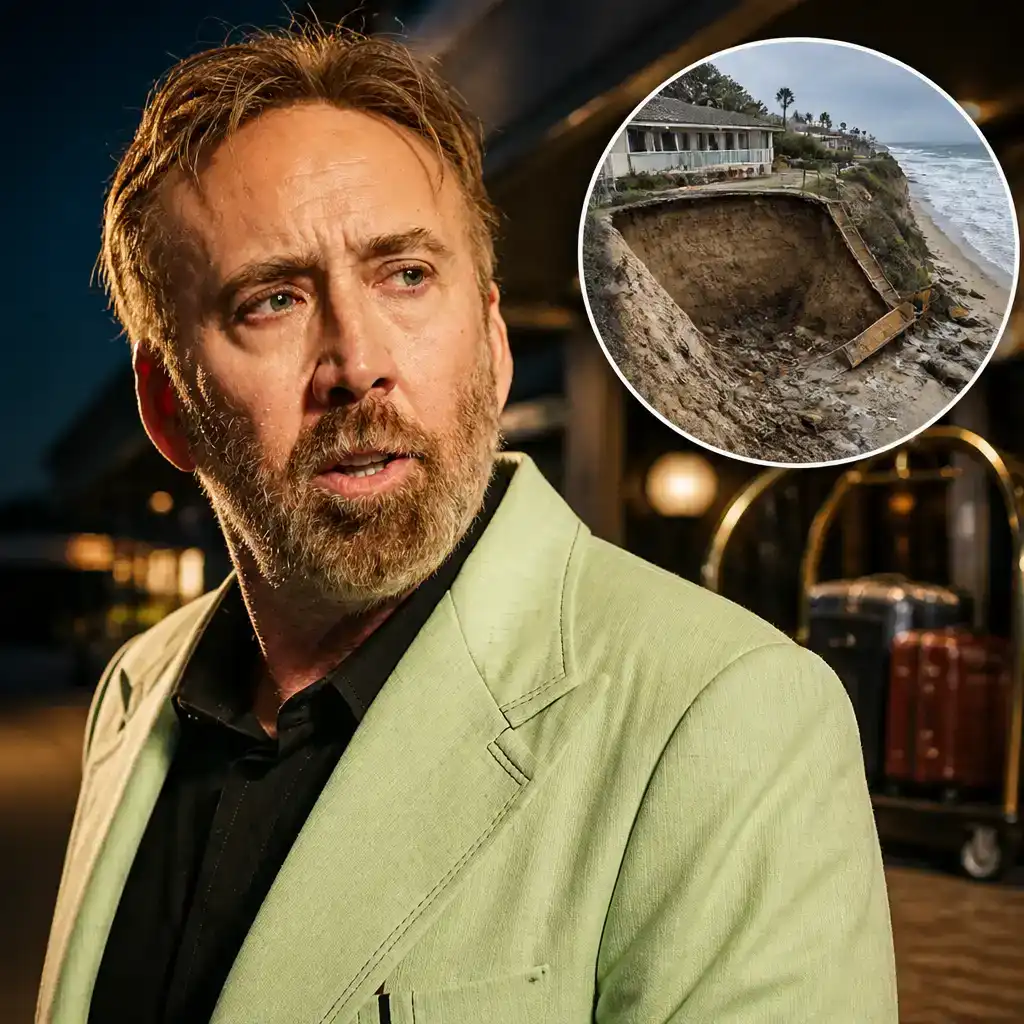
The Nicolas Cage Malibu sinkhole saga has left the actor living in hotels, although reports indicate his $10.5 million beachfront house was threatened rather than destroyed. The September collapse took out the driveway, damaged the deck and helped displace residents across 31 properties.
“I’m currently a little bit homeless,” Cage said during a Los Angeles Comic Con panel on October 31. He added that “something happened” to his home and that he was “sort of living in hotels.” It was a deliberately casual description of a serious problem, though temporary hotel accommodation is plainly not the experience most people associate with homelessness.
Cage said the disruption had also changed his Halloween plans. He intended to take August, his four-year-old daughter with wife Riko Shibata, trick-or-treating in Santa Monica before watching Stanley Kubrick’s The Shining after putting her to bed.
The Oscar winner also has two adult sons from previous relationships, Weston, 35, and Kal-El, 21.
What happened to Cage’s Malibu property?
The ground collapse opened on September 8, creating a hole measuring roughly 30 by 60 feet and 25 feet deep, according to the Los Angeles Times. Gas and water lines ruptured, while a displaced septic tank struck a neighbouring home, The Atlantic reported.
Malibu officials red-tagged 31 properties. Seven were deemed hazardous, while another 24 could not be safely reached by emergency vehicles. Evacuation orders followed, affecting far more than one celebrity residence.
As of October 19, the road remained impassable, utilities were switched off and the evacuation orders had not been lifted, according to the Los Angeles Times. Cage had secured four repair permits costing $3,158 for:
- Soil sampling
- Debris removal
- Sandbag protection
Those permits suggest an effort to stabilise and save the property, not the aftermath of a house that had already vanished into the ground. The driveway collapsed and the residence remained at risk, but reports from the Associated Press and the Los Angeles Times did not describe the main building as destroyed.
Cage bought the four-bedroom, five-and-a-half-bathroom home for $10.5 million in 2024. The property covers 3,938 square feet, slightly below the rounded 4,000-square-foot figure cited in early coverage.
Why Malibu officials see a wider threat
City officials have warned that the collapse may reflect a broader problem for Malibu’s heavily developed coastline.
“I don’t think this is a single, isolated event for Malibu,” City Manager Joseph Irvin told the Los Angeles Times, pointing to high tides, El Niño-type weather and rising sea levels. Mayor Bruce Silverstein similarly said the effects of El Niño were already being felt.
Malibu’s coastal vulnerability assessment estimates that 1,410 residential buildings, around 20 percent of the city’s total, could face flooding, erosion, seawater intrusion or other effects linked to sea-level rise during this century.
That leaves the city with difficult questions about emergency access, private repair costs, coastal defences and whether some exposed beachfront development can remain viable. Cage’s hotel stay attracts the headline, naturally, but the more consequential figure is 31 affected properties and a city preparing for the possibility that the next collapse will not be an isolated surprise.