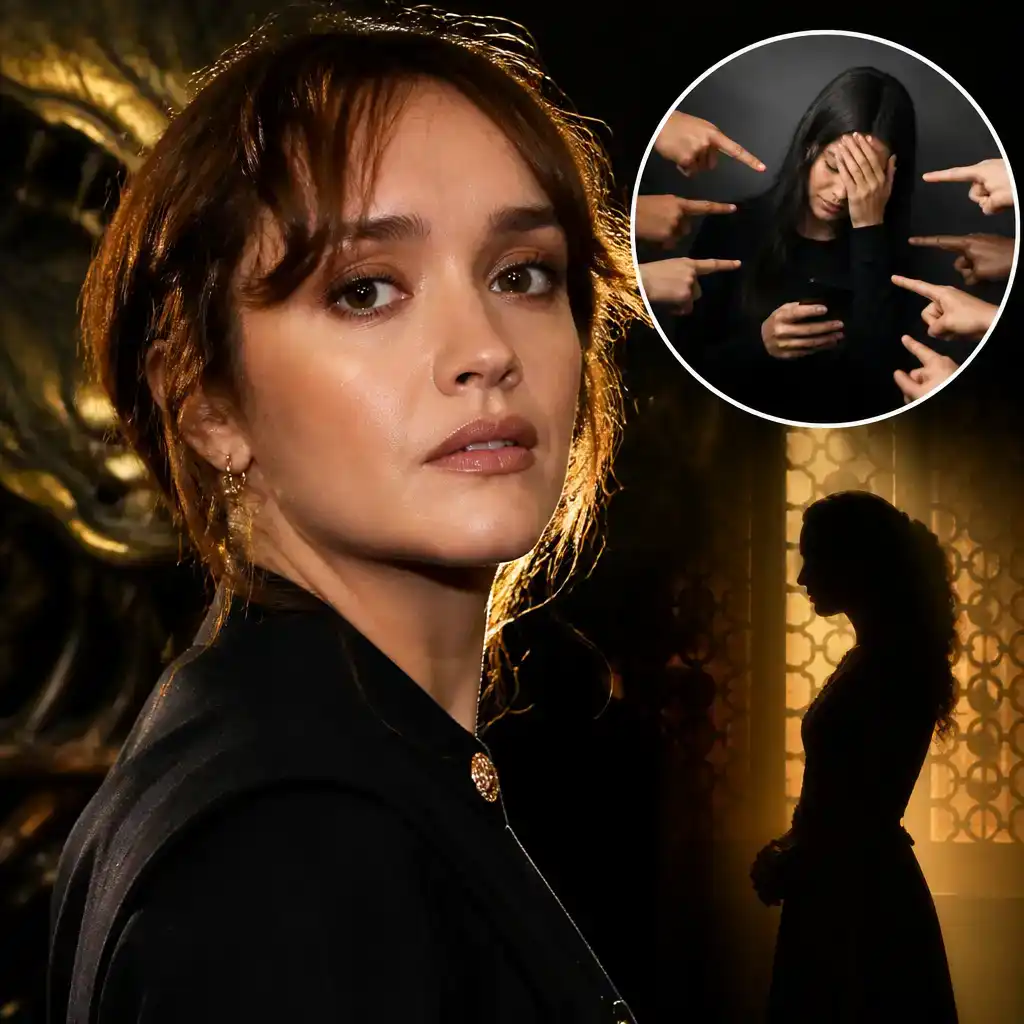
Olivia Cooke has spoken out about the hostility surrounding House of the Dragon, accusing parts of the HBO series' fanbase of misogyny and racism while challenging speculation about how she was treated behind the scenes.
The actress, who plays Alicent Hightower in the Game of Thrones prequel, discussed her decision to step away from social media in an interview with British GQ published on November 9, 2026.
Cooke described elements of the fandom as "steeped in misogyny" and said there was "a lot of racism". Her comments came after the show's third season, which aired over the summer and prompted intense debate about Alicent's increasingly controversial storyline.
But her criticism went beyond the unpleasant comments directed at actors. Cooke also addressed a particular type of fan speculation: viewers assuming they knew what was happening to her on set based on their reactions to fictional scenes.
Olivia Cooke challenges fan theories about House of the Dragon's directors
Season three featured disturbing developments involving Alicent and her son Aemond Targaryen, played by Ewan Mitchell. Those creative decisions sparked criticism, with some viewers questioning whether Cooke had been placed in uncomfortable situations by the production team.
In her GQ interview, Cooke rejected interpretations of her experiences that she felt had grown disconnected from reality. She also spoke positively about director Clare Kilner, praising her considerate approach to working with cast and crew.
That distinction matters. Viewers can disagree with the writing, question character development or criticise decisions made by the show's creators. But those opinions do not establish what an actor experienced during filming.
Cooke's account challenges the assumption that controversial material on screen necessarily indicates mistreatment behind the camera. Her comments offer a perspective from someone directly involved in making the programme, rather than another theory about her personal feelings.
Why Olivia Cooke stepped away from Instagram
The reaction to House of the Dragon was one factor behind Cooke's decision to disconnect from social media, but her reasons were broader than a single television controversy.
She told GQ that her relationship with social platforms had become "not nourishing". She also questioned the growing expectation that performers should continually cultivate an online following and commercial identity alongside their creative work.
Importantly, her departure was not permanent. GQ reported that Cooke had returned to Instagram by October 2026, although she remained uncomfortable with aspects of online celebrity culture.
Her frustration with social media was already apparent months earlier. In a June 21 interview with The Guardian, Cooke discussed how appearance-focused content on Instagram could distort people's perceptions of their bodies and themselves.
She also revealed that some unpleasant encounters with House of the Dragon viewers had happened in person, not just online.
Fans have confronted Cooke about Alicent in real life
Speaking to The Guardian, Cooke described occasions when people approached her for photographs before telling her how much they disliked Alicent.
Rather than responding aggressively, she said she generally tried to laugh off the encounters, sometimes suggesting that the person could delete the photograph they had just taken.
Her account reveals a distinction often lost in discussions about controversial fictional characters. An audience's emotional response to Alicent is part of watching the series. Directing personal hostility towards Cooke, however, involves a real person whose job is to portray that character.
Read together, the June and November interviews also clarify that Cooke's relationship with social media has changed over time. Her concerns include hostile fandom behaviour, intrusive celebrity expectations and the pressures created by appearance-driven online content.
And while Cooke has been openly critical of aspects of House of the Dragon's fan culture, she has been equally clear that viewers should not mistake their theories about her working relationships for her own account of what happened.