Donnie Darko director Richard Kelly has not released a film since 2009, but he has hardly abandoned the complicated universe that defined his career. Instead, the filmmaker says his debut established such an ambitious standard that every possible follow-up has had to compete with it. A modest target, then.
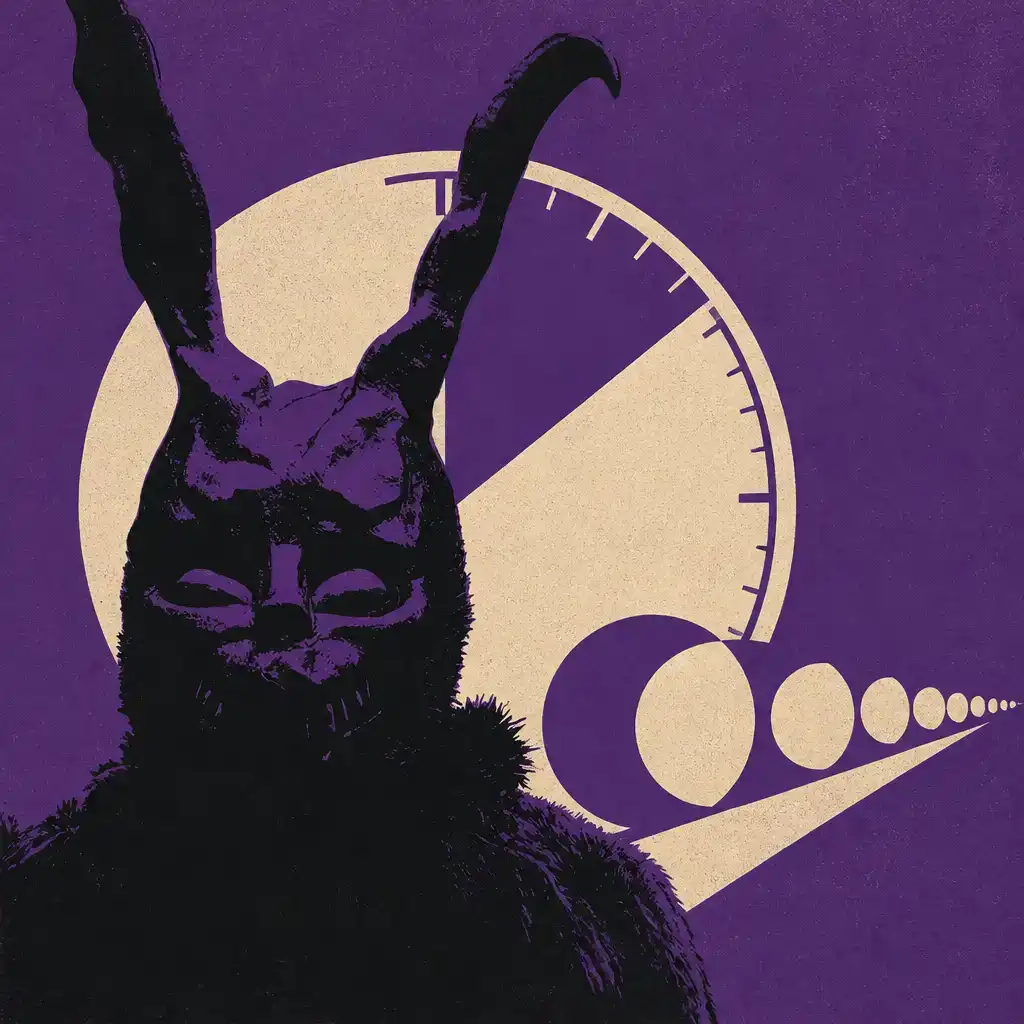
Kelly wrote the screenplay at 23, directed the film at 25 and was 26 when it arrived in 2001. Its story followed troubled teenager Donnie, played by Jake Gyllenhaal, through visions, time travel and unsettling meetings with Frank, a man wearing a deeply unhelpful rabbit costume.
The film initially struggled commercially. Its aviation disaster imagery also proved difficult to sell in the United States shortly after the September 11 attacks. Over time, however, its layered narrative and open-ended mythology turned it into one of the century’s defining cult films.
Why has Richard Kelly stopped directing films?
Kelly told Rue Morgue that releasing something so elaborate at the beginning of his career created a benchmark he has struggled to match.
“Because Donnie Darko was the first thing out of the gate for me, it sort of set this benchmark,” he said. “I’m a bit haunted by it in a way because I just... I don’t want to make something that feels like it’s not at least aspiring to that level of ambition and complexity.”
He followed the film with Southland Tales in 2006 and The Box in 2009. The latter received a poor critical and commercial response, and Kelly has not directed another feature in the 17 years since.
He acknowledged that choosing simpler projects might have produced a longer filmography. That does not mean he considers simplicity inferior.
“There’s nothing wrong at all with simple done in a smart, great way, which is beautiful in its own right and takes a huge amount of skill,” Kelly said. “But, for me, there’s something about creating stories that have a lot of layers and a lot of ideas that’s just really stimulating and interesting.”
The problem is that layered, expensive and unconventional films are not generally the easiest projects to finance. Hollywood enjoys originality, provided it arrives with predictable returns and preferably an existing audience.
How did Donnie Darko get made?
The original production was hardly guaranteed. Kelly and producer Sean McKittrick spent about a year and a half meeting people who wanted the screenplay but were less enthusiastic about letting an inexperienced director and producer make it themselves.
Interest increased when Rushmore actor Jason Schwartzman joined the project. In March 2000, Kelly met Drew Barrymore on the set of Charlie’s Angels. She agreed to play Donnie’s teacher Karen Pomeroy and produce the film with Nancy Juvonen through Flower Films.
Production began in July 2000. Schwartzman had withdrawn because of other commitments, leaving Jake Gyllenhaal to take the central role. The film was shot in 28 days on a budget of approximately $4.5 million.
Its eventual reputation grew well beyond that restrained production. A 25th-anniversary 4K rerelease in October 2026 earned $1,055,565 from 804 cinemas during the weekend of October 2 to 4, according to Box Office Mojo. That result offered measurable evidence that the film’s audience is not confined to old DVDs and online theories about jet engines.
What is The Philosophy of Time Travel about?
Kelly will return to the story with The Philosophy of Time Travel, named after Roberta Sparrow’s fictional book in the original film. Range Literary Publishing is scheduled to release the illustrated novel on December 15, 2026.
Reports disagree on its exact size. Rue Morgue describes it as a 600-page book, while GamesRadar and earlier reporting based on Variety put it closer to 800 pages. Either version suggests Kelly has not suddenly developed an interest in minimalism.
The story begins after Donnie dies beneath the falling jet engine and covers the following 14 months. It follows his parents, Rose and Eddie Darko, as they conduct separate investigations into what happened. Kelly told MovieMaker that the original film left their occupations unexplored and that both are “really formidable people.”
The novel uses documents, diary entries and transcripts to expand the mythology. Kelly has said it opens “an entire new universe,” rather than simply retelling the same events from another angle.
Could the sequel become an animated film series?
Despite suggestions that Kelly has no intention of returning to Donnie Darko on screen, his more recent comments indicate the opposite. He told MovieMaker that the novel contains enough material for three motion-capture animated films and described a wider sequel plan involving “multiple movies.”
“I didn’t want to live out the rest of my life saying that I couldn’t figure out a sequel,” he said.
According to Popverse, Kelly wants to begin with an animated adaptation before moving to a story set 28 years after the original. Animation and publishing could offer him a route around the financing problems attached to ambitious live-action productions, though proposed films and funded films remain two very different categories.
Kelly is also considering an expansion of Southland Tales using both motion-capture animation and live action. His absence from cinemas, then, appears less like retirement than a prolonged attempt to make large, difficult projects without reducing them into safer versions.
Whether those plans reach production is still uncertain. The sequel novel is concrete, the rerelease has demonstrated continuing demand, and Kelly is openly discussing several films. After 17 years away from directing, the filmmaker haunted by his first success may finally have found a way back through it.