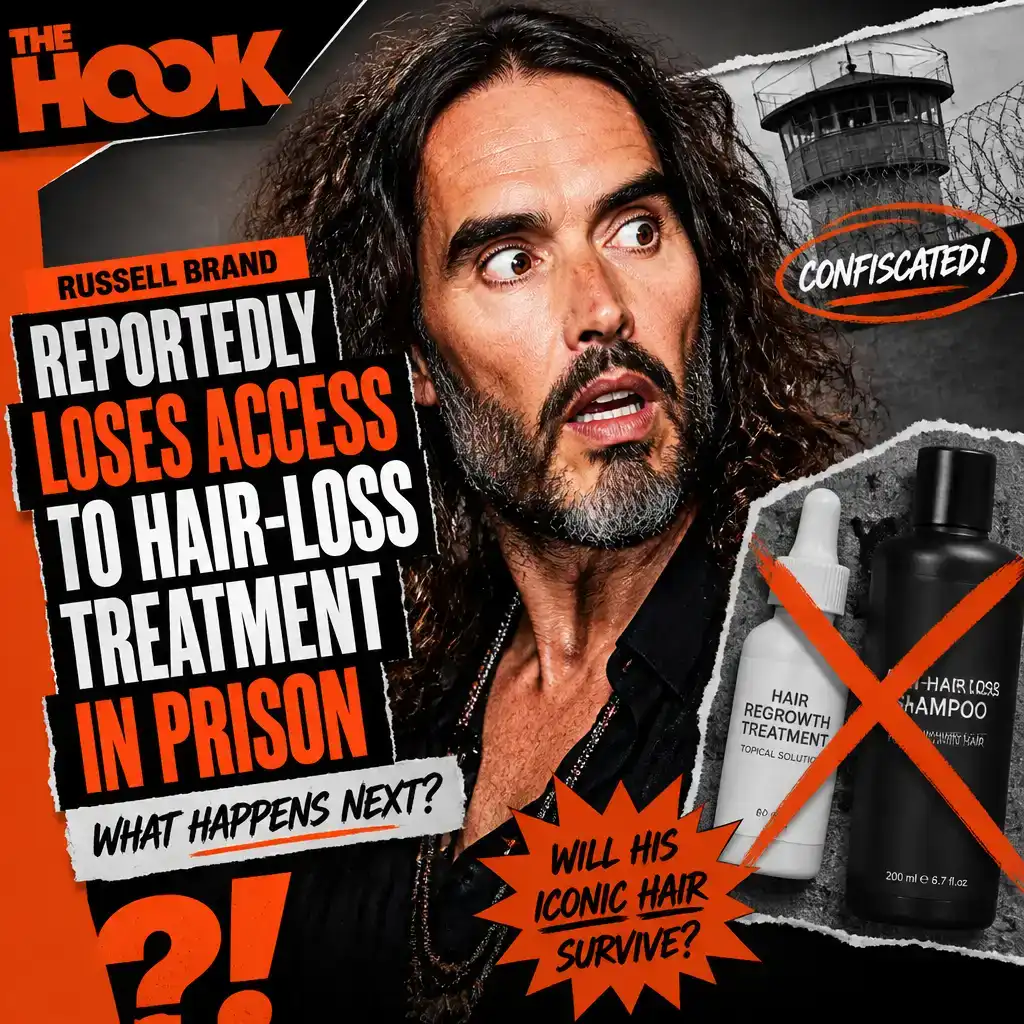
Russell Brand has reportedly been refused access to hair-loss medication and specialist shampoo in prison, raising questions about whether his familiar long-haired appearance could change during his sentence.
According to a report published by The Sun on November 15, the 51-year-old requested Propecia tablets and Alpecin caffeine shampoo after entering custody. An unnamed source claimed the products had been confiscated because they were considered cosmetic rather than essential.
The account has not been independently confirmed. The Ministry of Justice declined to comment on the newspaper's report, leaving the precise circumstances of any medication decision unclear.
Brand was sentenced to 10 years and six months in prison at Southwark Crown Court on November 9, following his conviction for one count of rape and three counts of sexual assault against four women. His sentence was confirmed by the Crown Prosecution Service.
Can prisoners continue taking prescription hair-loss medication?
The distinction between a prisoner having medication removed on arrival and being permanently denied treatment is important.
Under official UK government guidance, prisoners are entitled to the same standard of healthcare as people outside prison. However, treatment must be approved by a prison doctor or another member of the healthcare team.
The Prison Advice and Care Trust also explains that people entering custody are not normally permitted to retain medication brought from outside. Existing prescriptions must be reviewed by prison healthcare professionals, who determine which treatments should continue.
That means the reported confiscation of Brand's tablets does not, by itself, establish that he has been permanently refused the medication. Nor does the fact that Propecia is a prescription medicine automatically guarantee access to it.
It remains unknown whether Brand has undergone a further assessment or requested the treatment following his reported transfer from HMP Wandsworth to HMP Littlehey.
What happens when someone stops taking Propecia?
Propecia contains finasteride, a medication used to treat male pattern hair loss. It works by reducing the conversion of testosterone into dihydrotestosterone, a hormone associated with hereditary hair loss.
Unlike an ordinary cosmetic shampoo, finasteride is a pharmaceutical treatment with an established clinical indication. Its benefits generally depend on continued use.
However, suggestions that Brand could lose his trademark hairstyle within weeks are not supported by the medication's official guidance.
According to the Propecia prescribing information, the benefits of treatment generally begin to reverse within six months of discontinuation, with hair returning towards its previous condition within nine to twelve months.
Those figures describe typical treatment outcomes, not a prediction about Brand's individual appearance. His medical history, current treatment and actual hair-loss condition have not been independently established.
For now, the allegation remains an account attributed to an anonymous source, while the medical guidance offers a clearer distinction between a possible interruption in treatment and the much more dramatic claim that Brand could rapidly lose his hair.