For years, millions of people believed an Iranian Instagram star had undergone dozens of plastic surgeries to transform herself into a terrifying, zombie-like version of Angelina Jolie. The photographs were disturbing, the rumours spread worldwide, and the woman behind them became an unlikely internet celebrity.
But the most extraordinary part of Sahar Tabar's story wasn't her appearance. It was what happened when the person behind the viral images became the target of Iranian authorities.
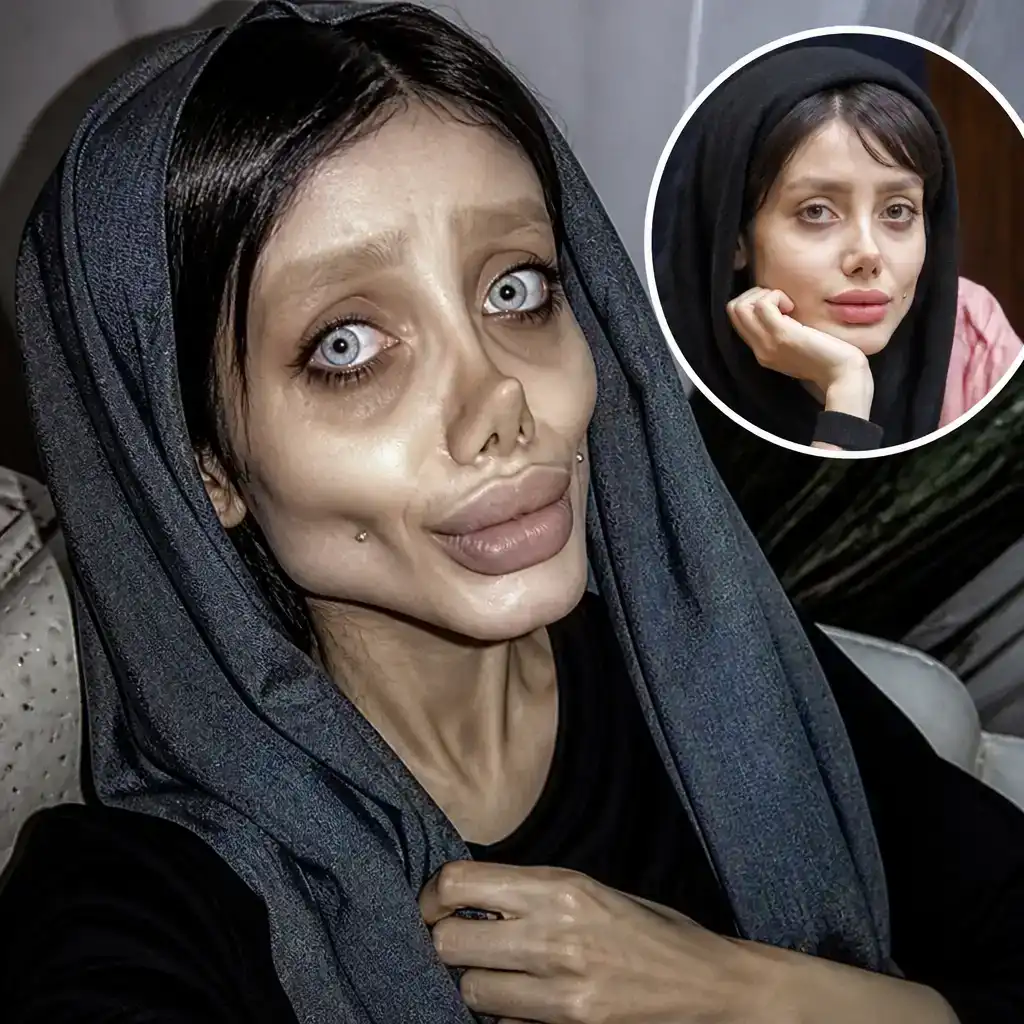
In October 2022, Tabar appeared on Iranian television and showed her real face, revealing just how different she looked from the unsettling photographs that had made her famous. Her appearance brought renewed attention to a controversy that had begun five years earlier.
Was the 'Zombie Angelina Jolie' transformation actually real?
Tabar, whose real name is Fatemeh Khishvand, first attracted international attention in 2017 when photographs of her dramatically altered face circulated across Instagram.
The images showed exaggerated cheekbones, hollow-looking eyes, an unusually narrow nose and oversized lips. Her appearance quickly earned her the nickname 'Zombie Angelina Jolie', with reports suggesting she had undergone approximately 50 cosmetic procedures in an attempt to resemble the Hollywood actress.
That explanation made for an irresistible viral story. It also gave people a misleading impression of what they were actually seeing.
Although Tabar acknowledged having undergone some cosmetic procedures, including a nose job, lip fillers and liposuction, the extreme features in her photographs were largely created through makeup and digital manipulation.
According to The Independent's October 2022 reporting, Tabar explained that she had used Photoshop and makeup to exaggerate her appearance and attract attention online.
The distinction matters. Her viral photographs were not simply the result of unsuccessful cosmetic surgery. They were deliberately constructed images, designed to provoke a reaction.
She wasn't necessarily trying to become Angelina Jolie
Despite the nickname that followed her around the world, Tabar's own explanation of her appearance was more complicated than the headlines suggested.
During an Iranian state television interview in October 2019, she reportedly denied that becoming Angelina Jolie had been her objective. Instead, she referenced the animated character from Tim Burton's Corpse Bride as an inspiration.
As Business Insider reported at the time, Tabar also spoke about her longstanding desire to become famous.
Her photographs had certainly achieved that ambition, attracting international attention and turning her Instagram identity into a widely discussed internet phenomenon.
Yet the publicity came with consequences far more serious than criticism of her appearance.
How did an Instagram transformation lead to prison?
In October 2019, Iranian authorities arrested Tabar following the controversy surrounding her social media activity.
Reports at the time described allegations including blasphemy, corruption and encouraging inappropriate behaviour. In 2020, she received a 10-year prison sentence, prompting criticism from human rights campaigners.
The case raised questions that extended well beyond her digitally altered photographs, particularly concerning freedom of expression and the treatment of young social media users under Iran's legal system.
Her appearances on state television also attracted scrutiny. A December 2020 report by Global News cited one of her lawyers, Saeid Dehghan, who alleged that she had been forced into a televised confession without access to her attorneys.
That allegation is important context when considering her televised statements. They should not automatically be treated as freely given accounts of her experience.
Tabar was eventually released after serving approximately 14 months, according to reports published in 2022. Her release was discussed amid the widespread protests that followed the death of Mahsa Amini in Iranian custody, although the precise circumstances of Tabar's release have not been consistently described across news reports.
What happened when Sahar Tabar revealed her real face?
In October 2022, photographs and television footage showing Tabar without her familiar extreme makeup and digital alterations circulated internationally.
Her appearance was strikingly different from the character audiences had come to associate with her name.
The woman previously depicted with skeletal features and dramatically distorted proportions looked nothing like the heavily manipulated Instagram images that had generated so much speculation.
The reveal was covered by outlets including The Independent, which published footage on October 27, 2022.
Tabar also discussed her motivation for creating the images. As reported by The Independent, she had wanted to become famous from a young age and saw social media as a more accessible route to recognition than pursuing an acting career.
There was an important irony in the revelation: the transformation that made her internationally recognisable was largely an illusion, but the legal consequences she experienced were very real.
Why the 'Zombie Angelina Jolie' story is still misunderstood
Several different versions of Tabar's story have circulated since her photographs first went viral.
Some reports portrayed her as someone who had undergone 50 unsuccessful operations. Others suggested she was obsessed with resembling Angelina Jolie. The more sensational versions often overlooked her use of photo editing, her stated artistic influences and the circumstances surrounding her arrest.
There is also confusion about the timeline. Tabar's arrest occurred in 2019, her prison sentence was reported in 2020, and her widely covered real-face reveal took place in October 2022. It is not a new development.
Her case illustrates how easily an exaggerated online persona can become accepted as reality when striking images circulate without sufficient context.
But reducing the story to an internet hoax misses its most consequential element: a young woman became internationally famous for creating disturbing fictional images of herself, then faced criminal prosecution connected to her online activity.
The photographs may have been manufactured. The controversy surrounding what happened to their creator was not.