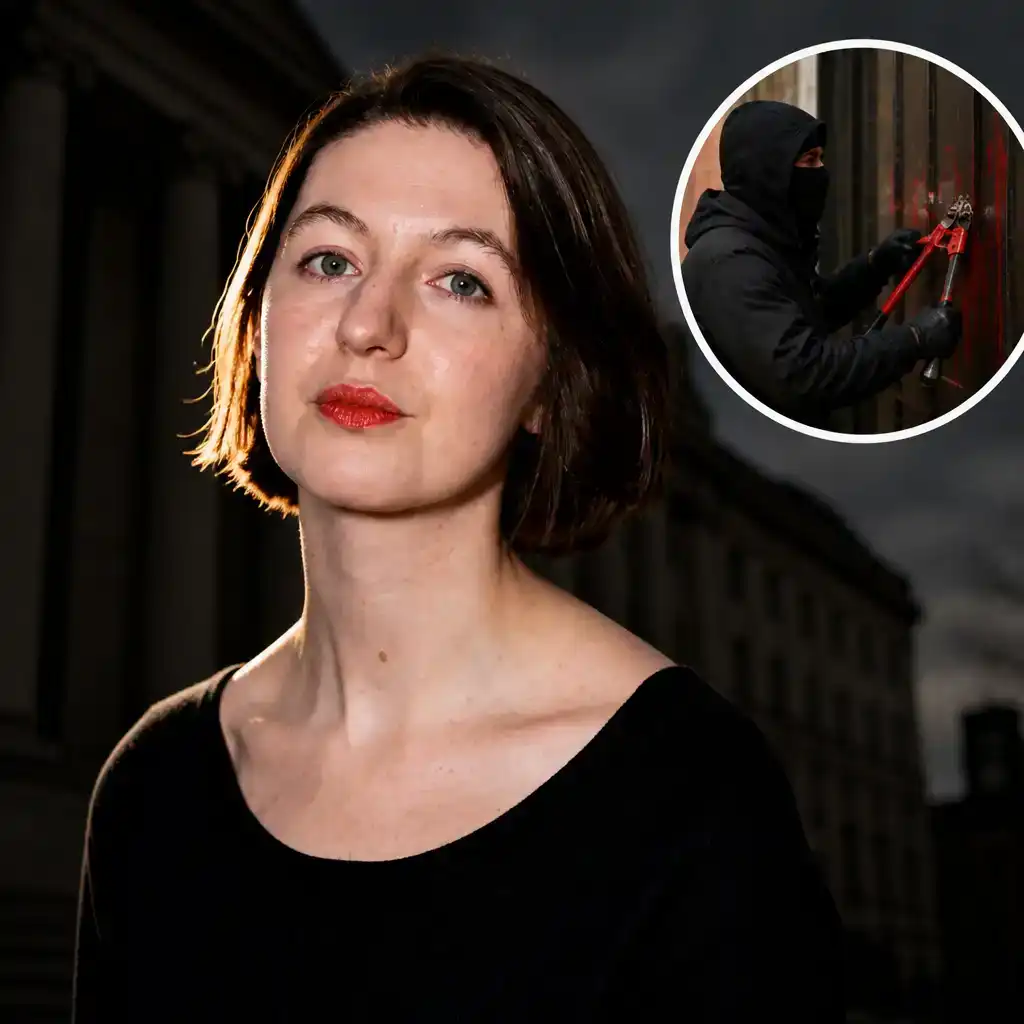
Sally Rooney books will no longer be supplied for sale in the UK after publisher Faber concluded that continuing to fulfil her contracts could amount to a criminal offence. The decision follows the Irish author’s pledge to support Palestine Action, a direct-action group proscribed by the British government in July 2025.
Rooney, 35, is one of her generation’s most prominent novelists. Her intimate accounts of relationships, class and millennial anxiety have produced four bestselling books, along with two major BBC adaptations: Normal People in 2020 and Conversations With Friends in 2022.
The latest development means Faber will stop distributing her work to British retailers. It does not make owning or reselling existing copies illegal, despite political descriptions of the decision as a book ban. The practical result for new copies, however, is fairly similar: British bookshops will no longer receive them from her publisher.
Why has Faber stopped supplying Rooney’s novels?
The UK proscribed Palestine Action as a terrorist organisation in July 2025. Under the ban, membership of or support for the group can be prosecuted, with a maximum sentence of 14 years in prison.
Rooney later said she intended to donate income from her books and television adaptations to Palestine Action. The organisation says its aim is to end international involvement in what it describes as Israel’s “genocidal and apartheid regime”. Palestine Action is not prohibited in the Republic of Ireland, where Rooney lives.
In a statement, the author explained that the legal position had placed her British publishing contracts in doubt.
“As a result, the fulfilment of contracts to publish my work in the UK could now constitute a serious criminal offence.”
She said Faber reached its decision after consultation and deliberation, and that she fully agreed with it.
“I have made every effort to be honest with the public about my beliefs and intentions, and I am wholly prepared to accept the consequences.”
The consequences are now unusually literal for a novelist: fewer books in bookshops because of what she plans to do with the royalties.
Rooney previously avoided Britain over arrest concerns
The publishing decision follows an earlier disruption to Rooney’s work in the UK. In September 2025, she cancelled a planned visit to London to accept the Sky Arts Award for literature, citing concerns that she could be arrested because of her support for Palestine Action.
Supporters of the organisation have continued holding demonstrations despite its proscription. Those protests have led to hundreds of arrests under terrorism legislation.
Palestine Action co-founder Huda Ammori called Rooney’s loss of access to the British publishing market “a new low” for freedom of expression. She claimed the law had been used to make more than 3,700 arrests involving people who were “simply holding seven word signs”.
Ammori also accused Andy Burnham’s government of defending the proscription rather than overturning it. She described Rooney’s position as “brave and principled”, saying the author had refused to compromise despite the professional and personal cost.
“No author should have to choose between their principles and their freedom to publish.”
Which Sally Rooney novels are affected?
Faber’s decision covers Rooney’s published novels in the UK:
- Conversations With Friends (2017)
- Normal People (2018)
- Beautiful World, Where Are You (2021)
- Intermezzo (2024)
Her work has built a large British readership, helped by the success of the BBC adaptations. Normal People, starring Daisy Edgar-Jones and Paul Mescal, became a major television hit during the first Covid lockdown in 2020. The adaptation of Conversations With Friends followed two years later.
The withdrawal therefore affects more than a small political title with limited distribution. It removes new copies of several internationally successful novels from normal publisher supply in one of Rooney’s biggest markets.
Politicians condemn the effect of the law
Green Party leader Zack Polanski blamed Labour for creating the circumstances that led to Faber’s decision. He said the government had admitted it was wrong over Gaza, only to produce a law that had now affected one of the best-known authors writing in English.
Polanski described the legislation as “authoritarian and ludicrous” and called for the proscription of Palestine Action to be overturned immediately.
His description of Labour having “banned books” is politically forceful but legally imprecise. The government has not issued a list prohibiting Rooney’s novels. Instead, Faber says supplying them could expose the publisher to criminal liability because Rooney has publicly stated where some of the proceeds would go.
That distinction may matter in courtrooms and government statements. For readers trying to buy a new copy from a British shop, it is likely to feel considerably less important.