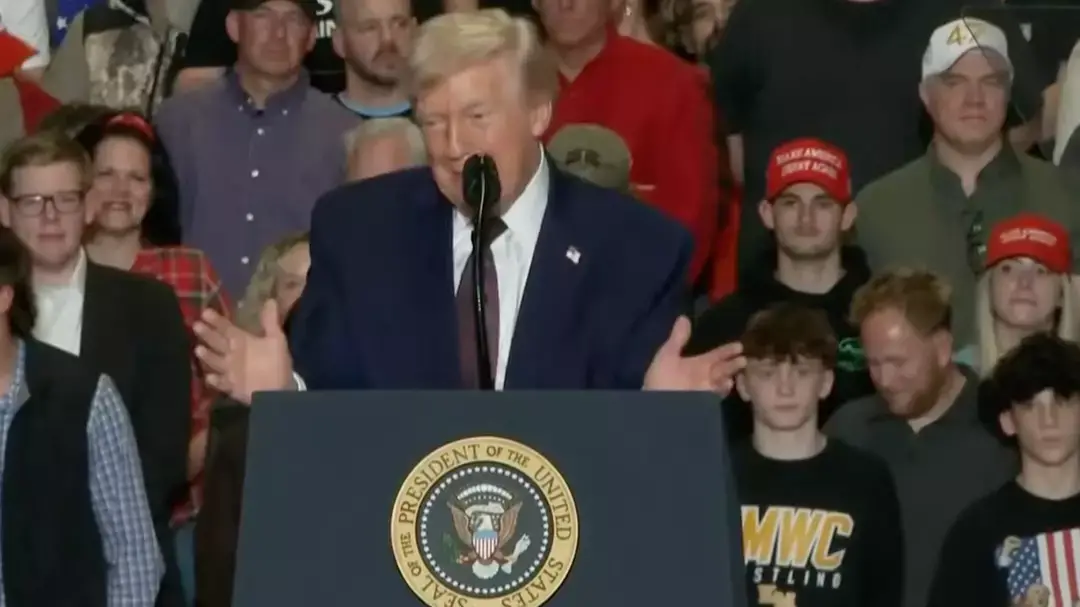
President Donald Trump has attacked recent polling on his performance in office, calling the surveys “fake and fraudulent” and suggesting they should be treated as criminal, after a run of approval ratings showed the public divided on his second-term agenda and sharply negative on key issues such as the economy and immigration.
In a statement shared online and widely reposted, Trump wrote: “Fake and Fraudulent Polling should be, virtually, a criminal offense,” arguing that organisations publishing unfavourable results were “negative criminals” and claiming their work influenced public opinion and elections.
The remarks came as fresh survey results put Trump’s overall job approval at about four in 10, with a majority disapproving. In the AP-NORC Center’s January topline poll, 40% said they approved of the way Trump was handling his job as president, while 59% said they disapproved.
The same poll also found that opinions on Trump’s second term were more negative than positive when respondents were asked to rate his presidency so far, with 52% describing him as “poor” or “terrible” and 31% describing him as “great” or “good”.
When asked about priorities, 47% said Trump was “mostly focusing on the wrong priorities”, compared with 21% who said he was focusing on the right ones.
On the economy, the AP-NORC topline showed more Americans saying the national economy was worse off than better off since Trump returned to office, with 53% saying it was “somewhat” or “much” worse off and 29% saying it was “somewhat” or “much” better off.
On immigration, a separate UNILAD report summarising the latest wave of polling said an AP-NORC poll found 62% disapproved of Trump’s handling of the economy and 61% disapproved of his handling of immigration, figures that underline how the president is facing headwinds on issues central to his political brand.
Other recent polling has pointed in a similar direction. A YouGov survey conducted for the University of Massachusetts Amherst and The Economist this month put Trump’s approval at 42% and his disapproval at 49%.
A New York Times and Siena College poll released in late January also found a plurality saying the country was worse off than a year earlier, a result cited as part of the broader picture of public unease about the direction of the United States under the current administration.
Trump’s response fits a pattern that stretches back years, with the president regularly disputing unfavourable surveys and portraying polling and media coverage as politically motivated. In recent months he has also taken legal action related to election and polling disputes, including a defamation case linked to pre-election polling in Iowa, an episode that has kept questions about polling accuracy and political narratives in the public eye.
The White House has previously defended Trump’s record by pointing to policy priorities such as border enforcement, deportations and an “America First” approach abroad, while arguing that the administration is acting on what it describes as a mandate from voters.
At the same time, the administration has faced a series of contentious flashpoints on immigration enforcement and public order, including high-profile operations that have drawn protests and heavy scrutiny. In Minneapolis this month, an Immigration and Customs Enforcement raid was followed by a shooting incident involving federal agents, underlining the intensity surrounding immigration enforcement and the risks of confrontation as political tensions remain high.
In his statement reacting to the latest approval numbers, Trump focused on the legitimacy of the surveys rather than the substance of the criticisms reflected in them, casting pollsters as actors in a broader political effort against him.
Polling experts generally stress that individual surveys can vary based on timing, methodology and question wording, and that trends across multiple polls provide a clearer picture than any single result. The AP-NORC topline itself shows that Trump’s approval has remained within a relatively narrow band over recent months, with the January figure close to levels measured in late 2025.
Even so, the January data indicates that public dissatisfaction is concentrated in areas that can shape broader perceptions of competence and leadership, particularly the economy and the overall sense of whether the country is moving in the right direction.
The question of how voters interpret these numbers is likely to become more politically consequential as the administration moves deeper into its term, especially if economic pressures persist or immigration enforcement remains a dominant national story. For now, Trump’s reaction suggests he is preparing to fight the public argument over his standing as aggressively as he fights the policy battles themselves, framing negative polling not as warning signs but as evidence of opponents and institutions working against him.